Showing posts with label Juliette Binoche. Show all posts

Wednesday, October 3, 2012

Does a Relationship Ever Actually Change? (Certified Copy 2010)

#90-- Certified Copy (2010)


I have been married for (carry the one, twelve minus nine) 23 years, which is half of my life.  And when my wife and I married, and for the eight years before we were married, we were completely different people than we are now.  I was more stoic and aloof.  She was more carefree and had more energy.  There is much that we haven’t changed: we both still love books (we spent half of our first three months of marriage reading), we are both still introverts, I am still ambitious and she is still anti-ambitious.  But there still seems some fundamental things that have changed.

But have they really?  Are we really all that different?  The male and female protagonists of Certified Copy (Juliette Binoche, William Shimell) seem to make a radical change toward each other in the middle of the film.  Although no time has gone by, their relationship changes from courtship to married to several years.  The heat in their relationship increases.  But the issues in their relation remains the same.  They are fundamentally still the same people, with the same opinions, with the same attraction toward each other, and with the same anger at each other’s’ idiocy.   They are different people, and yet, over the years, their relationship remains oddly similar. (There are different interpretations of the film, but this is mine and I’m sticking to it.)

What if, no matter how long we lived together, we are continually rehearsing the same relationship joys and sorrows, again and again?  Perhaps each relationship is fated to be a loop, with the highs and lows repeated, with the same arguments.  Perhaps, in the worst as well as the best times, we need to re-consider our relationships before we commit to them.  Perhaps we need to ask these questions before our marriage, before our divorce: Can I live like this the rest of my life?  Can I live without this for the rest of my life?  I know for me, despite any hardships or desperate weaknesses in our relationship, I couldn’t imagine my life without her.  I can only hope she feels the same about me. 

Fun Fact: Certified Copy is a French film with a French actress, a British actor and an Iranian writer/director, Abbas Kiarostami.  Kiarostami also directed Iranian films, such as A Taste of Cherry which won the Cannes Palme D'Or of 1997.

Wednesday, May 9, 2012

Your Mission: The Top Actress Relay Race

Mission Impossible Theme

Alex Thompson, from Benefits of a Classical Education handed me an 8-track tape.  "Here are your instructions," he told me in a hushed voice.

"How am I supposed to play this?" I demanded.

He looked bemused. "We always use tapes," he said with a superior tone.

"Cassette tapes.  Or reel to reel.  Haven't you seen the original series?  Anyway, what did you want to tell me?"

A bit crestfallen, he waved at me to come around a corner and mumbled something about needing a Cone of Silence.  Finally, he began.

"Your mission, should you choose to accept it, is to carefully study this list of great film actresses..."

"Study actresses?  That doesn't sound too impossible to me."

"That's not the hard part," Alex chided me.  "One of these actresses must be eliminated."

"What?  You don't really mean..."

"Yes, you must declare one of them unworthy to be called one of the top greatest actresses of all time. In fact, four actresses have already been eliminated:
My Film Views came up with the original list of ten.
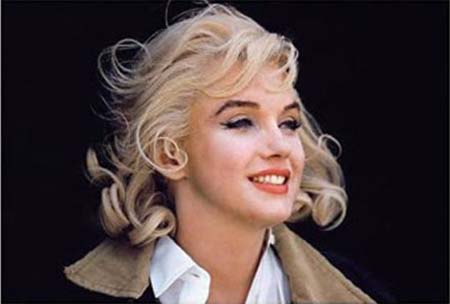
Jessica of The Velvet Cafe crossed Marilyn Monroe off the list.

MartinTeller massacred Natalie Portman.

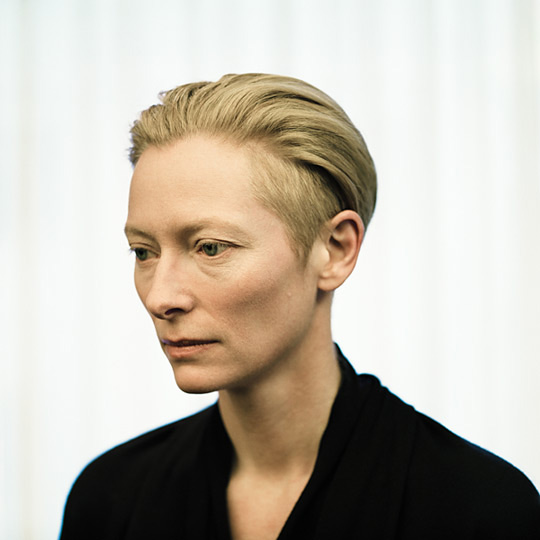
Bondo of The Movie Review Warehouse brutally cut off Tilda Swinton.

And I..."

"Alex, you?"

"Yes.  I eliminated Julie Delpy.  Without discretion.  Or mercy."


"How could you?"

"Now it is your turn, Steve.  One of the following actresses must be eliminated by your hand:

Cate Blanchett

Kathrine Hepburn

Frances McDormand

Julianne Moore

Barbara Stanwyck

Meryl Streep

Emma Thompson

Liv Ullmann

Kate Winslet

and my own addition, Viola Davis."


"Wait, you add an actress?"

"The principle of the mission is this: for every actress eliminated, another must be included.  A great film actress.  The best.  One who, without question, belongs on this list."

The 8-track began smoking in my hand.

Alex whispered, "I must depart," and in a whirl of his cloak, he was gone.

Now I must consider my choices.  First, there is an actress to do away with.

There are four that are practically untouchable.  Meryl Streep is the Queen of Actresses.  And the three K(C)ates are a trinity that are highly exalted.  There is no possible way to eliminate them.  I don't know enough about Liv, and the rest are all so good.  But Alex gave me the mission.  I must decide.  The weakest must go.  It was a choice I didn't want to make... couldn't make... but I pulled out my eraser and Emma Thompson was gone.  Just like that.
"I want Just Another Movie Blog shut down"

Sorry, Emma.  It was nothing personal.  I have really enjoyed your performances.  But you just aren't top ten material.

Then I turn my attention to the wide world of film.  Who could be worthy to take Emma's place?  Certainly Alex was wrong about kicking Julie Delpy off.  He never even saw Before Sunrise or Before Sunset! She deserves a place.  I seriously considered placing her.  But Alex's decision was irrevocable.  I must choose another.

Honestly, I knew who I would choose almost immediately.  The name came, unbidden to my mind.  But surely, I thought, I can't just raise someone up without due consideration of who else might be worthy.  Helen Mirren is certainly a Queen among actresses.  Deborah Kerr is a Mother Superior.  Could I truly leave Ellen Burstyn alone in her room?  
"Would someone please brush my hair?"

But after all the considerations, I went back to the first one I considered.  Juliette Binoche.  As wonderful as all these other actresses are, only she has been consistently solid throughout her performances.  And she has had so many great performances: Three Colors: Blue, Summer Hours,  and most recently, Certified Copy.  Even in smaller roles, such as in Cache, she stands out.  Never has she played a false note, and often she has been magnificent.  The Binoche abides.

However, my mission remains.  Until I find another blogger to carry it for me, I must keep it.  Who will take this weight from me?  No one knows.  


Until now.  Squasher88 of Film Actually will eliminate an actress.  Hopefully he will do it kindly.


Thursday, August 11, 2011

Ain't Nothing But the Blue

A Review and Analysis of Three Colors: Blue


Have I ever told you that Krzsztof Kieslowski was a master of filmmaking?  I wish more people would see his films so more would recognize what a craftsman he really was. I don't think anyone should begin with my favorite, The Double Life of Veronique.  Perhaps some of his television show, The Decalogue. Perhaps A Short Film About Love, a film release of one of the stories of the Decalogue.

For myself, I started with Three Colors: Blue, and I was only mildly impressed by it at first.  It was so slow and didn't seem to have much of a plot. I didn't realize that Keislowski had a different style of storytelling, one that is uniquely suited to film.  He weaves all the aspect of film: the music, the characterization, the plot, the visual elements even the filter he uses in his cinematography, all of it is a symphony of a theme.  And like most symphonies, the theme may not stick out the first time you experience it.  How do you know if you want to listen to it again?  Because it won't leave you mind.  It has become a part of you.  And this is what happened to me with Blue.  The film haunted me.


It is the story of a woman dealing with her grief at the loss of her husband and daughter in a car accident.  Her grief is deep, caverns deep, but she cannot share it with anyone, so she isolates herself, trying to forget that she had ever had that life. However, life intrudes.

If you are not a fan of slow films, you will not like this movie at first blush.  However, it is not a slow film.  There is a lot going on in every scene.  What is happening is quiet, but it is powerful.  Allow yourself to be captured by it.

*        *         *

Spoilers below:

Of course, the Three Colors come from the French flag and it is well known that they are associated with the  three word motto: Liberty, Equality, Fraternity.   Like Keislowski's TV series The Decalogue, each film deals less with a certain theme, but rather reflects the whole of the subject.  Is Blue about Fraternity?  Or Liberty?  Or some aspect of each?  It might be better understood that this film deals with the opposite of them all: Isolationism.

At the beginning of the film we know nothing about Julie or her family.  We see the accident, but we have no feelings about it because we know almost nothing about them.  We only learn about the family and their day to day life as Julie is trying to destroy it, which reminds me so much of Michael Heneke's The Seventh Continent.

The grieving wife and mother feels that she can only live her life isolated from all people.  She attempts to destroy everything of her old life, leaving only the blue glass lamp to remind her of what she gave up.  What exactly does the color blue represent?  Her family, her grief that she has tried to shut out, humanity, the pain of humanity?  Perhaps all of that.  Blue is everything she no longer wants in her life.


This doesn't mean that she doesn't wallow in that same grief.  Poignient scenes take place as she swims in the pool, drenched in blue light, the only place where she allows herself to grief, to weep.  But as soon as she is with others, she dries her whole self and is as stoic, as independent as ever.  She sees a man being beaten by a group of other men and she does nothing, even when he comes to her door and seeks asylum.  She pushes away all neighborly interest because she doesn't want to be involved.

But she can't keep everyone away. A street flute player catches her interest.  A talkative neighbor impresses herself upon her.  A man at the scene of the accident finds her.  And finally, an old flame seeks her out, attempting to pull her back to life and humanity.


It is interesting to compare and contrast this film with the previous film Keislowski made: The Double Life of Veronique.  Grief is also present in that film, although the protagonist doesn't know who she is grieving for.  But two other themes are interesting connections: music and sex.

In The Double Life, music is a symbol of the spirit, that which draws one away from the earth (some disagree with my interpretation of this, and I'm okay with them being wrong).  In Blue, music is strictly fraternal.  It is a symphony with many players, many writers, a score being written for the unification of Europe.  Julie attempts to destroy it, because it is a part of everything she no longer wants to be a part of.  But it survives, because it cannot help but survive.  Life on earth is about fraternity, about connection, about association. No one can escape it forever.  The most stringent hermit, such as The Desert Fathers or a Trappist Monk in a vow of silence, none of them are completely isolated.  Rather, recognizing the need of hospitality, they welcome all who come their way.  Even so, Julie, although at first irritated by human interruption, eventually welcomes it.


Sex is also an interesting theme in both films.  In the Double Life, sex is that which keeps one bound to the flesh, attached and associated.  At first, Julie wants to use sex to show that she is just the same as any other woman, unworthy of notice, thus easy to leave alone.  But sex in Blue is clearly shown to be connection, association, intimacy with others.  Julie's neighbor says, "I can't spend a night alone" and "Everybody wants to do this"-- while Lucille was crudely talking about sex, in the end what was really meant was connection and intimacy.  Everyone wants what Julie has shut out of her life-- even Julie, although she doesn't know it.

In the end, I think that Three Colors: Blue is a magnificent symphony on how we all go through periods where we demand loneliness.  Humanity, in times of deep depression, is too much work, too many demands, too much stress.  And if we can get isolation, we might enjoy it for a time.  But humanity always beacons us back.  We are always woven together with others and we can't escape it forever.  One of the most touching parts of the film is the finale when we see the many people Julie has touched, even during her period of isolation  and the full musical piece that she has been avoiding plays in the background.


Almost at the beginning of the film, she awakens in the hospital after the accident and we see a close up of her eye.  It is empty, even hollow.  At the very end, we see her eye again, but the center of it is filled with the man with whom she has just made love, the man who dearly loves her in return.  That, in a nutshell, is the theme of the film.