Showing posts with label Film Buff Essentials. Show all posts

Friday, August 31, 2012

Film Buff Essentials #6-10 (FB 101 Part 4)

I am not trying to list the ten best films or most important.  Rather, I want to give the beginning of a conversation between film buffs.  What are the basic films that pretty much all film buffs should have under their belt?  This is the final five of ten, but they aren't in any particular order.

Dr. Strangelove, or How I Learned to Stop Worrying and Love the Bomb
It is difficult to choose only one Stanley Kubrick film, as many of his films have made a permanent mark on film history.  I choose this film because it became, in a sense, the basic way of thinking of an era of world history: the cold war. The paternalistic insanity and futile attempt to recover some rationality pervades this film.  Peter Sellers did some of his best work in this film, playing a half dozen characters.  As madcap as it seems, the film never goes out of control, it steps clearly to an inevitable, black, but still comedic, conclusion.

Apocalypse Now
Francis Ford Coppela is the only director who has two films on this list.  Perhaps I should have made room for another director, but his two films could not be missed.  This is not just a film, but a piece of literature, more complex and crafted than the text that inspired it, Heart of Darkness by Joseph Conrad.   Although episodic, the theme of the madness of war couldn’t be clearer or more precise.   This film has sections that will haunt you long after you finish it.
Citizen Kane
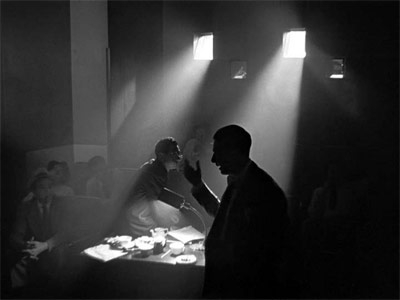
For fifty years, this film starring and directed by Orson Welles was considered the greatest film ever made.  Whether that was true or not isn’t important.  But the influence of this film demands attention.  It is a technical marvel, even seventy years after its release.  But the truly amazing thing is a film that is so praised and so honored for its technical achievement is so human and so entertaining.  It has everything: comedy and drama; it is both a biopic and a newspaper film; it is both pro-system and critical of system.   It is an every-film, but it is enjoyable at the same time.   Rarely do we see such a marvel.

Taxi Driver
This is an actor’s film that is also a director’s career highlight.  Robert DeNiro and Martin Scorsese have worked together a number of times, but never more powerfully.  We follow Travis Bickle’s little sorrows and joys and see him step by step fall apart.  And his psychosis is reflective of New York City’s, for he is a son of New York, and he gives back what he receives.  Rarely does a fictional character so frighten us and enthrall us and the film so perfectly set us up for its conclusion.


City Lights
To choose any one silent comedy is to stir controversy.  Why a Chaplain and not a Keaton?  Why not Modern Times or The Gold Rush?  Yes, The General or Sherlock Jr. or Safety Last could have been chosen.  But this classic is the perfect transition film.  It is primarily silent, but makes use of sound technology.  It is a Little Tramp slapstick comedy, but is as much a romantic comedy.   The Little Tramp has less of the scoundrel and more of the noble in this film.  And it is as much a sentimental melodrama as a comedy.   There are so many films in this one stirring, much lauded film, that it must be seen.

Mind you, these ten are only a beginning, the first step up the gangplank  to the ship Film Buffness that has adventures and new people galore.   If you are new to film buffness, then you can’t go wrong with beginning with these films.   If you are an old film hand and haven’t seen one or two of these films, please check them out.  And if you have seen them all, then try out the directors and actors you’ve appreciated.  The journey is long and fulfilling.  The best thing you can do is enjoy it. 

Finally, what would you put as your essential film buff movies?  If there were films that you could make everyone see so you could all have them in your film vocabulary, what would they be?

Film Buff Essentials #1-5 (FB 101 Part 3)

Here we go, the ten films every film buff should have seen.  They aren't ordered in any particular direction-- there's no priorities here.  They are all important.  Here are the first five.  The second five are in the next post.


The Godfather
The godfather of all film buff films is, rightly so, The Godfather.   It was released in 1972 and was one of the few films to receive the Best Picture Academy Award that actually deserved it.   Amazingly, its sequel won the same award.  Of course, The Godfather is now a permanent fixture in the broad cultural consciousness with phrases like “We’re going to give him an offer he can’t refuse” and the image of a horse’s head in a bed common territory.  But the Godfather is more than a cultural touchtone.  It is also a role call of great actors of a certain generation: Al Pacino, Robert De Niro, Diane Keaton, Marlon Brando, Robert Duvall—many of them giving the classic performance of their careers.  And it is a master storyteller, Francis Ford Coppella— telling a masterful story.  There are some movies that become so ingrained in our culture that they become tired that watching the film again feels like a chore.  Not The Godfather.  It is an amazing experience, in which we feel we understand the Italian mafia, because we have spent time with them, seen them at their best and worst. 

8 ½
This is an Italian film of 1963 directed by Fredrico Fellini.  It is about a director played by M M who is in the midst of filming a film that he isn’t altogether clear about.  But it has less to do with filmmaking and more to do with how one directs one’s life, and how badly it can be mismanaged.   The greatness of this film can be explained in this phrase I recently heard which describes it: manic charm.   On the surface, it feels very unorganized and unnecessarily complicated.   Some of the greatness can be seen in its self-reference, how much of the discussion about the film is talking about the film we are watching now.  This film can be watched with a critical eye, analyzing and making references, or we could let it flow over us until all we have left are impressions—a giant spaceship, a fountain, a crazy dance at the close.  Either way, we will experience something unique.

Seven Samurai
This is one of those films that seems difficult to watch at first.  Three and a half hours of subtitles, really?  Of course, if you are going to be a film buff, subtitles must be your stock in trade, but this seems excessive.  In reality, it is not.  How long does it take to know a person, to really have a sense of who they are?  And if a filmmaker is going to really get us involved in a character, how long does that take? Certainly not as long as a real person, but it is not easy, or quick.  Now, what about seven characters?  How long does it take to feel the stakes involved in seven people accomplishing an impossible task?  This is Akira Kurosawa’s goal—to introduce us to seven characters who impact us.  Seven Samurai may be of a different era, a different culture,  but the power of this story is there because he took his time.  This epic film is powerful, and its impact is felt on most who take the time to watch it.

Vertigo
There is an ongoing debate as to which of the great director Alfred Hitchcock’s film is his greatest.   My money is on Rear Window.  But the influence and impact of Vertigo cannot be gainsaid. Jimmy Stewart plays Scottie who is obsessed with a mysterious woman (Kim Novak).   Although there is clearly a secret about this woman, it is Scottie himself who might have the greater, more disturbing secret.  As usual, Hitchcock invents new ways to tell a cinematic story, in the shooting, in the editing and in the narrative.  No one can deny its brilliance.

Singing In The Rain
The classic Hollywood musical is about exuberance and joy, and none excels in these qualities better than Singing In the Rain from 1952.  The plot is thin, about the new sound films and a fading actress, but each scene is expertly crafted, wonderfully choreographed and rarely do we see color like this anymore.  All film is about entertainment, and no film screams “that’s entertainment” better than this one. 


(to be cont...)