Thursday, January 22, 2015

The Greatest Musical Scenes in the Movies

The best musical scenes create a poem, a romance that convinces us that the unreal is real.  We don’t care how unrealistic the situation is, the best musical scenes make us believe because we long for it to be true.  It is too beautiful, too perfect not to be true.  Good musical scenes stun us and take our breath away.  Perfect musical scenes create a world that we enter for a few moments.

Red Shoes Ballet-- The Red Shoes

One of the most magnificent productions ever.  It is long, taking up the whole center of the movie, but it exemplifies what a musical scene can do, even without words.  All the emotion, power and themes presented in a single scene.  Even so, the complexity of staging and the colors create a fantasy stage world that takes one’s breath away. 

Do Re Mi- Sound of Music

Not only is this song one of the catchiest songs ever composed, but in film it is almost a miracle of writing and editing, creating a montage of setting, teaching and acceptance.  Everything about the legend of the Von Trapp singers are in this scene and it re-creates them right here, village life, prodigy singing, a teacher who is practically perfect in every way-- they got it all.

Lodi—Veer Zaara

This song perfectly exemplifies the joy and color of the best Bollywood musicals along with a village celebration and a battle of the sexes.   When I think of Bollywood, this is often the scene I return to.

Tonight (reprise)—West Side Story

Not the balcony fire escape scene, but near the end of the film with all the heavies of the cast singing.  This is probably the best penultimate songs ever.  At this point in the film, we have accepted the musical world of dancing gang fights and Natalie Wood as an immigrant or not.  Now we have the original romantic song mixed with gangs prepping for a fight and the seductress readying herself to get her man.  They are talking themselves up and this perfectly ramps us up, ready for a exciting conclusion.

When Your Mind’s Made Up –Once

We have been following our two lead characters for half the film getting reading to create an album, and finally, when they are in the studio, we see them from the place of the editing booth.  The editor has heard thousands of bands, and this is one more.  As the song continues, though, he sets aside his book and begins to realize that this band is different, and deserving of his full attention.  At this point the band amps up and gives us their full energy.  Best studio scene ever.

Everybody Wants to Be a Cat—Aristocats

Honestly, the Aristocats is among the least of Disney’s catalog (no pun intended). But when they arrive at the “pad” and the music hits us, we realize we are in for something fun.  As we are introduced to the new characters, we really warm up.   The song is so infectious and builds up to such a peak, we find ourselves singing it long after the film is over.   A meter of racism is uncomfy, but it passes quickly and then we are bouncing and giggling and the colors flash and… yeah, man.

Barn Dance—Seven Brides for Seven Brothers

It amazes me how much sexual tension you can put in a film that’s really a G-rated musical.  The tension of the seven brothers finally explode in their competition with the other men of the town at the barn raising.  The dance itself begins tame and builds up to a level of circus acrobatics.  Eye-popping and entertaining to the highest degree.

“I was hearing the voice of God”—Amadeus

Amadeus combines some of the most magnificent music ever written with commentary on the music and the human being filled with longing and religious jealousy that combines to a sweet complexity.  It is no wonder so many people thought that the story was really true.

Candy Colored Clown—Blue Velvet

It is common for musical scenes to express joy, exhilaration or spectacle, but they rarely express dread.  With no context, there is not much happening in this scene, but in the film, we are just waiting for everything to explode.   Dennis Hopper provides the omnipotent backdrop of a violent lunatic which gives a new emotion to the Roy Orbison classic.

Lose That Long Face—A Star is Born (1954)

Judy Garland’s marriage is breaking up, but she must perform and the song she has to perform is that of a superficial joy despite sorrow.  She smiles and dances and clowns, but her depression is seen in the corner of her eyes, belying the joy she is supposed to exude.  A mix of emotions that causes us to cry instead of smile, as we are commanded.

Next to Last Song –Dancer in the Dark

This is the final scene of the film, Dancer in the Dark, so you might want to skip this description if you haven’t seen the film.   Bjork is dying for her love of her son, her care for her manipulative neighbor.  She isn’t strong enough to deal with this last scene, but once she realizes that her death leads to her son being able to see, she can once again be the heroine of her own musical.  She bolts out, “This isn’t the last song” and we weep at the abuse the world heaps on her.

O Death—O Brother Where Art Thou?

A Klu Klux Klan rally where a black man is about to be lynched is spooky. But when the head of the Klan begins singing the standard O Death with Ralph Stanley’s weak and cracking voice, we wonder if the lynching isn’t about a perverted sense of justice, but a human sacrifice.  And when the Klan begins marching to the beat of the song, it’s simply surreal.


77 Other Great Musical Scenes (in no particular order):

Spoonful of Sugar—Mary Poppins
Train Scene—Music Man
Chim Chim Chimery/Step in Time—Mary Poppins
Empty Spaces—Pink Floyd The Wall—Empty Spaces
Singing in the Rain—Singing in the Rain
I Dreamed A Dream –Les Miserables
Linda Linda—Linda Linda Linda
New York New York—Shame
Bye Bye Life—All That Jazz
Molasses to Rum –1776
Music Box Dance—Chitty Chitty Bang Bang
Opening credits –Skyfall
Be Our Guest—Beauty and the Beast
I Won’t Dance –Swing Time
Treat Her Right—The Commitments
Falling Slowly—Once
Always Look on the Bright Side of Life – Life of Brian
The Man That Got Away—A Star is Born
Hunchback of Notre Dame—Hellfire
Rainbow Connection—The Muppet Movie
I’ve Seen It All—Dancer in the Dark
Isn’t It a Lovely Day—Top Hat
An American In Paris—Tap Dance
My Beloved Monster—Shrek
Do You Want To Build a Snowman?—Frozen
I’ll Try—Return to Neverland
Love on the Rocks—The Jazz Singer
When Somebody Loved Me—Toy Story 2
Thus Spake Zarathustra –2001: A Space Odyssey
You Make My Dreams Come True –500 Days of Summer
This Is Halloween—The Nightmare Before Christmas
Man or Muppet?—The Muppets
I Will Follow Him –Sister Act
That’s How You Know –Enchanted
The Lonely Goatherd—Sound of Music
Prince Ali—Aladdin
Yeh Duniya Agar Mil Bhi Jaye To—Pyaasa

Don’t Rain On My Parade –Funny Girl
Little Town—Beauty and the Beast
Unchained Melody –Ghost
Honor to Us all—Mulan
Parade—Ferris Bueller’s Day Off
Topsy Turvy—Hunchback of Notre Dame
Love Is An Open Door—Frozen
Yeh Tara Woh Tara—Swades
Putting on My Sunday Clothes—Hello Dolly
I Just Can’t Wait To Be King—Lion King

We Got Trouble—Music Man
Over the Rainbow—Wizard of Oz
With One More Look At You/Watching Me Now—A Star is Born 1976
Why don’t you do right –Who Framed Roger Rabbit
Poor Unfortunate Souls—Little Mermaid
On Broadway—All That Jazz
Gee Officer Krupskie—West Side Story
Babysitter’s Blues—Adventures in Babysitting
Hey Big Spender—Sweet Charity
The Hills Are Alive—Sound of Music
Beauty School Dropout—Grease
Circle of Life—Lion King
Que Sera Sera –The Man Who Knew Too Much
French Club Dance –Funny Face

A Clockwork Orange—Singin In the Rain
Musical Aliens –Close Encounters of the Third Kind
Dueling Banjos –Deliverance
Stonehenge –Spinal Tap
Wayne’s World—Bohemian Rhapsody
Fame—Hot Lunch Jam
The Trial –Pink Floyd The Wall
Grease—Sandy
Hunchback of Notre Dame—God Help the Outcast
Take me or Leave Me—Rent
Your Song—Moulin Rouge
And I Am Telling You –Dreamgirls
I Want It All –High School Musical 3
Do You See The Light?—Blues Brothers


South Park—Blame Canada

Thursday, January 15, 2015

Linklater's Bullseye: Boyhood

Slacker, Linkater's first feature film
Slacker was the first Richard Linklater film I saw.  It was one of my earliest art films, and I saw it in an old theatre in Portland.  It was a strange film, and strangely opened my eyes to a new kind of art.  A number of people lecturing about freedom and alternative lifestyles, each from their own perspective.   Really, Waking Life wasn’t that different, with spooky animation and the theme being what life is all about.  But despite the different ideas floating around, they both seemed to be largely disconnected from reality.  So different from Linklater’s films School of Rock or Bernie or even Tape—those may not have been conceptual films, but they were grounded, in a narrative.  The Before movies were in between these two extremes, leaning toward the talking.  They were idea movies in a specific context.  Dazed and Confused was an event film, but leaning more toward conversation than, say, Bernie.

In Boyhood, Linklater I believe, captures the perfect balance between idea and narrative.  He draws in the nostalgia, the narrative, the real life drama, the conversation, the romance, the conceptual conversation, all in one perfect film.  Dang, I used the “p” word, didn’t I?  Let me back off from that for a moment.  What I really mean is that I feel that Linklater has been aiming at some goal all these years, experimenting and crafting amazing films which reach a balance between concept and narrative and I feel that he finally hit the bullseye.

Finally, he has truly connected with me emotionally.  Not because I recognized the scenes and cultural background of Mason’s life.  His is the generation of my children, not of me.  And I have never had to deal with all that relationship drama or dating.  The film hits the emotional target because it honestly draws me in by making these people real, and their lives real, not by hyperdramatized moments, but through visiting this family again and again over a period of years.  I just feel that I know these people.  Not just who they are in a moment, but who they became over time.  So the final scenes of Mason with each of his parents were real emotion, with real power.

The question Linklater wants to answer in Boyhood—possibly the only question he has ever asked in his films—is “what is life about?”  In the conversation, we learn that life is not about the education we receive, the jobs we get, the relationships we have, or the ideals we live by (or claim to live by).  Even though we label ourselves through these things:  we are the spouse of so and so, we “do” this job, we have this degree—that’s not what really matters.  It doesn’t even matter what we intend to do or how we spend our days.  Rather, life is about the moments, the people, the events, the dreams that capture us and drag us along with them.  

Life is the parent who is always there, always supportive, always cheering us on.  Life is not about the person we become infatuated with, but the person who “gets us” and waits for us while we learn to mature.  Life isn’t about our biggest vision, but the one that we pursue for year after year, even if we never make our money from it.  Life is not about the education we pursued for years, but about the knowledge that changes us, makes us the people we are, the people perhaps we were always meant to be.  Life isn’t about the stuff we gather, but what really is important to us, those with whom we live day in and day out, and the things we interact with that shape our being.   Sometimes the most important thing in our life is the small, offhand comment that seemed so insignificant, but it changed us in ways we never would have thought possible.  It is not just the day-to-day, it is the everyday.  It isn’t the drama, it is the small love that lasts over years that’s most important. 

I don’t feel that Linklater has been so focused on one concept Instead of trying to show big ideas compressed into a brief moment in time—a single night, a point in the history of a human life—Linklater succeeds by showing us the whole span of a family.  We cannot understand the scope of human existence until we experience that scope.  In less than three hours, Linklater gives us that span and communicates what is to be focused on. 

The film itself is full of bright cinematic spots.  For the first two thirds of the film, every time Ethan Hawke showed up, the screen lit with his energy and enthusiasm.  Even at the end, he sparkles, understanding better than anyone in the cast exactly what Linklater wants.  Both Ellar Coltrane and Patricia Arquette faltered at first, but they grew into their roles, owning them and helping us experience the growth of their characters.  Some of the scenes, like Olivia taking her children away from an abusive situation, and the self-important teacher giving an ineffectual “darkroom chat”, will remain with me forever.   But most importantly to me is the living philosophy that we had opportunity to experience, not just hear a discussion about.


I think Linklater has always tried to give us a thoughtful philosophy, to try to measure all of us and human existence in one of his films.  Finally, I believe that he succeeded.

Thursday, January 8, 2015

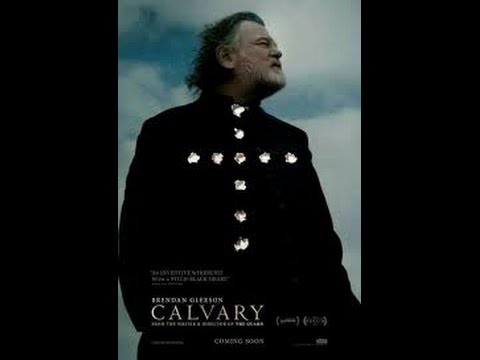
Calvary: A Sociology of a Good Man

You would think that being a good person is just pats on the back and accolades.  Rather, the cliche is too often true: "No good deed goes unpunished."

Goodness isn't the same as just being responsible.  Anyone can support their family, be a good provider. Goodness is that extra step of self-sacrifice.  It is being the parent who is gentle with the teenager when she is screaming at your face.  It is the neighbor who doesn't complain about the next door mess, but comes over to help them clean it.

Certain people are given the social position of being a mini-saint: teachers, social workers, medical workers, religious leaders. They have an additional responsibility of goodness.  They are given the task to not only work for their family or themselves, but their whole community.  They are not allowed to slip up, to say that which is inappropriate, to bend or break community standards.  They cannot scream at their objects of help, they cannot take advantage of them, or else they will rightly be accused of harming the vulnerable.  They are held to a higher standard.

Normal people compromise their standards.  That is seen as being human.  They will give up, be prejudiced, even hate, and that is fine.  They understand that being human is weak, that everyone breaks at times.  But the good person may never break, never give up.  They must always be strong in goodness, always put on a good face.  Unfortunately, this means that every good person is an implied accusation to those who get drunk, who give into their hatred, who refuse to forgive, who allow life to break them.  The good person is an offense to those who are normal.  Thus, the normal person must constantly buffer the good, to force them to display their humanity, to show that they aren't any better than anyone else.

The good are threatened, they are called names, they are accused of that which they did not do, they are given motives that they never thought of, their children are threatened, they are beaten, they have fists in their face, they are screamed at, they are hated.  They are tempted with sex, with drugs. This happens to them so they will break and show hate and prove their weakness, and so prove their humanity.

Of course, the good are human.  Every human has a certain level of will power.  Some have more and some have less.  Will can be exercised, like a muscle and it can also atrophy or be overworked and strained.  But no matter who we are, we only have so much will power to work with in our lives.  We focus our will on certain things, which means we don't have will to put into other aspects of our lives.  A surgeon might spend so much focus on precision in cutting and creativity in repairing the human body, that they might not have energy to put into being polite to their patients.   A mother may spend so much time and energy on her toddler that she doesn't have enough "get up and go" to clean the house.  We may disagree as to how a person spends their limited will and energy, but we must admit that no one can do everything.  This is why the normal person is compromised.

What is rarely known is that the good person is also limited.  It is just that they focus their will on being good to others, in being compassionate, in assisting the vulnerable.  This means that other aspects of their lives are reduced.  The priest won't spend time on fixing up his room, the pastor may not spend time with his family, the compassionate person may be addicted to pornography, the teacher uses much of the summer break recuperating from the rest of the year.

And, of course, the good person may very well break.  They might get tired of the accusations and strike back.  They might neglect their family or have an affair.  They might give way to a stroke. They might fall into severe depression or other mental illness.  They might become a hermit or become self-focused.

But what happens if a good person doesn't have any severe breaks?  What if they just move to a different community?  Or, God forbid, suddenly die?  It is then that they really become a saint to the community.  A saint is only safe after they are no longer available to be an accusation.  They can be lauded and statues can be made for them and they can be safely regarded as a community hero.  People might even change after they are gone, seeing their strength and goodness as an example.  Their struggles and difficulties are seen as a passion, a legend of their goodness.

The only loved saint is the one who is no longer there.


Sunday, January 4, 2015

Philosophy of Action: Coen Brothers Ranked

I've finished watching all of the Coen Brothers, so it's time to rank! 

I think I like Ethan over Joel, personally.  Wait, we are ranking the films, not the brothers... sorry, forgot.

There is so much to love about the Coens.  Their quirky sense of humor; their unique, often confusing storytelling; their use of analogy; their literary view of filmmaking.  There are some things I don't like: the fact that they almost never have likable characters (the Dude is a huge exception), and people being mean is a theme in their films (in Intolerable Cruelty, that's the whole film).

If I was going to summarize their films under one category, I'd say that they all are reflections on how to live.  Their more existential pieces, like A Serious Man, Inside Llewyn Davis and Barton Fink, emphasize existential action, especially action that shows caring for other people.  Raising Arizona shows how foolish action can sometimes be detrimental, but it is better to act according to ill-informed concepts than to be passive, or to pull the rug out from other people's lives.  It seems like a simple philosophy of life, but when we look at their filmography as a whole, it is richly and widely displayed.  Whether comedic or tragic, I love (almost) all their films and I look forward to their next one, whatever it may be.

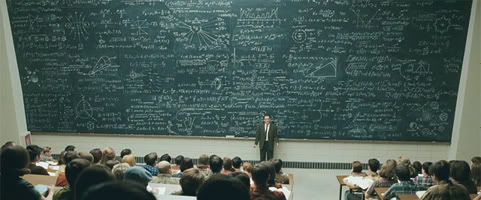
1. A Serious Man
The nature of truth and the meaning of life in one entertaining yarn.  One of my favorite films of all time.  5/5

2. Barton Fink
A mysterious fable about a writer in his own personal hell. 5/5

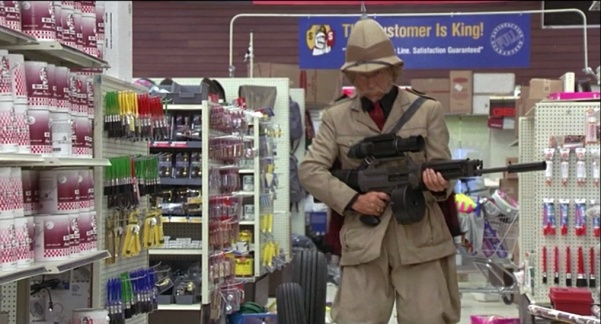
3. Raising Arizona
A hilarious take of two loving parents of someone else’s kid.  4.5/5

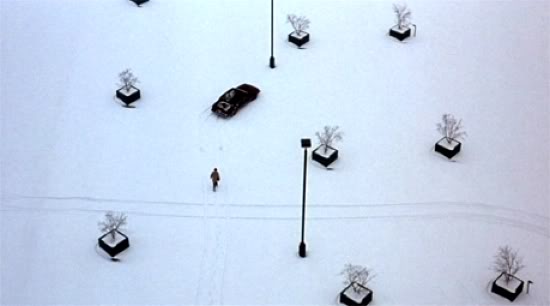
4. Fargo
Everything that makes a Coen Bros. film great—crime, comedy, stupidity, and a slight philosophical twist. 4.5/5

5. O Brother Where Art Thou?
A simple comedy about simple men with some of the best music ever. 4/5

6. Blood Simple
A wonderfully simple story with twisted characters.  Far more entertaining than a crime film has a right to be. 4/5

7. No Country for Old Men
Dark and darker still.  Tough to crack a smile at the foreboding message. 4/5

8. The Big Lebowski
A cult favorite, but nothing more than a quirky, curious entertainment for me.  3.5/5

9. Inside Llewyn Davis
“A Serious Man” with no character to really appreciate but the music.   3.5/5

10. The Ladykillers
Broad comedy for a broad religion. (Don’t tell anyone, but I really laughed hard at this one) 3.5/5

11. True Grit
Some good performances, but no one can really replace the crackle in the original. 3/5

12. Miller’s Crossing
A dark crime story that didn’t do much for me.  3/5 (need to rewatch)

13. The Man who Wasn’t There
I can barely remember anything about this one.  It’s about a barber, right? 3/5 (need to rewatch)

14. The Hudsucker Proxy
Lots of movie references, but Tim Robbins and it’s general unfunniness left me uninspired. 3/5

15. Burn After Reading
Unpleasant people doing stupid. 2.5/5

16. Intolerable Cruelty
Unpleasant people doing mean.  It was intolerably cruel of myself to force me to watch this film, just for completion's sake. 1/5

Sunday, November 30, 2014

Why I Love Movies

Michael is spending his afterlife in this theatre.
Must be the popcorn.
Movies are central to my life.  On average, I participate in about two hours of movie-watching daily.  That’s more than seven hundred hours a year.  If I keep this pace up I might chalk up perhaps 35,000 hours in my adult life. Some would say that as a pastor, or a Christian, movies shouldn’t take such a large part of my existence.  I should spend that time in prayer, perhaps or Bible reading.  I don’t know, perhaps I should.  But I spend my life living with and working with people who deal with tragedy on an everyday basis, so I figure I’m deserved a break at times. 

I have a friend of mine who looks at my bookshelf every once in a while and aloud wonders at the large amount of fiction books, as if there is a problem with good Christians reading fiction.  Some people have the same idea about movies, as if they are a “waste of time” and unworthy of a productive life.  Well, I lead what I consider to be a pretty productive life, and movies play their part in that.  Below are some reasons why. 

I think that my wife might exchange the word “books” for my word “movies”.  And I think that any form of art might be able to take the place of movies in my life, if they were as integral.  So feel free to  put “music” “fiction” “poetry” “art” or whatever else connects to you in place of my focus on movies.   Just one other thing: I’ll be speaking specifically about watching DVDs at home, because I rarely get out to the theatre.

Tell your boyfriend goodbye!
Because I need a break from life
I’m a busy guy.  I know this because everyone tells me I am.  And I know this because after a day of working, I am exhausted, ready to collapse.  As an introvert, I need to take a break from people and their demands, just to recharge.  Watching a film allows me to be passive while my mind is active.  It allows me to interact with two-dimensional beings on my own terms.  I can decide if they will make me laugh or sad.  I can decide if I’ve had enough of them and just need a break for a moment.  I can turn down the volume if they are too loud, and freeze them if I need to use the restroom or get something to eat.  For a few moments, I’m in control of my surroundings. 

This may make me sound like a power-hungry control freak.  But it is because I feel so out of control for most of my life that I feel I need an arena in which I can control.  People think I am in charge of a lot, but actually I see a reality that is best for others, and strive to reach that reality.  I live most of my life trying to meet people’s needs and to meet their expectations.  When it’s just me and a movie, then I can meet my own needs for a bit, and these two dimensional beings act for my benefit.  This doesn’t mean they always do what I want, not at all.  And that’s part of the joyful surprise.

Kubrick, to what horror-filled place did you send me?
Because I want to expand my experiences
In 1983, before Christopher Walken was only playing scary guys, he starred in a B-grade sci-fi called Brainstorm.  The idea of the film was a technology was developed in which one can “videotape” experiences, tapping one’s experience in the mind and placing that full experience into another person’s brain.  Someone could learn piano this way, or experience a roller coaster or re-live someone else’s tragedy. 

To a lesser degree, this is what movies are like.  Saving Private Ryan, in the twenty minute D-Day scene, gave non-combatants a sense of what the constant danger of a battle means.   Ordet allows us a glimpse of what the disciples experienced of Jesus’ passion (more so than the over-brutal Passion of the Christ).  Amadeus helps us view Mozart’s music through one who truly loves and hates it.  At times movies give us an opportunity to empathize with those we might never want to, like The Godfather or Citizen Kane, but we obtain a new perspective on humanity as a whole by experiencing these lives.

A life with art expands our experiences to accomplish what we will never do ourselves.  Art can help us climb Everest, can walk us through Dante’s Inferno, can help us empathize with an evildoer and can give us a sense of being a saint.   Without art, we will be limited to just who we are, without being anyone else, which leaves us poorer human beings.

Because I need an outlet for my emotions
My job pretty much is that of a social worker.  I listen to stories of tragedy all day long and my task is to solve problems, erase difficulties, point toward solutions.  All too often I hear the worst of tales and there is nothing I can do… nothing anyone can do.  Yet it is my role to remain stoic, to be calm and not to worsen their own fate by causing it to be more dramatic than they can handle.  I am level-headed, looking for help.  I make sure they know I take their problems seriously, but I am a solver, not an emoter.  Meanwhile, I pack this tragedy into my heart, stuffing it with the hundreds, thousands of stories that I have heard.  They are all packed in there so tightly, that they are in danger of bursting out, often in frustration or anger.  Frustration that there is nothing to be done.  Anger because I feel overburdened with tragedy, not a single one of my making.

I know of a mental health organization where each social worker is required to see a therapist monthly, to process the stories they obtain from their clients.  That’s a great idea, but not everyone can afford this, or have employers who can afford this.  My therapy is film.  Occasionally, the right time and the right film meet and I am able to release my pent-up emotions.  I wept watching Wendy and Lucy, tears streamed down my fact at Joyeux Noel, and I openly sobbed at the musical of Les Miserables.  I didn’t used to cry at films, but now I look for the opportunity.  Life for many is tragic, and we all need an opportunity to let it go.

Of course, some ideas are better to never have heard...
Because I want to learn new ideas
Along with expanding my experiential horizon, movies can help me do what I most enjoy: explore new concepts.  I am a concept junkie.  I love seeing things from a new perspective, opening up doors in my brain that I have never explored before.  Books like Thinking Fast and Slow are like a whole bundle of Christmas presents, each chapter exploring a new, shiny bauble for me to play with and examine. 

Even so, certain films open up my mind to ideas never realized.  The Mission (1986) introduced pacifism and fighting for justice from a Christian perspective to me.  The idea of mercy as being the foundation of the universe is explored by Tree of Life.  The idea of growth through discipline and adversity is explored by Groundhog Day.  Many of my favorite films not only give me compelling characters and entertain me, but also create new thoughts, which I can use later in my life.

Jack and I are feelin' good
Because I need an emotional uplift
I am of a melancholic nature.  I’m more comfortable with the sad story than the happy one.  I expect life to be unhappy, and thus far life hasn’t disappointed me.  But I can get to an emotional state in which I am no longer able to play well with others.  I can be moody, withdrawn or sullen.  It used to be when I got in that kind of mood, I would bask in depressing music and wallow in my dark mood. 

This doesn’t work so well for a marriage, I found.  My wife never understood my dark moods, and my children just simply ignored them, running over them roughshod.  As my responsibilities grew, I found that I wasn’t allowed the luxury of melancholia.  So I sought an out, and movies and television provided me an opportunity.

If I need a cheerful (but sarcastic) disposition, then I can watch a couple episodes of Gilmore Girls and I laugh myself into a better mood.  If I need a burst of energy, I can watch Die Hard or a Star Wars film.  If I need to be productive and fast-paced, an episode or two of West Wing does the trick.  Film provides a mood changer, providing both a setting and characters for me to conform to.

There's a limit to how deep I want my experiences to go
Because I want to learn about modern cultures most powerful art form
The world is a complex place.  It always was, and always will be.  Art gives us an opportunity to explore the vastness of the world and of the universe, both in its reality and its possibilities.  The worst of art only tells us what we already know, enforcing our preconceptions.  The best of art opens up old worlds that we never knew existed, and new minds that sees the world in a way we could never perceive without art. 

Film is not the newest art form but, along with novels, it is the deepest experience.   When watching Gravity, we might experience floating in space.  When watching Rabbit Proof Fence, we not only learn about a period of history we might not know about, but from a perspective that we would never read about outside of fiction.  Through film we can be surrounded by a world, step into it and observe it, feel it and know what it means to be a character in that world. 

Someday perhaps a virtual reality might give us that kind of experience.  But right now, in this era, it is the time of movies.  In a matter of an hour and a half, we can live a life we have never dreamed of in an area of the world we may have never thought of before.  Yes, often we are simply riding the rails inside of a couple artists’ minds, but when we have a remarkable artist, isn’t it worth it? 

Because of movies, I find that I am a richer, more complex person.  I am more stable and (if I don’t keep talking about movies all the time) more interesting.  Movies take the ins and outs of my everyday experience and allows me to see the sparkle in the humdrum, the significance of the mundane.  I laugh at what others do not see and understand the sorrow that no one sees.


That’s what’s so great about film. 

Thursday, October 23, 2014

Below the Surface: Blow Up

Blow Up (1966)

The thriller is not the thing. If we focused on the "mystery" of this film, then we would miss perhaps 80 percent of the film.  I'm going to describe a scene, and it won't spoil the film, even though the scene is in the final quarter of the film.

Our protagonist is looking for his friend, Ron.  He goes to a music venue where the Yardbirds are playing (and they are playing so well).  There is static on Jeff Beck's speaker and he's really irritated at it, so he keeps hitting it with his guitar.  Finally, he breaks his guitar on the speaker, throws the instrument down and smashes it with his foot.  Then he takes the fretboard and throws it into the crowd who goes wild, trying to grab the broken piece of the guitar.  Our protagonist doesn't care about the Yardbirds, but he goes after the fretboard and captures it, running out of the club.  A couple fans run after him, hoping to capture the broken piece, but he outruns them.  Finally, after the chase, he tosses the fretboard aside.  Another man sees the debris, picks it up for a second and then tosses it back on the ground.

The film is about value.  The broken piece of guitar has no value in and of itself, it is because it is associated with Jeff Beck and the Yardbirds that it has any value at all, and only to those who value the band.  To a person on the street, it is a piece of garbage.

Even so, the film is about human value.  We see the protagonist take pictures of women and deal with them all day long, but he only sees their surface.  They have no value to him, because he doesn't see them as whole people, only bodies without souls.  The point of the mystery is that his photography finally leads him to see human value-- the act of looking close at the surface allows him to see what is below the surface.  The final scene indicates to us that he finally able to see what cannot be seen by only looking at the surface-- human value.

Great art, and an interesting character arc.  I'd be interested to see the character a year from this time to see if this insight changed him at all. 

Monday, October 20, 2014

Struggling with the Void: The Hours

The Hours is a film of three stories about three women all living a form of the life of Mrs. Dalloway, the lauded novel by Virginia Woolf.  The first story is that of the author herself played by a gaunt, frail Nichole Kidman.  She uses the novel to struggle with her inner demons, to which she eventually subcumbs (as we see in the first scene of the film).

Then there is Mrs. Brown, a housewife in the 50s, masterfully played by Julianne Moore. She has the perfect life, the perfect husband, the perfect, beautiful son, yet she is inadequate for this very life she is living.  The third woman is Clarissa, played by Meryl Streep, a book editor who struggles to keep her dear friend, poet and ex-lover involved as he struggles with AIDS.

The brilliance of this film is the weaving of these three stories into one coherent whole about life and happiness and relationship.  This is cinematic literature, depth in film at its finest, even if it wears its literariness on its sleeve.  The film is held strong by its amazing cast, including John C Riley and Ed Harris, who take the great ideas and encapsulates them into a reality that touches us and breathes.  Even the editing is top-notch, clearly spelling out a narrative that could easily be confusing for frustrating, but never is.

One of the greatest aspects of the film are the touchstones of themes in the story.  There is a desperate kiss in each story, each protagonist collects flowers to maintain a semblance of normalcy, and they all have an individual that keeps them alive and breathing, often out of duty.  The deeper we look into this film, the richer we find it.

*  *  *

Is the purpose of life happiness?

Happiness is so fleeting and life continues long after happiness has passed.  A life might be spent pursuing happiness, but that goal might be too lofty to be achieved, yet does that make the life any less meaningful?  Certainly life must have a certain level of contentment, a low level of happiness, a sense that "yes, this is the direction things should be going in."  We must have a satisfaction with who we are, what we do, lest we perpetually be in transition.  At the very least, we must hope that who we are will eventually be enough to satisfy ourselves.

But what if we have obtained happiness, all the things that we have reached for we finally achieve, all the hope realized and then, mysteriously, we are still not content? Some might say we are ungrateful, but the inner emptiness has noting to do with appreciation.  We can be amazed and thankful of how far we have come, but it simply isn't enough.  Perhaps the goals we achieved were wrong headed to begin with, or perhaps our emptiness will never be filled.  We don't know.  And the ache becomes more and more unbearable.

To obtain contentment, we must have peace both in our environment and in our hearts.  To claim that one or the other kind of peace is all that is necessary leads to despair, causing one to fall in the personal void of discontent.

Struggling with this void comes naturally to those who have no control over their own life decisions. Their lives are taken out of their hands and their happiness and contentment is determined by those who only see a shadow of their deeper selves.  There may be fleeting glimpses of bliss, or the opportunity to build the life of another, but this is inadequate to avoid despair over the long haul. When we have no say in our own lives, the natural result of this is discontentment.  The vulnerable life is the despairing one.

Perhaps contentment is essential, but if we see the basis of life as our own personal happiness, that would deepen the discontentment, because it can never be ultimately achieved.  But what else is there?  Compassion?  Building society through family or other means?  This is the core of our being, and we must discover it for ourselves.  In the end, the determination of what gives our life purpose is a solitary determination.