Showing posts with label Irish. Show all posts

Thursday, January 8, 2015

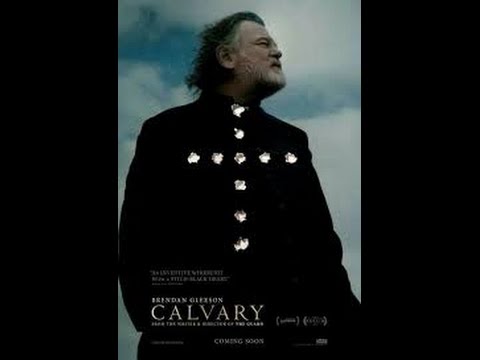
Calvary: A Sociology of a Good Man

You would think that being a good person is just pats on the back and accolades.  Rather, the cliche is too often true: "No good deed goes unpunished."

Goodness isn't the same as just being responsible.  Anyone can support their family, be a good provider. Goodness is that extra step of self-sacrifice.  It is being the parent who is gentle with the teenager when she is screaming at your face.  It is the neighbor who doesn't complain about the next door mess, but comes over to help them clean it.

Certain people are given the social position of being a mini-saint: teachers, social workers, medical workers, religious leaders. They have an additional responsibility of goodness.  They are given the task to not only work for their family or themselves, but their whole community.  They are not allowed to slip up, to say that which is inappropriate, to bend or break community standards.  They cannot scream at their objects of help, they cannot take advantage of them, or else they will rightly be accused of harming the vulnerable.  They are held to a higher standard.

Normal people compromise their standards.  That is seen as being human.  They will give up, be prejudiced, even hate, and that is fine.  They understand that being human is weak, that everyone breaks at times.  But the good person may never break, never give up.  They must always be strong in goodness, always put on a good face.  Unfortunately, this means that every good person is an implied accusation to those who get drunk, who give into their hatred, who refuse to forgive, who allow life to break them.  The good person is an offense to those who are normal.  Thus, the normal person must constantly buffer the good, to force them to display their humanity, to show that they aren't any better than anyone else.

The good are threatened, they are called names, they are accused of that which they did not do, they are given motives that they never thought of, their children are threatened, they are beaten, they have fists in their face, they are screamed at, they are hated.  They are tempted with sex, with drugs. This happens to them so they will break and show hate and prove their weakness, and so prove their humanity.

Of course, the good are human.  Every human has a certain level of will power.  Some have more and some have less.  Will can be exercised, like a muscle and it can also atrophy or be overworked and strained.  But no matter who we are, we only have so much will power to work with in our lives.  We focus our will on certain things, which means we don't have will to put into other aspects of our lives.  A surgeon might spend so much focus on precision in cutting and creativity in repairing the human body, that they might not have energy to put into being polite to their patients.   A mother may spend so much time and energy on her toddler that she doesn't have enough "get up and go" to clean the house.  We may disagree as to how a person spends their limited will and energy, but we must admit that no one can do everything.  This is why the normal person is compromised.

What is rarely known is that the good person is also limited.  It is just that they focus their will on being good to others, in being compassionate, in assisting the vulnerable.  This means that other aspects of their lives are reduced.  The priest won't spend time on fixing up his room, the pastor may not spend time with his family, the compassionate person may be addicted to pornography, the teacher uses much of the summer break recuperating from the rest of the year.

And, of course, the good person may very well break.  They might get tired of the accusations and strike back.  They might neglect their family or have an affair.  They might give way to a stroke. They might fall into severe depression or other mental illness.  They might become a hermit or become self-focused.

But what happens if a good person doesn't have any severe breaks?  What if they just move to a different community?  Or, God forbid, suddenly die?  It is then that they really become a saint to the community.  A saint is only safe after they are no longer available to be an accusation.  They can be lauded and statues can be made for them and they can be safely regarded as a community hero.  People might even change after they are gone, seeing their strength and goodness as an example.  Their struggles and difficulties are seen as a passion, a legend of their goodness.

The only loved saint is the one who is no longer there.


Sunday, August 7, 2011

Personal Thoughts on Hunger


Watching Hunger (2008) is one of the most brutal experiences of my life.  I say this as a recommendation.

Hunger is the story of Bobby Sands, an Irish Republican put in prison for political violence against the British.  While in prison, he leads protests, demanding to be treated as political prisoners—POWs— instead of just criminals.  As the British refuse, he and his co-prisoners suffer the filthiest existence at their own hands.  And then they endure forced bathings and the most inhumane searches.  Finally, Bobby Sands decides on a hunger strike, for him and his comrades.  And the horror of that fast is depicted gruesomely.

Obviously, this is not a movie for everyone.  By the end of this film I began to wonder why I was putting myself through this torturous movie.  Then I wondered why the director put in all of this amazing effort, with some amazing filmmaking talent, to put us through this experience with Bobby.  It seems that Bobby is going through some of the most terrible self-torture, and for what?  Political recognition?  For the recognition of human rights, most of which were in their grasp at any point?  To make some petty point?

But I realized that this was not a political film.  The director depicts the suffering of the guards as well as the prisoners.  The fact how everyone’s life involved was simply miserable because of this system, because of the determination of these men.

Finally, I realized what the movie is about, at least for me.  Endurance.  It doesn’t matter what Bobby Sands was fighting for, or what methods he used.  The point is simple—he was willing to go to whatever extent to obtain his goals.  He had the steadfastness to put his body through any degradation, to suffer whatever the cost, to go through any pain or mutilation in order to achieve his goals.  The ethic nature of the goals weren’t significant.  But his determination was.

And, honestly, that’s what makes any cause great.  Not the rightness of the cause, but the stark determination of the promoters of the cause.  This is what made the civil rights movement great, as well as the Indian freedom protests—they were willing to suffer all, while not causing the suffering of anyone.  This is what made the early Anabaptists great, the early Franciscans, the first century church.  They all promoted their cause to the death, while never harming another.

I am ashamed of our modern day church.  How little determination we have.  How we speak so much about “balance” and “cycles”, as if the main text of Scripture we should be living out is not the Sermon on the Mount, but Ecclesiastes 3.  We speak of the “discipline” of rest, but the fact is our lives are full of rest and we do little work for those who honestly need it.  Pastors are the ultimate compromisers, seeking salaries and retirements and office hours, instead of trusting and giving. 

I know true endurance.  I once lived it.  For fifteen years, I worked hard for the people on the street until my body, slowly but decidedly gave up on me—until my stress levels exploded.  Surely, people would say, that is the need for balance.  And I will say, no one’s body is meant to endure terrible stress for twelve or fifteen years.  We just can’t keep doing it.  Even Jesus only dealt with daily suffering for three years or so.  However, I keep it up.  Perhaps my schedule and stresses aren’t as grueling as they used to be, but I’m still out there.  Somehow.

And this kind of endurance isn’t for everyone.  It is a saintly life to support the spiritual athletes and soldiers—those who lay down their lives for the cause.  But, honestly, we are in a time of the church where those who are willing to lay their lives down for the gospel are few.  Very few. 

What is the task?  To love others, even if it means our own death.
What is the cost?  Our lives, our sanity, our family, our balance.
What is success? To make other’s lives tolerable, even at the cost of our own life.

Who is willing to endure?

Who is willing to endure?