"A movie review is a reflection of your life." -Michael Phillips
What's my spin? I'm often looking at film from an ethical (not moralistic) stance. What does a film communicate about right and wrong especially in relationships?
I have for years thought that I needed to catch up with The
Outlaw Josey Wales... but it turns out I have seen it. I don't know how long
ago, but I distinctly remembered almost every scene, and knew the general
outline of what was going to happen next. I also remembered that I didn't think
much of the film, that it seemed a pretty standard Western story (which
probably meant that I saw it when I was much younger as well, as this story
isn't especially common.)
I have to say that I'm really glad that I watched it again
because it has certainly gone up in my estimation in this viewing.
Clint plays the title character who finds himself in the middle
of the Civil War after a Union troop destroys his house, rapes and kidnaps his
wife and kills his son. When the war finishes and he finds himself on the
losing side, he cannot pledge allegiance to the Union, and finds himself an
outlaw, being chased across the land, from Missouri to Texas.
But my question about this film comes in the short
introduction that Clint, in his current aged appearance, makes to the film. He
says that it is "about the destructiveness of war"... which puzzled
me. There is a brief war montage at the beginning of the film, but almost all
of the film takes place in the aftermath of the Civil War. I believe the
director, so it caused me to reconsider what this film was really about.
Suppose it was all about war, how would it be read?
First, the situation comes as a result of war. Clint's
family is killed and he is thirsty for revenge because a group of men was given
licence to ravage uncontrollably, which really would happen only in wartime.
The betrayal of his men comes from the hatred and distrust of even honorable
men that occurs in wartime. Clint is declared an outlaw because he refused to
put the war behind him. Everywhere he went the bodies stacked up because no
matter where he was the war followed him. Even though many had put the war
behind them, he didn't because his thirst for revenge hadn't been fulfilled,
and there were many who wanted to take revenge on him. The large price on his
head was also an aftermath of the war, in which war crimes were overlooked (or
even rewarded with promotions). Because of this continuing war, Clint could
never settle down, never relax, never create a new homestead.
There are signs of peace between individuals. Hatreds can be
set aside between individuals, and battles can be agreed to be avoided between
individual leaders. But this cannot happen, it is agreed, between governments.
Governments must fight and kill the innocent because they have no choice.
[spoiler]At the end, the man whom Clint thought betrayed him declared his
peace, saying, "The war is over." But this is only because the
government's official records declared the outlaw dead. War can only end in the
face of a lie.[/spoiler]
How does this fit into Clint Eastwood's filmography and
politics? I think it is clear that Clint supports the individual right of
violence, but opposes any institutional violence. Institutional violence kills
too many innocents, ruins the independent nuclear family/homestead ideal, and
destroys lives long past the war's cessation. Clint is close to a libertarian,
seeing government as a largely malevolent force, creating a context in which
the individual is forced to be an outlaw to survive.
While the ethics and politics I might question (especially
any support of redemptive violence), I think that this film presents such an
ideal in a marvelous way. It is often subtle, and the brutality of the story is
often softened by the beauty of the landscape, not unlike The Searchers. The
cinematography and pacing is certainly reflective of Leone's influence,
although Eastwood doesn't have the patience of Leone to really develop an
intense suspense. This film is about as close as I've seen Eastwood get to an
epic film, in both theme and size of landscape.
At the beginning of I’m Not There, we are introduced to Bob
Dylan a southern black child blues singer. If you think that’s unique, given that Dylan
is a Jewish kid from Minnesota, we might
conclude that this biographical film isn’t necessarily concerned with
accuracy. And we would be right. Later in the film we are introduced to Dylan,
the poet under inquisition, the folk singer, the born again preacher, the
western hero and the rock star (played brilliantly by Cate Blanchett). To think of all these characters as one
person, in one life is dizzying, in that it is both confusing and exhilarating.
I think that I'm Not There is one of the best biography
films ever made, if not the best. It recognizes that his subject is not a
single person, able to simplify into a recognizable pattern or plot. Rather, he
is multiple people, a community, that should be represented by many characters.
I think that there are many, many people like that-- on this forum, even-- who
cannot be shoehorned into a stereotype, and to reduce them to a single
storyline is to do injustice to their whole selves.
I love how this film incorporates fantasy of a self into the
whole picture of who the man is or was. He is a hero of the West, a genius
child performer, and these fantasies informed who he was in real life. They
created a context for how he acted that "real life" couldn't explain.
The fact that the film is about Dylan isn't the point. Dylan
is just a starting point. The real point is the complexity of every individual,
the community of people that we all live with, the multiple personality
disorder that we all control, or fail to control, in unique ways.
As a film buff, it is essential that I continue to deepen my experience of film, not only recent film, but great films of the past. I am constantly learning things about film, and experiencing new genres, new directors and new cinematic ideas. Below aren't my favorites of last year, but my important discoveries of cinema this last year.
Lost Highway — If David Lynch ever made a
proper horror film, it might be one of the most frightening films ever.
He works so hard to give what we don’t expect, to make us uncomfortable.
To films a shot just a little too long, to film an empty room before the action
starts, to just undermine our assumptions to how film should work.
This is certainly one of his best, both disturbing and powerful.
The Umbrellas of Cherbourg— A bittersweet, beautiful opera.
Nightmare Alley- This is the film I will point to when I want to tell
people what noir is like.
Literary Film—Last year, I watched Bright Star, which explored poetry in
a very cinematic manner, and this year I watched The Hours and Wit, which
explores their literary pursuits in unique but fully cinematic ways. I
discovered that I love this approach to literature, not a scene-for-scene or
word-for-word reproduction, but a unique artistic take on the art. All
three of these films have a unique perspective on their artists, but they also
have an artistic quality themselves. I will seek out more films like
these.
A Star is Born—Really, this is my discovery of the amazing talent of
Judy Garland. Sure, I’ve seen The Wizard of Oz dozens of times, but in
this film my eyes were opened to her powerful presence and acting.
The Selfish Giant (2013)—This is my favorite film of this year. A powerful story, I found
myself uncontrollably weeping at it, despite the fact that the film is honest
and unmanipulative as they come.
Freaks—Not a horror film, but a brilliant ensemble piece with a powerful
cast.
Hellzapoppin—This wouldn’t make my top 100, but the freshness of the
comedy and the variety of the amazing talent left me with my mouth open.
Come and See — A gut-wrenching war film, which really tears
apart any idea of the glory of war.
Andrei Rublev — Finally, I understand why Tarkovsky is hailed as a
master. All of his films are intellectually powerful, but this is the
first film of his that didn’t bore or confuse me unnecessarily. Instead,
this is a brilliant picture of a long ago age that isn’t so terribly unlike our
own.
Hitchcock—This year I watched a number of his films that aren’t usually
included in the top five lists: Rebecca, I Confess and It Takes a Thief.
I discovered something: Hitchcock really is a great director. I couldn’t
see it in tearing apart his “great” films. But I can in simply enjoying
his “second tier” films. Every film is unique and interesting and powerful
in their own way. I can finally honestly list him as one of my favorite
directors.
Eyes Without a Face — What a creepy, wonderful film.
Tokyo Story—Powerful family drama.
Howard Hawk’s Westerns— This year I discovered the “companion” westerns
of Howard Hawks, where the center of the film is the relationship of the
men. Not much has to happen, such as in El Dorado, but it is the
characters interacting that the real entertainment lies. My favorite was
Red River, which had an important female companion as well.
The best musical scenes create a poem, a romance that
convinces us that the unreal is real. We
don’t care how unrealistic the situation is, the best musical scenes make us
believe because we long for it to be true.
It is too beautiful, too perfect not to be true. Good musical scenes stun us and take our
breath away. Perfect musical scenes
create a world that we enter for a few moments.
Red Shoes Ballet-- The Red Shoes
One of the most magnificent productions ever. It is long, taking up the whole center of the
movie, but it exemplifies what a musical scene can do, even without words. All the emotion, power and themes presented
in a single scene. Even so, the
complexity of staging and the colors create a fantasy stage world that takes
one’s breath away.
Do Re Mi- Sound of Music
Not only is this song one of the catchiest songs ever
composed, but in film it is almost a miracle of writing and editing, creating a
montage of setting, teaching and acceptance.
Everything about the legend of the Von Trapp singers are in this scene
and it re-creates them right here, village life, prodigy singing, a teacher who
is practically perfect in every way-- they got it all.
Lodi—Veer Zaara
This song perfectly exemplifies the joy and color of the
best Bollywood musicals along with a village celebration and a battle of the
sexes. When I think of Bollywood, this
is often the scene I return to.
Tonight (reprise)—West Side Story
Not the balcony fire escape scene, but near the end of the
film with all the heavies of the cast singing.
This is probably the best penultimate songs ever. At this point in the film, we have accepted
the musical world of dancing gang fights and Natalie Wood as an immigrant or
not. Now we have the original romantic
song mixed with gangs prepping for a fight and the seductress readying herself
to get her man. They are talking
themselves up and this perfectly ramps us up, ready for a exciting conclusion.
When Your Mind’s Made Up –Once
We have been following our two lead characters for half the
film getting reading to create an album, and finally, when they are in the
studio, we see them from the place of the editing booth. The editor has heard thousands of bands, and
this is one more. As the song continues,
though, he sets aside his book and begins to realize that this band is
different, and deserving of his full attention.
At this point the band amps up and gives us their full energy. Best studio scene ever.
Everybody Wants to Be a Cat—Aristocats
Honestly, the Aristocats is among the least of Disney’s
catalog (no pun intended). But when they arrive at the “pad” and the music hits
us, we realize we are in for something fun.
As we are introduced to the new characters, we really warm up. The song is so infectious and builds up to
such a peak, we find ourselves singing it long after the film is over. A meter of racism is uncomfy, but it passes
quickly and then we are bouncing and giggling and the colors flash and… yeah,
man.
Barn Dance—Seven Brides for Seven Brothers
It amazes me how much sexual tension you can put in a film
that’s really a G-rated musical. The
tension of the seven brothers finally explode in their competition with the
other men of the town at the barn raising.
The dance itself begins tame and builds up to a level of circus
acrobatics. Eye-popping and entertaining
to the highest degree.
“I was hearing the voice of God”—Amadeus
Amadeus combines some of the most magnificent music ever
written with commentary on the music and the human being filled with longing
and religious jealousy that combines to a sweet complexity. It is no wonder so many people thought that
the story was really true.
Candy Colored Clown—Blue Velvet
It is common for musical scenes to express joy, exhilaration
or spectacle, but they rarely express dread.
With no context, there is not much happening in this scene, but in the
film, we are just waiting for everything to explode. Dennis Hopper provides the omnipotent
backdrop of a violent lunatic which gives a new emotion to the Roy Orbison
classic.
Lose That Long Face—A Star is Born (1954)
Judy Garland’s marriage is breaking up, but she must perform
and the song she has to perform is that of a superficial joy despite
sorrow. She smiles and dances and
clowns, but her depression is seen in the corner of her eyes, belying the joy
she is supposed to exude. A mix of
emotions that causes us to cry instead of smile, as we are commanded.
Next to Last Song –Dancer in the Dark
This is the final scene of the film, Dancer in the Dark, so
you might want to skip this description if you haven’t seen the film. Bjork is dying for her love of her son, her
care for her manipulative neighbor. She
isn’t strong enough to deal with this last scene, but once she realizes that
her death leads to her son being able to see, she can once again be the heroine
of her own musical. She bolts out, “This
isn’t the last song” and we weep at the abuse the world heaps on her.
O Death—O Brother Where Art Thou?
A Klu Klux Klan rally where a black man is about to be
lynched is spooky. But when the head of the Klan begins singing the standard O
Death with Ralph Stanley’s weak and cracking voice, we wonder if the lynching
isn’t about a perverted sense of justice, but a human sacrifice. And when the Klan begins marching to the beat
of the song, it’s simply surreal.
77 Other Great Musical Scenes (in no particular order):
Spoonful of Sugar—Mary Poppins
Train Scene—Music Man
Chim Chim Chimery/Step in Time—Mary Poppins
Empty Spaces—Pink Floyd The Wall—Empty Spaces
Singing in the Rain—Singing in the Rain
I Dreamed A Dream –Les Miserables
Linda Linda—Linda Linda Linda
New York New York—Shame
Bye Bye Life—All That Jazz
Molasses to Rum –1776
Music Box Dance—Chitty Chitty Bang Bang
Opening credits –Skyfall
Be Our Guest—Beauty and the Beast
I Won’t Dance –Swing Time
Treat Her Right—The Commitments
Falling Slowly—Once
Always Look on the Bright Side of Life – Life of Brian
The Man That Got Away—A Star is Born
Hunchback of Notre Dame—Hellfire
Rainbow Connection—The Muppet Movie
I’ve Seen It All—Dancer in the Dark
Isn’t It a Lovely Day—Top Hat
An American In Paris—Tap Dance
My Beloved Monster—Shrek
Do You Want To Build a Snowman?—Frozen
I’ll Try—Return to Neverland
Love on the Rocks—The Jazz Singer
When Somebody Loved Me—Toy Story 2
Thus Spake Zarathustra –2001: A Space Odyssey
You Make My Dreams Come True –500 Days of Summer
This Is Halloween—The Nightmare Before Christmas
Man or Muppet?—The Muppets
I Will Follow Him –Sister Act
That’s How You Know –Enchanted
The Lonely Goatherd—Sound of Music
Prince Ali—Aladdin
Yeh Duniya Agar Mil Bhi Jaye To—Pyaasa
Don’t Rain On My Parade –Funny Girl
Little Town—Beauty and the Beast
Unchained Melody –Ghost
Honor to Us all—Mulan
Parade—Ferris Bueller’s Day Off
Topsy Turvy—Hunchback of Notre Dame
Love Is An Open Door—Frozen
Yeh Tara Woh Tara—Swades
Putting on My Sunday Clothes—Hello Dolly
I Just Can’t Wait To Be King—Lion King
We Got Trouble—Music Man
Over the Rainbow—Wizard of Oz
With One More Look At You/Watching Me Now—A Star is Born
1976
Why don’t you do right –Who Framed Roger Rabbit
Poor Unfortunate Souls—Little Mermaid
On Broadway—All That Jazz
Gee Officer Krupskie—West Side Story
Babysitter’s Blues—Adventures in Babysitting
Hey Big Spender—Sweet Charity
The Hills Are Alive—Sound of Music
Beauty School Dropout—Grease
Circle of Life—Lion King
Que Sera Sera –The Man Who Knew Too Much
French Club Dance –Funny Face
A Clockwork Orange—Singin In the Rain
Musical Aliens –Close Encounters of the Third Kind
Slacker was the first Richard Linklater film I saw. It was one of my earliest art films, and I
saw it in an old theatre in Portland. It
was a strange film, and strangely opened my eyes to a new kind of art. A number of people lecturing about freedom
and alternative lifestyles, each from their own perspective. Really, Waking Life wasn’t that different,
with spooky animation and the theme being what life is all about. But despite the different ideas floating
around, they both seemed to be largely disconnected from reality. So different from Linklater’s films School of
Rock or Bernie or even Tape—those may not have been conceptual films, but they
were grounded, in a narrative. The
Before movies were in between these two extremes, leaning toward the
talking. They were idea movies in a
specific context. Dazed and Confused was
an event film, but leaning more toward conversation than, say, Bernie.
In Boyhood, Linklater I believe, captures the perfect balance
between idea and narrative. He draws in the nostalgia, the narrative, the real life
drama, the conversation, the romance, the conceptual conversation, all in one
perfect film. Dang, I used the “p” word,
didn’t I? Let me back off from that for
a moment. What I really mean is that I
feel that Linklater has been aiming at some goal all these years, experimenting
and crafting amazing films which reach a balance between concept and narrative
and I feel that he finally hit the bullseye.
Finally, he has truly connected with me emotionally. Not because I recognized the scenes and
cultural background of Mason’s life. His
is the generation of my children, not of me.
And I have never had to deal with all that relationship drama or
dating. The film hits the emotional
target because it honestly draws me in by making these people real, and their
lives real, not by hyperdramatized moments, but through visiting this family
again and again over a period of years.
I just feel that I know these people.
Not just who they are in a moment, but who they became over time. So the final scenes of Mason with each of his
parents were real emotion, with real power.
The question Linklater wants to answer in Boyhood—possibly the
only question he has ever asked in his films—is “what is life about?” In the conversation, we learn that life is
not about the education we receive, the jobs we get, the relationships we have,
or the ideals we live by (or claim to live by).
Even though we label ourselves through these things: we are the spouse of so and so, we “do” this
job, we have this degree—that’s not what really matters. It doesn’t even matter what we intend to do
or how we spend our days. Rather, life
is about the moments, the people, the events, the dreams that capture us and
drag us along with them.
Life is the
parent who is always there, always supportive, always cheering us on. Life is not about the person we become
infatuated with, but the person who “gets us” and waits for us while we learn
to mature. Life isn’t about our biggest
vision, but the one that we pursue for year after year, even if we never make
our money from it. Life is not about the
education we pursued for years, but about the knowledge that changes us, makes
us the people we are, the people perhaps we were always meant to be. Life isn’t about the stuff we gather, but
what really is important to us, those with whom we live day in and day out, and
the things we interact with that shape our being. Sometimes the most important thing in our
life is the small, offhand comment that seemed so insignificant, but it changed
us in ways we never would have thought possible. It is not just the day-to-day, it is the
everyday. It isn’t the drama, it is the
small love that lasts over years that’s most important.
I don’t feel that Linklater has been so focused on one
concept Instead of trying to show big ideas compressed into a brief moment in
time—a single night, a point in the history of a human life—Linklater succeeds
by showing us the whole span of a family. We cannot understand the scope of human
existence until we experience that scope.
In less than three hours, Linklater gives us that span and communicates
what is to be focused on.
The film itself is full of bright cinematic spots. For the first two thirds of the film, every
time Ethan Hawke showed up, the screen lit with his energy and enthusiasm. Even at the end, he sparkles, understanding
better than anyone in the cast exactly what Linklater wants. Both Ellar Coltrane and Patricia Arquette faltered
at first, but they grew into their roles, owning them and helping us experience
the growth of their characters. Some of
the scenes, like Olivia taking her children away from an abusive situation, and
the self-important teacher giving an ineffectual “darkroom chat”, will remain
with me forever. But most importantly
to me is the living philosophy that we had opportunity to experience, not just
hear a discussion about.
I think Linklater has always tried to give us a thoughtful
philosophy, to try to measure all of us and human existence in one of his
films. Finally, I believe that he
succeeded.
You would think that being a good person is just pats on the back and accolades. Rather, the cliche is too often true: "No good deed goes unpunished."
Goodness isn't the same as just being responsible. Anyone can support their family, be a good provider. Goodness is that extra step of self-sacrifice. It is being the parent who is gentle with the teenager when she is screaming at your face. It is the neighbor who doesn't complain about the next door mess, but comes over to help them clean it.
Certain people are given the social position of being a mini-saint: teachers, social workers, medical workers, religious leaders. They have an additional responsibility of goodness. They are given the task to not only work for their family or themselves, but their whole community. They are not allowed to slip up, to say that which is inappropriate, to bend or break community standards. They cannot scream at their objects of help, they cannot take advantage of them, or else they will rightly be accused of harming the vulnerable. They are held to a higher standard.
Normal people compromise their standards. That is seen as being human. They will give up, be prejudiced, even hate, and that is fine. They understand that being human is weak, that everyone breaks at times. But the good person may never break, never give up. They must always be strong in goodness, always put on a good face. Unfortunately, this means that every good person is an implied accusation to those who get drunk, who give into their hatred, who refuse to forgive, who allow life to break them. The good person is an offense to those who are normal. Thus, the normal person must constantly buffer the good, to force them to display their humanity, to show that they aren't any better than anyone else.
The good are threatened, they are called names, they are accused of that which they did not do, they are given motives that they never thought of, their children are threatened, they are beaten, they have fists in their face, they are screamed at, they are hated. They are tempted with sex, with drugs. This happens to them so they will break and show hate and prove their weakness, and so prove their humanity.
Of course, the good are human. Every human has a certain level of will power. Some have more and some have less. Will can be exercised, like a muscle and it can also atrophy or be overworked and strained. But no matter who we are, we only have so much will power to work with in our lives. We focus our will on certain things, which means we don't have will to put into other aspects of our lives. A surgeon might spend so much focus on precision in cutting and creativity in repairing the human body, that they might not have energy to put into being polite to their patients. A mother may spend so much time and energy on her toddler that she doesn't have enough "get up and go" to clean the house. We may disagree as to how a person spends their limited will and energy, but we must admit that no one can do everything. This is why the normal person is compromised.
What is rarely known is that the good person is also limited. It is just that they focus their will on being good to others, in being compassionate, in assisting the vulnerable. This means that other aspects of their lives are reduced. The priest won't spend time on fixing up his room, the pastor may not spend time with his family, the compassionate person may be addicted to pornography, the teacher uses much of the summer break recuperating from the rest of the year.
And, of course, the good person may very well break. They might get tired of the accusations and strike back. They might neglect their family or have an affair. They might give way to a stroke. They might fall into severe depression or other mental illness. They might become a hermit or become self-focused.
But what happens if a good person doesn't have any severe breaks? What if they just move to a different community? Or, God forbid, suddenly die? It is then that they really become a saint to the community. A saint is only safe after they are no longer available to be an accusation. They can be lauded and statues can be made for them and they can be safely regarded as a community hero. People might even change after they are gone, seeing their strength and goodness as an example. Their struggles and difficulties are seen as a passion, a legend of their goodness.
The only loved saint is the one who is no longer there.
I've finished watching all of the Coen Brothers, so it's
time to rank!
I think I like Ethan over Joel, personally. Wait, we are ranking the films, not the
brothers... sorry, forgot.
There is so much to love about the Coens. Their quirky sense of humor; their unique,
often confusing storytelling; their use of analogy; their literary view of
filmmaking. There are some things I
don't like: the fact that they almost never have likable characters (the Dude
is a huge exception), and people being mean is a theme in their films (in
Intolerable Cruelty, that's the whole film).
If I was going to summarize their films under one category,
I'd say that they all are reflections on how to live. Their more existential pieces, like A Serious
Man, Inside Llewyn Davis and Barton Fink, emphasize existential action,
especially action that shows caring for other people. Raising Arizona shows how foolish action can
sometimes be detrimental, but it is better to act according to ill-informed
concepts than to be passive, or to pull the rug out from other people's
lives. It seems like a simple philosophy
of life, but when we look at their filmography as a whole, it is richly and widely
displayed. Whether comedic or tragic, I
love (almost) all their films and I look forward to their next one, whatever it
may be.
1. A Serious Man
The nature of truth and the meaning of life in one
entertaining yarn. One of my favorite
films of all time. 5/5
2. Barton Fink
A mysterious fable about a writer in his own personal hell.
5/5
3. Raising Arizona
A hilarious take of two loving parents of someone else’s
kid. 4.5/5
4. Fargo
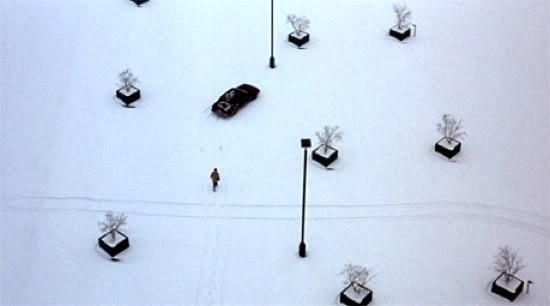
Everything that makes a Coen Bros. film great—crime, comedy,
stupidity, and a slight philosophical twist. 4.5/5
5. O Brother Where Art Thou?
A simple comedy about simple men with some of the best music
ever. 4/5
6. Blood Simple
A wonderfully simple story with twisted characters. Far more entertaining than a crime film has a
right to be. 4/5
7. No Country for Old Men
Dark and darker still.
Tough to crack a smile at the foreboding message. 4/5
8. The Big Lebowski
A cult favorite, but nothing more than a quirky, curious
entertainment for me. 3.5/5
9. Inside Llewyn Davis
“A Serious Man” with no character to really appreciate but
the music. 3.5/5
10. The Ladykillers
Broad comedy for a broad religion. (Don’t tell anyone, but I
really laughed hard at this one) 3.5/5
11. True Grit
Some good performances, but no one can really replace the crackle
in the original. 3/5
12. Miller’s Crossing
A dark crime story that didn’t do much for me. 3/5 (need to rewatch)
13. The Man who Wasn’t There
I can barely remember anything about this one. It’s about a barber, right? 3/5 (need to
rewatch)
14. The Hudsucker Proxy
Lots of movie references, but Tim Robbins and it’s general
unfunniness left me uninspired. 3/5
15. Burn After Reading
Unpleasant people doing stupid. 2.5/5
16. Intolerable Cruelty
Unpleasant people doing mean. It was intolerably cruel of myself to force me to watch this film, just for completion's sake. 1/5