Showing posts with label The Coen Brothers. Show all posts

Wednesday, May 25, 2016

The Coen Religion in O Brother Where Art Thou

"O Brother Where Art Thou?" is the title of the movie that was going to be made in the film Sullivan's Travels, a film about the depression, poverty and reality.  Well, it's close.  I am watching the film for the third time, but each time that I watch it, I gain insight.

The Coens' claimed that they were deeply influenced by Homer's Odyssey in the writing of this film, although they had never read the poem fully.  I'm sure they read a summary.  But deeper than this, they were interested in placing their own philosophy of life in the film.

Homer's Odyssey:
Our Ulysses is on the run from the law, just as Odysseus was running from Poseidon.   Like the epic poem, the gods of O Brother are capricious and fickle-- we have the governor of Mississippi, his opponent in the coming election and the representative of unmerciful justice.  There is a debate in the film as to whether there is another, all-powerful god over all these other human.  The power of these gods are not magic, but music, which can stir the hearts of humans and create powerful actions to occur.  Ulysses is fated to the poorest luck possible, just as his epic counterpart.  He and his travelling companions are beaten, tricked, betrayed, and run into the worst of characters-- one-eyed monsters, women intent on their destruction, and chased by powers of destruction.  Finally, they find that they have their own music that can guide their own fate, which leads Ulysses to his true treasure-- his family and his wife who is being wooed by another man. Through the power of a merciful god?  Or fate? Or luck? Ulysses achieves his goal-- home and hearth and family.   Perhaps.

Coens' philosophy:
The Coens' philosophy begins with a universe that cannot be determined.  Is it God?  It is fate?  Is it luck?  Whatever the case, for the most part we are all a sad sack, trapped in a cycle of bad luck.  The way to move ahead is to grasp onto our fate, to take action in every moment that it presents itself. That action might be theft, it might be earning money, it might be working with people who are perhaps unsavory.  But we will never achieve the next step we need in life unless we keep moving.  Death is stillness, passivity, inaction.  Only when we keep acting do we know who we are.  And when we keep making those steps, we find that the universe isn't opposed to us, but in the end it fits together, for the best.  And the best for us is home, hearth and family.


Besides the themes of this film, the music is marvelous.  This is one of my favorite soundtracks of all time, brilliantly produced by T Bone Burnett.  I listen to the music all the time so it is so wonderfully familiar when it appears between the cracks or in the forefront of the film.  Each song is the magic of the film: not just the tone, but the power of each scene, the sound of the god or monster shaking the universe, all attempting to fruitlessly force their own will upon humanity.


Sunday, February 21, 2016

Is Hail, Caesar! Worth the Suffering?

In my mind, there are three general types of Coen Bros. films:
a. crime
b. comedy
c. existential
    ...or some combination of these.

I think Hail, Caesar is some mix of the last two categories. On the surface, it is all comedy with a love-letter/critique of golden age Hollywood. The five mini-films included are perfect renditions of the classic genres, all with a comic twist. And there is a perfect comedy routine between Ralph Fiennes and Alden Ehrenreich, which although given in a trailer is still a joy.

In the end, however, the meaning is existential. The bookends are of Eddie Mannix, the historic "fixer" of MGM studios, (not a good man, in any way) in confession, attempting to reconcile himself with his sins. The struggle is whether small bad acts can add to a good end.

And anyone looking at the history of Hollywood could easily question whether movies are worth it. Lately I have been pouring over thepodcast You Must Remember This where Karina Longworth goes through the"hidden or lost history of Hollywood of the Twentieth Century", in aset of audio essays, brilliantly told. But the stories she tells are dark, at times disturbing. Like the story of Eddie Mannix. All these broken marriages, all this money spent for lighthearted fluff, all these twisted lives-- are the movies we enjoy worth it?

I suppose the Coens ask themselves the same question. All the money they spend for their films, all the hurt, all the hardship... is it worth it? To a certain degree, I think they are giving themselves a cop-out-- sure, guys, compared to participating with the atomic bomb, making movies is a much better occupation.

But is it better than spending the same money on the homeless, on AIDS victims, on immunizing the world's children, on providing clean drinking water? Can the billions we spend on movies be better spent?

For the Coens, I'd say the answer is a clear "yes." In the end, there are a lot of bad things that go into making films, including the amount of money spent, but there is a "spiritual message" a heroism, an opening of the conscience that we might not be able to get any other way. There is a cost, sometimes a horrible cost, but in the end, it's all worth it for that message.

I am still torn. Admittedly, I spend a moderate amount of personal dollars on movies and personal time. I do that so that I can get a break from my other work, to "forget about life for a while." I think about the end message of Sullivan's Travels, that movies provide joy for the joyless. But are they just an opium for the masses? An evil, although small, that could do more, that harms some, but we accept because of the small good they produce? It is entertainment we receive worth the megalomania of Lars Von Trier and Errol Flynn? Is it worth the destruction of the Madonna/Sean Penn marriage, the downfall of Judy Garland?

What about the children, the grown-ups who take movies as a blueprint for their misguided lives?  Me included?

But aren't movies, and the celebrities they inevitably create simply a microscope of the lives and thoughts we struggle with as society? An opportunity to see the result of our thoughts on a big stage? The outgrowth of philosophies we actually hold to? In movies we can see the result of the redemptive violence philosophy, both good and bad. In movies we can see the romance myth encouraged and debunked. In movies are laid out bare the cowardice and hopes of all humankind.


I'm not the one to say whether movies are moral or not, I guess. For now, they are here to stay and they are essential to my life and many others. I guess, in the end, I have to say that they are important to me. After all, were it not for a movie, I would have never had this reflection.

Sunday, January 4, 2015

Philosophy of Action: Coen Brothers Ranked

I've finished watching all of the Coen Brothers, so it's time to rank! 

I think I like Ethan over Joel, personally.  Wait, we are ranking the films, not the brothers... sorry, forgot.

There is so much to love about the Coens.  Their quirky sense of humor; their unique, often confusing storytelling; their use of analogy; their literary view of filmmaking.  There are some things I don't like: the fact that they almost never have likable characters (the Dude is a huge exception), and people being mean is a theme in their films (in Intolerable Cruelty, that's the whole film).

If I was going to summarize their films under one category, I'd say that they all are reflections on how to live.  Their more existential pieces, like A Serious Man, Inside Llewyn Davis and Barton Fink, emphasize existential action, especially action that shows caring for other people.  Raising Arizona shows how foolish action can sometimes be detrimental, but it is better to act according to ill-informed concepts than to be passive, or to pull the rug out from other people's lives.  It seems like a simple philosophy of life, but when we look at their filmography as a whole, it is richly and widely displayed.  Whether comedic or tragic, I love (almost) all their films and I look forward to their next one, whatever it may be.

1. A Serious Man
The nature of truth and the meaning of life in one entertaining yarn.  One of my favorite films of all time.  5/5

2. Barton Fink
A mysterious fable about a writer in his own personal hell. 5/5

3. Raising Arizona
A hilarious take of two loving parents of someone else’s kid.  4.5/5

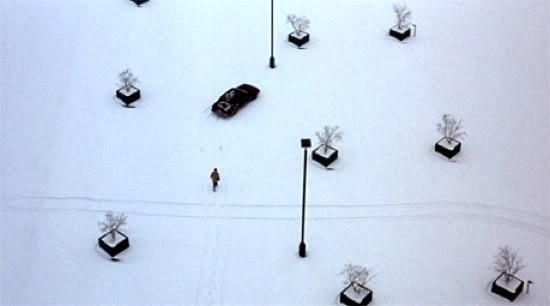
4. Fargo
Everything that makes a Coen Bros. film great—crime, comedy, stupidity, and a slight philosophical twist. 4.5/5

5. O Brother Where Art Thou?
A simple comedy about simple men with some of the best music ever. 4/5

6. Blood Simple
A wonderfully simple story with twisted characters.  Far more entertaining than a crime film has a right to be. 4/5

7. No Country for Old Men
Dark and darker still.  Tough to crack a smile at the foreboding message. 4/5

8. The Big Lebowski
A cult favorite, but nothing more than a quirky, curious entertainment for me.  3.5/5

9. Inside Llewyn Davis
“A Serious Man” with no character to really appreciate but the music.   3.5/5

10. The Ladykillers
Broad comedy for a broad religion. (Don’t tell anyone, but I really laughed hard at this one) 3.5/5

11. True Grit
Some good performances, but no one can really replace the crackle in the original. 3/5

12. Miller’s Crossing
A dark crime story that didn’t do much for me.  3/5 (need to rewatch)

13. The Man who Wasn’t There
I can barely remember anything about this one.  It’s about a barber, right? 3/5 (need to rewatch)

14. The Hudsucker Proxy
Lots of movie references, but Tim Robbins and it’s general unfunniness left me uninspired. 3/5

15. Burn After Reading
Unpleasant people doing stupid. 2.5/5

16. Intolerable Cruelty
Unpleasant people doing mean.  It was intolerably cruel of myself to force me to watch this film, just for completion's sake. 1/5

Saturday, March 1, 2014

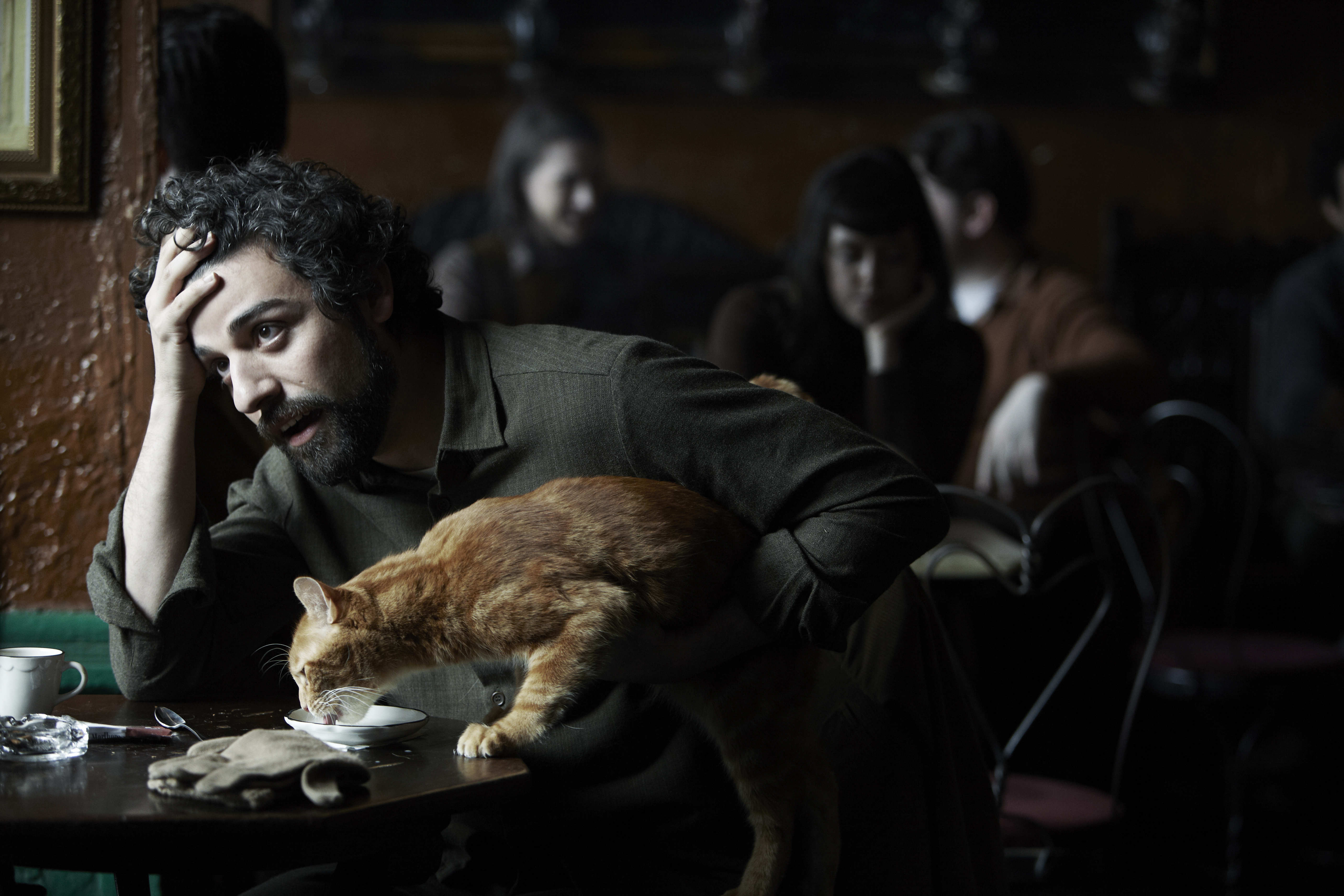
Llewyn Davis: A Serious Man

Inside Llewyn Davis has received a lot of critical acclaim, but probably more about the soundtrack by T Bone Burnett than by the film by Joel and Ethan Coen.  Like many of the Coen Bros. films, there are unlikable people, but less of the quirk or the criminal that keep people interested.  Instead, it is the story of a wandering performer, following his wandering and his interactions between a variety of girls, musicians, managers, and music admirers.  It just doesn’t seem as entertaining as many of the Coen’s films. 

I believe that it is one of Coen’s “message” films, with a symbolic plot.  And it deals with many of the same themes and ethical queries as their previous film A Serious Man.   Before I discuss the themes of Llewyn Davis, I’d like to spend some time on A Serious Man and the themes in that film.

Warning: there are serious spoilers ahead.

A Serious Man takes place in 1967 and is the story of Larry Gopnik, a Jewish professor whose life is falling apart.  His wife is leaving him for another man, he is bribed and then threatened by a student failing his class, his brother is accused of various legal issues and his son, who is about to have his bar mitzvah, is a first class jerk.  He feels that his life is falling apart, and he doesn’t understand why.  After all, “I didn’t do anything.”

The film makes it clear that his main problem is just that: He isn’t doing anything.  He is so passive that he is allowing others to enact evil around him without taking any action against it.  He is just moving from one bad situation to another, which he neither created nor did anything to prevent. 

A central theme in the film is the situation in which a being is neither one or the other, but in stasis.  This is introduced with the story of Schrodinger’s cat, who is in a box, in a state of both being alive and dead, until the box is opened and then it is either one or the other state.  Even so, there are many situations in the film which is neither here nor there.  Larry is married and not married.  His wife is both married to him and to Sy.  F Troop is both on and off.  And the rabbi at the beginning of the film is both a dybbuk (a ghost/demon) and is not.

What changes all of these situations is direct action, which Larry won’t take.  He just wanders from person to person, being pushed or led or advised, while he never does anything.

The main conclusion to this theme is found in the conversation with the senior Rabbi, whom Larry is unable to speak with, but his son, having just had his bar mitzvah, could speak to the Rabbi.  Rabbi Marshak quotes from Jefferson Airplane, as if their lyrics were Torah—the word of God--, “When the truth is found to be lies and all the joy within you dies…” and he expects Danny, a student of the Torah, to come up with the next line.  And that line is the center point of the movie: “Don’t you want somebody to love, don’t you need somebody to love, wouldn’t you love somebody to love, you’d better find somebody to love.”

The issue in the film is that each person is either passive or doing evil to others around them.  The film is about why there is evil in the world, and the answer is: because too few people are actively loving.  Everything is in stasis because some are passive, and there is evil because some are acting out evil against their fellow man.   But if the passive would actively stop the evil and begin to actively love, then evil would no longer reign in the world.  But, instead, we live in a world of selfishness and inaction.

Okay, now we are ready to talk about Inside Llewyn Davis.

Llewyn isn’t exactly passive the way that Larry is in A Serious Man.  Llewyn is a travelling musician, trying to make a career for himself, attempting to get gigs and to get money for his album.  But something seems to be stopping him. 

As a “mistaken” line in the film shows, Llewyn is the cat whom he happens to be carrying around with him. And the cat is neither here nor there, neither this nor that.  Assuming that the cat is the same one throughout the film, it is both male and female, both housed and wandering (it’s name is Ulysses, the epic wanderer), both alive and dead.  Just like Schrodinger’s cat.  And so is Llewyn.  He acts and makes decisions, but they never accomplish anything.  Even when he decides to give up on his music and become a merchant marine, he find that he is unable to.  What is his problem?

His problem is his lack of connection with other people, his lack of love.  He never stays in any one place, he never grows roots.  He impregnates two girls, but he never becomes a father, either through abortion or because he doesn’t follow through.  He agrees to not receive credit for a song he helps record.  He used to have a partner, but his troubles start when his partner commits suicide.  He is invited to join a trio, but he refuses.  And when he is invited, the theme of the movie is spoken to him by a nightclub manager (quote is approximate): “You’re an okay singer, but you’re no good on your own.”


Like A Serious Man, Inside Llewyn Davis is a study of a man who thinks he can live his life without pursuing love.  Through these negative examples, the Coens hope to prod us toward love.

In the end, I think that A Serious Man is a better film.  The characters are more compelling and Larry's plight really draws us on, while Llewyn just seems kind of pathetic.  Also, A Serious Man weaves a variety of stories on their theme, allowing us to see a number of perspectives, while Llewyn Davis is a more straight forward (and less interesting) approach.  I like them both, but only one makes my top 100. 

Wednesday, June 20, 2012

What Does a Great Director Look Like?


Stanley Kubrick on a good day
What exactly does a director do?  A film can be a massively complex jigsaw puzzle.  There are actors, writers, producers, studio execs, cinematographers, special effects: both physical and digital, sound, music, props, make up, clothing, editing, lighting, catering, cameras, location, assistants, and more and more and more.  The director takes all of these details and works them all toward a (hopefully) coherent whole.   This is an amazing job, one that makes me wonder if it is humanly possible.  Obviously it is, with a lot of help.   What really amazes me are the directors who can produce one (or more!) films a year.  Woody Allen is a workhorse.  Johnny To is a madman.

So being a director is a difficult job, no matter whether you produce an art film, a blockbuster or something in between.   I think to call any director a “hack” isn’t fair.  Every director has a difficult job.  Some are just studio directors, producing whatever the studio told them to make—but even a studio director could be Victor Fleming who directed both The Wizard of Oz and Gone with the Wind the same year.  I don’t think any director is really lazy.  Kevin Smith might come close, but he’s such a good writer that we forgive him.  And besides, Red State wasn’t lazy directing at all.

But what makes a great film director?  What makes a director stand out from the pack?  We know a great director when we see their body of work, but what exactly does a great director do that others do not?  Below are a list of characteristics that I think great directors have:

1. Unique vision
It's a Wonderful Life
First of all a great director has a vision with the film he is creating.  Sometimes the same vision extends to different films, and sometimes a director has a different vision for each film.  Most importantly, each film has something that makes it special, that causes it to stand apart from all other films, and to be a glorious example of filmcraft.  Constantly working directors sometimes have a vision that is clearer in one film than another (everyone has a bad year), but still, a great director’s work stands out.   Frank Capra had a unique vision: that of the everyman changing the world despite opposition, and it made his films stand out in the midst of hordes of everyday films being produced in his time.

2. Theme
Three Colors: Blue
A great director isn’t just telling a fairy tale with a simple plot and a straightforward telling, but she or he has a theme or themes that run throughout the film, adding depth and power to the plot or characters.  Krystof Kieslowski often had simple plots with deep themes that ran through the visuals, the music, the characters and the sometimes odd events that occurred in his films.


3. Communication
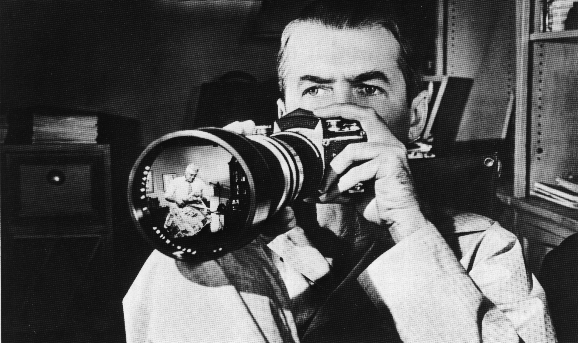
Rear Window
A good director often has themes and a unique vision, but he or she might have difficulty communicating this to his audience.  Part of this is knowing who your audience is, but a larger part is using all the complex pieces to make a coherent, never-before-seen whole that makes sense to the audience.  Hitchcock was brilliant at communicating his themes in often unique ways, using details to sometimes obviously and sometimes obliquely communicate his vision and themes.

4. Connection
The Godfather
The final aspect I want to emphasize is that a great director knows how to take all of these film pieces and to connect to his audience.  Not just that he touched them emotionally—a cat video could do that.  Rather, she or he gives his audience a memorable experience.  This director’s film isn’t just communication, it is magic.  He or she can take their work and make it a part of their audience’s life.  Their work becomes a reference point for other experiences, and the film is now a part of real life.  Even though a Mafia family is leagues away from most of our experience, the Corleone family is a part of our cultural heritage, and their unique morals and habits are a part of everyday conversation, to make us understand the rest of our world better.  “Corleone” is even in my Google spell check, for which I am very grateful.

Let's look at some directors who, I believe, are at the top of their game right now:

Howl's Moving Castle
Hayao Miyazaki—Some may say that an animator has less details to worry about.  However, those who understand animation knows that the director’s job is just as difficult to do well.  Miyazaki is a master of writing and direction. Even in his mediocre works (Lupin III; Kiki’s Delivery Service), his approach is fresh and fun.  In his masterpieces (Mononoke, Spirited Away) he is unlike any other director, yet a compelling storyteller.  At times, Miyazaki doesn’t communicate well because his stories are so foreign to us non-Asians.  Nevertheless, he wins most of us over in time because his very unique vision and compelling themes, as well as his characters that we enjoy spending time with.

Barton Fink
The Coen Brothers—I don’t appreciate some of their classic works as much as some (The Big L, Miller’s Crossing), but it doesn’t matter.  The Coens have a unique approach to storytelling, as well as unusual morals.  I have my favorites (A Serious Man, O Brother Where Art Thou, Barton Fink)… but so does everyone, and everyone’s favorites are different.  That’s a great director. Because they are both unique, but they communicate something to (almost) everyone.

Days of Heaven
Terrence Malick—Malick is a great director not just because of his message,  which is interesting, or the manner of his communication, which is unique (although sometimes hard work), but his method of creating film.  He, more than any other, takes the editing stage of filmmaking as a creative process, and by the end of his editing he may have a completely different film than the plan before the editing.  All the filming and the music are less communicating a narrative, but a concept and the film and even the plot are just resources for  him to use as toward the finished product, which isn’t realized until long after filming.  Again, that is a powerful director.

Wendy and Lucy
Kelly Reichardt—I think that Reichardt has the most unique vision of the current group of independent makers of low budget films (Miranda July might come close to that).  The stories are small and quiet, but the emotional resonance is deep and powerful.  She wants you to walk with her characters, to live their lives for a few days, even the silences and the confusion.  In this way, she hopes to teach us compassion and perspective.  I think this is powerful communication that is more than just telling a narrative.  It is throwing us in the deep end and hoping we will learn to swim.


Vera Drake
Mike Leigh—I have spent time with more real people through Mike Leigh than any other filmmaker.  Like Kelly R, Leigh throws us in the deep end of a community’s life and asks us to swim.  But the swimming isn’t deep, and often very pleasant, with only the occasional shark to gnaw on our legs.  He is a powerful filmmaker, the Michael Powell of our generation, always giving us what we don’t expect.  I can’t wait to see another film by him, which is as high a praise a director could get, I suppose.

Cache
Michael Haneke—Finally, the man who makes dramas that feel like horror films. He has a singular vision, and he seems to be determined to dismantle society bit by bit.  Everyone seems so normal, so typical, so pleasant until they are not and the underbelly of proper society is revealed.  But he also throws a generous helping of Hitchcock, presenting us with a puzzle or two that we might not ever solve.  Nor do we necessarily have to.  And if we did, we think we might exhaust ourselves.  So Heneke, for his singular vision and disturbing experiences goes on the list.