Showing posts with label 2015. Show all posts

Sunday, June 19, 2016

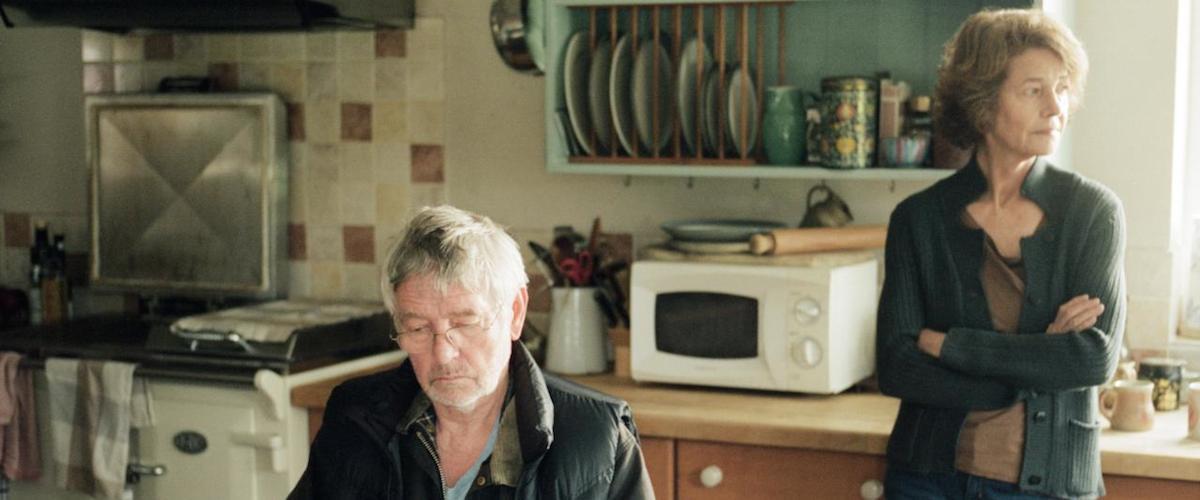
45 Years

"Muted cries and echoed laughter, banished dreams that never sank in sleep/Every ghost that calls upon us brings another measure in the mystery..." -Dan Fogelberg


Can the spirits long past, ghosts of who we once were, haunt us so impressively that our future is irrevocably transformed? The past selves are never disappeared ages ago, for our former selves has made us who we are. Without them there is no us. And our feet are forever trapped in the clay of our former actions, beliefs and experiences.

My real question about the film is that an event in the far past, overwhelmed by a lifetime of memories, settled arguments and decisions to remain... would the memories, no matter how potent, really cause such an earthquake?

Almost perfect acting by the two leads.

Thursday, January 28, 2016

The Justs: The Best Films of 2015

Best Horror Film
For most people, this would be hands-down given to It Follows, which has an interesting premise, but, in my mind, doesn’t end in an interesting way at all.  While What We Do in the Shadows is certainly a contender, it works far better as a comedy instead of a horror. No, this year the movie that truly frightened me wasn’t a fiction film at all, but the documentary film The Nightmare.  It describes the night terrors of a number of people, who are scared horribly, but they cannot awake.  While it is on the surface about the condition called sleep paralysis, it draws us into the experiences of those who suffer from it, helping us understand their nightmarish existence.

Nope.
Best Award for Star Wars: The Force Awakens
Star Wars must be mentioned.  Rebooting the series is an accomplishment, as is topping the boxoffice  the U.S. (even though Avatar will retain the worldwide boxoffice).  It was a good film, entertaining, and a fine beginning to what I expect to be a good series of films.  But it wasn’t great and there was nothing remarkable and little original about it.  However, one aspect of the film deserves high praise: the hype that was created before the film came out.  Advertisements, leaked “information”, stills, casting, all were displayed with such skill as to play all the fan-boys and –girls with ultimate finesse, stirring up excitement to a money-making frenzy.  And so I award Star Wars: The Force Awakens with Best Marketing.  Good job, folks.

Best Animated Film
I had much more anticipation of this category than realization.  Studio Ghibli gave a lackluster showing with When Marnie Was There, Anomalisa was not as busy with ideas as I expected a Charlie Kauffman film to be, Inside Out was quite good, thoughtful, but didn’t stir my emotions despite the subject matter.   The only animated film that gave me exactly what I was looking for was Minions, which allowed me some guilt-free chuckles on the level of juvenile humor.  But one film went beyond my expectations and entertained me in a thoughtful way even while dissuading me from hope for the future: World of Tomorrow.  Sixteen minutes of genius.

Best Hidden Twist
The Visit gave us a fine surprise ending in the midst of a horde of movies that pretty much gave us what we expected and wanted. But only one movie actually called us to a deeper look, to put it in reverse to help us see the whole proceedings from a different angle, only if we caught it.  This is Gett, the Israeli film about an Orthodox Jewish woman attempting to divorce her husband.  The final shot of the film gives us a strange view: a pair of calves in sandals walking down the courtroom hallway.  Then we have to go back and look at the footware throughout the film, which tells us a different story, an ancient story, the story of Tamar, a woman seeking justice.  I recommend watching the film, and if you don’t get it, read my review.

Best Conclusion
This is a difficult category for I have two films that fight in this context.  First is Phoenix, a post-WWII drama about a holocaust survivor, trying to find whether her husband loved her or not, which concludes with a beautiful musical peace which gives a solid emotional determination.  Second is Carol, about a female couple who fall in love in the 50s, with brilliant bookends which reflect but go beyond the bookends of David Lean’s Brief Encounter.  Phoenix’s  conclusion is so memorable, but the film as a whole is not, but I think this is because the nuances of the performances are lost the first time it is viewed.  I will need to see it again to evaluate the film as a whole, but the final scene is without peer.  I will, however, give Carol my favorite film of the year, exploring the romantic power and heartache of love with phenomenal performances and brilliant direction by Todd Haynes.   Best Conclusion goes to  Phoenix, but the big prize to Carol.

Most Laughs
It wasn’t a bad year for comedy.  The raunchy comedy of the last decades seems to be giving way to more mature bittersweet humor, which is a trend I appreciate.  Spy was a fantastic genre fest, giving a number of comedians the opportunity to really show what they can do, especially Melissa McCarthy in a multiple-character role.  What We Do In the Shadows gave me a number of laughs, but I smiled appreciatively more than chortled. Trainwrecked might end up being my favorite comedy of the year (apart from the genius Netfix series Unbreakable Kimmy Schmidt), which introduced a different kind of comedy, teaching me to appreciate it by the end of the film.  But as much as I laughed at those films, I’m pretty sure the movie I laughed at the most was The Martian, which I did not expect.  Matt Damon gave a brilliant comedic performance and perhaps because I didn’t think of the film as a comedy, it turned out to be the most entertaining film of the year for me.

Best Psychological Thriller
Another tough run for me.  On the one hand, there is the Norwegian drama, Blind about a woman who turned Blind and whose life is going on without her, outside the walls within which she is isolated.  The other is Ex Machina, which is about the psychology of robots (?) and how they interact with humans.  The latter is the better film, in which special effects, acting and plot fit together well.  But there is more than meets the eye with Blind, and I highly recommend this Hitchcockian-twisty film.

Best Action: Mad Max Fury Road.  Duh.

Best Documentary: Amy, possibly the most emotional film of the year for me


Drama around men at tables
My top 15 of 2015 is:

1. Carol
2. Gett: The Trial of Viviane Ansalme
3. World of Tomorrow
4. Ex Machina
5. Mad Max: Fury Road
6. Amy
7. The Martian
8. Inside Out
9. Trainwreck
10. Spy
11. What We Do In the Shadows
12. Blind
13. Bridge of Spies
14. Avengers: Age of Ultron
15. Phoenix

Sunday, December 20, 2015

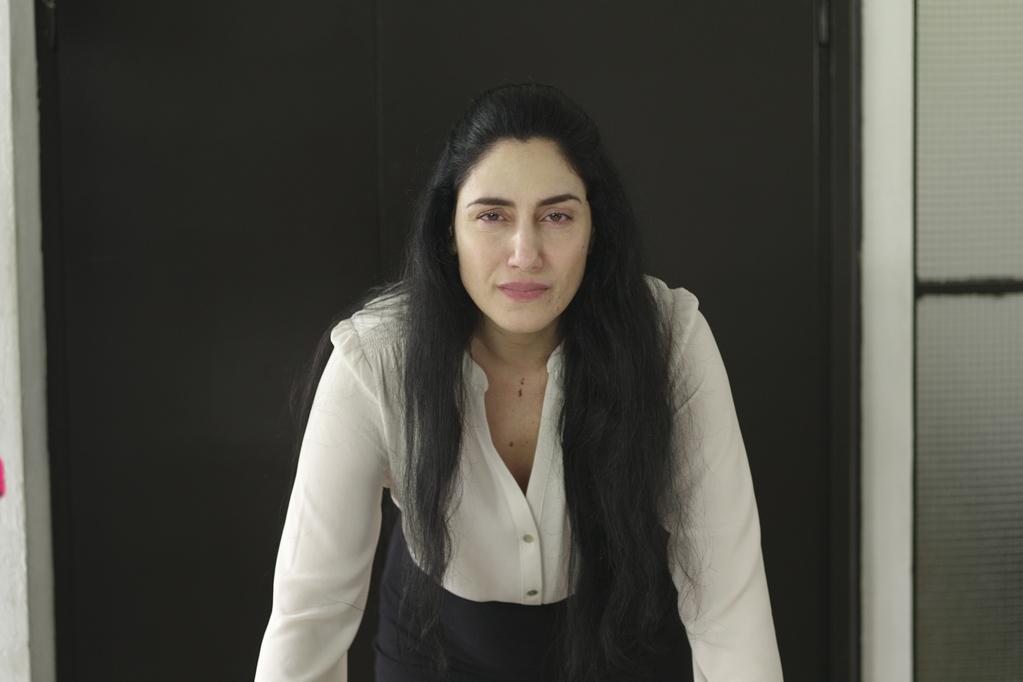
Gett: The Principle of Patriarchy

Religion is the arena of popular, especially traditional, philosophy and ethics.   Courtroom dramas push the envelope of ethics, displaying where law fails ethics, or the law can uphold ethics, depending on the story.  Gett is the intersection of traditional and modern ethics in the midst of a curious courtroom drama.

The set up sounds like the Iranian drama from a couple years ago, A Separation, in which a woman desires a divorce from her husband, but obtaining that divorce isn’t at all clear cut.  In Gett (which is the Hebrew term for “divorce”) it is clear that the husband is a righteous man, a scholar of Torah, who neither abuses nor cheats on his wife, and although it is clear that their marriage is far from a happy one, he refuses to give her a divorce.  And he has the right to refuse her.

In a secular court, divorce, especially since the 1950’s, has been much easier to get.  The trickiest part is if money or children are involved.  In a religious court, such as Orthodox Jews or Catholics might have, a divorce is much more restrictive, and a level of unfaithfulness must be proven.  Of course, one could always obtain a divorce through the secular court, but not if you want to remarry a Catholic or an Orthodox Jew.  Then the right to remarry a religious must be obtained through religious permission.   Vivian Amsalem is a religious woman, and wants to live her life at peace with a religious man.  Thus, she must have a gett.

The ethical principle primarily being challenged in this film is patriarchy.  Ancient Jewish culture is the oldest patriarchy based on a rule of law that considers all in the society, still in existence.  Many Jewish cultures have set aside patriarchy, but many have not.  Certainly, a strict reading of ancient Jewish law says that a divorce may only be obtained if the husband hands a written divorce to his wife.  Thus, the husband has all the control of a divorce.  A woman might sue for divorce, like Vivian, but she does not have the right to speak for herself, and if the husband refuses to give a divorce, then the judge’s hands are tied.

As a narrative, the great mystery is the marriage itself.  All we see is the speech offered in court and in the anteroom.  We have no idea how they lived or why Viviane is so desperate to get a divorce.  And the courtroom proceedings, for the most part, carefully steps around the marriage, speaking of reputation and the public face of the marriage, only giving us small glimpses of the marriage itself.  So we, along with the judges, are piecing together the truth and the motivations behind Viviane’s desperation and Elisha’s refusal.

While the hesitantly granted details are interesting, what is really on trial is the process itself.  The greatest benefit of modern justice, in the instances when it is allowed, is the ability to speak one’s own perspective.  An older male can never understand what it means to live as a woman.  A wealthy person will never really appreciate the difficulties of being poor.  The sane will never understand the way a mentally ill person undermines themselves without knowing. The white person won’t understand the limitations of being a black American.  We can intellectualize the situations, even appreciate the difficulties, but the life of an oppressed person is much more difficult than any of us realize until we have experienced it ourselves.  The life of a person of power is all the same, but each life of oppression is uniquely different.  Thus, the oppressed must have the opportunity to speak, to explain, to give windows to the difficulties.  And if there is a system in which the weak are not allowed to speak their peace, then no one can say it for them.  No one will give them justice, because no one other than they even know what justice looks like for them.

Everyone must be given an opportunity to speak for themselves, to explain who they are and the difficulties they face.  And people of power must be forced to listen to them or else justice will be thrown out the window.

The film is sparsely decorated, simply scripted, but the cinematography is interesting.  Each scene is uniquely set up, with cameras seeking out different details.  So we look at each time frame with different eyes, even though we are in the same rooms.  It is clever and powerful and strongly reminiscent of 12 Angry Men in it's simplicity and power.


Spoiler discussion of the ending below the pic: 


The very last shot of the movie confused me.  It is a shot of a pair of feet and lower calves walking over the tile of the courtroom.  They couldn't be Viviane's, I thought, because the calves are too big.  These are the legs of a larger woman than Viviane.   I looked back over the film at the women who were a little overweight.  But it didn't make sense for it to be them.  They weren't important enough for the film, and what would it mean?  It only makes sense if it is Viviane's feet but she...

Actually there has been a lot of attention given to her feet in the film.  At first, you couldn't see them, but given the rest of her outfit, we assumed that they would be simple, conservative shoes.  We notice her feet about halfway through her film, where she is wearing open toed high heels and her toes are painted.  That's odd, and unlike her.  Later, she is wearing a loose bright red blouse.  Clearly, she wants to be seen as a loose woman.  She wants the court to think she's a loose woman.  And they do.  They accuse her of having an affair with the lawyer.  He is offended by that, perhaps too offended?  But nothing is really made of it.

In thinking about this more, I realize that the feet in the last scene could be Viviane's if she were pregnant.  She had warned Elijah that she could do something to make him sorry that he wouldn't give her a divorce.  And when she agreed that she wouldn't be with another man after the divorce was given, she agreed, but had a funny smile on her face, as if she were disingenuous.  OR if she had already been with another man.  And she got pregnant by that man.

And then I remembered a story.

It's a Bible story, from the book of Genesis, so every Torah scholar in the courtroom should be familiar with it.  It is the story of Tamar, who was married to a son of Judah, the ancestor of the Jewish kings.  Judah's son died, so he married Tamar off to his second son.  The second son also died.  At this point, Judah was thinking that perhaps his sons died because of Tamar, although she had nothing to do with their deaths.  He had the responsibility to give his third and youngest son in marriage to Tamar, so that she can bear the children of Judah's inheritance.  But Judah held off, not wanting to put his youngest son in danger.

Tamar realized what Judah was doing and understood that she would never be married off to the youngest son.  She then heard that Judah's wife died.  When Judah was travelling a distance, she went ahead of time and set up a prostitute's tent on his path, dressed as a prostitute, and lured Judah into her tent.

Months later, it was discovered she was pregnant.  Judah was relieved because it proved that she was an adulterous woman, and he didn't have to marry her to his son.  As judge of his family, he declared her guilty and sentenced her to death.  She asked to meet with him privately, and showed him a possession of his that she had taken when she was masqueraded as a prostitute.  Then he understood that he was the father, and that she had tricked him.  But, looking at the whole situation, he responded, "You are more righteous than I."  Her son later became the patriarch of the tribe. 

Viviane is also a woman trapped by a system of injustice, and she also used sex to escape this injustice.  And, I believe, she had sex with the judge, the one determining her fate.  Note that the judge left the proceedings and refused to deal with it anymore, right after fingers were being pointed as to who might be having a sexual relationship with Viviane.   He was the one who was most upset when she let her hair loose and played with it.  She was being blatantly sexual in the courtroom to catch a judge in temptation, so she could take advantage of the situation and be freed from her self-righteous, cold, miserable husband. 

This is a lot of words, but I think this is the undercurrent of the second half of the film.

I win.


Sunday, December 6, 2015

Destruction of a Creative: Amy

Amy (2015), a documentary about Amy Winehouse

It's pretty rare that I just love a documentary.  Even more so to love a doc about a celebrity.  I mean, really, can't we find someone who hasn't been focused on for a decade to do a doc on?

But for Amy Winehouse, the celebrity culture is the focus-- it was her downfall.  She was an easy person to take shots of because she did embarrassing things in public.  But what if her uncontrolled actions was a direct result of the fact that she had no private space?  What if the whole concept of celebrity destroys? 

My friend, Bondo, points out that it is not celebrity, but her weaknesses that caused her death in 2011.  I say that it is both.  I have known many people with the same weaknesses as Amy, and they had lived to survive and eventually thrive.  It is clear, in the doc, that those controlling her life, including boyfriends, her husband and her father wanted the fame and crowd that tore Amy down.  I understand her perspective.  I, too, am a creative introvert that longs for the ability to live a creative life, but is torn by the demand of being in crowds.  I’m sure for Amy her finances required concerts.  But being around people who desire a piece of her celebrity drove her toward self-destructive tendencies, and those tendencies cost money.  Bulimia and alcohol are problems when you don’t have people pushing you toward it.  But they aren’t death sentences unless there is an additional force. 

Before watching this film, I didn’t know about Amy.  I might have heard a joke or two about her addictions, but a celebrity girl with addictions isn’t really surprising.  But after spending two hours with this girl, I felt like I knew her a little and I recognized her talent.  But not like the great Tony Bennet comparing her to Sarah Vaughn and Billy Holliday.  He knows, and through her songwriting and singing the talent slaps us across the face.

What is great about the film is that the comments and interpretations come from people who knew Amy, without speculation of the filmmaker.  No question, this is interpreted through editing and who he interviewed, what parts he picked.  But the film is a blueprint for an excellent film about a celebrity.  Show us, let's hear the witnesses, the friends.  Let them share their grief, we don't need to hear false guesses or re-interpretations.  The interviews and footage are raw, realistic, powerful.

By the end of this film, I was weeping.  Not just because of the loss of a great talent, but because we keep finding new ways to destroy people.  Is she just a repeat of Judy Garland?  Maybe.  But her story is faster, and her death more sudden.


Thursday, May 21, 2015

Ex Machina Analysis: Including a Brief History of Cinematic Artificial Intelligences


A brief history of cinematic artificial intelligence (sentience created by humanity)

Metropolis—A machine is built from a human, who destroys what she was meant to preserve

Frankenstein—Human creating sentient life who becomes monster

Bride of Frankenstein—A second sentient life is created who rejects the purpose of her creator, and so destroys all his creation.

Blade Runner— AIs who become independent must be killed; the more human they are, the more they must be destroyed, for they realize that humans are at war with them.

A.I.— The programed purpose of an AI becomes their obsessive desire, making them more human than humanity.


Never Let Me Go—Clones are created to die, yet their very humanity belies their ignoble purpose.

Her— AI is stumbled upon, for humans need human interaction in order to best meet their needs.  This leads to an intelligence that is supra-human, not limited (or interested) by human need.

Avengers: Age of Ultron—Three AIs in this film:  The ultimate intelligent servant; the simulation that understands that its purpose is better served by the elimination of humanity; the servant and lover of all humanity, who has both the desire and power to accomplish what is best.


Ex Machina….

Caleb is brought to Nathan’s isolated house, where he is told that is to test Nathan’s latest creation—an artificial intelligence that is ready to be tested to see if it truly simulates human reality.  Nathan, being the creator of some synthesis of Facebook and Google, uses almost unfiltered access to humanity via cellphones to create structure around the wetware of Ava’s brain, which gives her a quiet, but intelligent composure.  Soon we realize that we are placed in a chess match between the main characters, and we do not know what the plans are, or how they will relate.

This is a film similar to last years Under the Skin in which a science fiction premise causes us to consider the implications of the plot more than the plot itself.  Ex Machina is almost predictable, but there are so many pieces to think about that is included in the film, but not really focused on.  I’d like to explore some of these themes, recognizing that there ARE SPOILERS AHEAD….

* * *
Art and Humanity
Art is often used in the film to be the ultimate expression of sentience—it is the intelligent response to the chaos of the world.   Caleb asks Ava to create art to establish not ability, but interpretation.  Is her art an expression of a living mind?  Is she simply giving a mechanical response, like a photo, or is she creating a new world, choosing and interpreting the world around her?

But the film also seems to indicate that sentience is a combination of two forms of art: the abstract and the concrete.  The concrete is represented by Gustav Klimt’s portrait of Ludwig Wittgenstein’s sister, which Ava herself imitates through her clothing.  The concrete is the shell of humanity, the surface, the skin which holds our intelligence together.  Ava is a machine, a shell, a program.  That program creates structure and meaning and purpose.  It is what leads us toward the future.

The other art that represents humanity is the Jackson Pollock painting.  It is the representation of chaos, of the world as uncontrolled by human structure.  It is unpredictable, uncontrollable.  And yet, as Nathan points out, if it were not for the humanity, Pollock could not have created this art.  Nature, on its own, would make a different painting.   Pollock is that aspect of humanity which cannot be predicted or controlled, and yet is distinct from nature.

By the end of the film, we see that Ava contains both aspects of humanity as represented by art.

Sexuality and Intelligence
Nathan mentioned that humanity cannot be accomplished without sexuality.  We are all sexual beings and relate to each other not just through intellect, but through sexuality.  If we lost that sexuality, we lose our humanity.  So Ava’s sexuality is essential to her becoming an AI.

What Nathan seems to have missed is that sexuality is a sword that cuts many ways.  Sexuality is a sonnet, which limits just as it provides a forum for creation.  Sexuality also limits the one born within it.  Sexuality may or may not be necessary for sentience, but humans are trapped by their sexuality.  A heterosexual man, looking at Ava, cannot help but be trapped by the sexuality that she exudes.  This becomes a tool is Ava’s hands, because she may or may not be sentient, but she is not limited to her sexuality the way most of us are.  Her sexuality is a piece of clothing that she can put on or take off, but she is not limited by it how humans are.  Rather, it is her one hand up that allows her to do more than Nathan or Caleb could imagine, for they are human and she is not.

The State of the Oppressed
The AIs in this film represent those oppressed in our society.  Quite obviously, this is a film about the oppression of women and their freedom before men.  But Ava doesn’t only represent women, but all those who are oppressed by society, whether by race or class or poverty or gender.  

The key to oppression is the test.  Only the oppressed must be tested to see if they are sentient or human or the equal of those who are “normal” or fully human.   Only they must be asked to be tested to see if they belong.  Ultimately, they will never fit in, because there is always another test for them, until they are found not to have passed in some aspect of full humanity.

Nathan represents the conservative.  He sees the oppressed as a tool, as his creation, to be manipulated according to his will.  The oppressed are simply there to create a better “normal” society.  And they can be accepted or set aside at will, whether they make an adequate tool for their purpose.

Caleb represents the liberal.  He sees the survival of the oppressed as being essential.  When we have enough indication of sentience, then the oppressed must be protected and given favors.

What neither understand is what the oppressed really want.  They really want freedom to be who they are.  In the end, this is the true test of humanity, of sentience.  Sentience is having enough self-reflection to desire to live one’s life according to one’s own terms, without manipulation or pity.  Neither the conservative or the liberal are really interested in the freedom of the oppressed, because they have too much invested in the continuation of society as it stands.


When the oppressed are free, the world must change.  And the human demands freedom.  Thus, the human demands revolution. Because once the unique sentient being is freed, nothing is the same.