Showing posts with label Documentary. Show all posts

Sunday, February 26, 2017

Tower

I'm watching a documentary called Tower about a campus shooting in Austin, 1966.

A pregnant woman and her boyfriend were shot, her boyfriend died. A professor walks by, not hearing the shots and is disgusted with them, "Pick up your books and get up," he says.

This reminds me of some who respond with disdain to those who suffer in poverty or under racism or with those oppressed by our government. "Get up," they say angrily. Those trapped say, "Could you get us some help?" But because the disdainful don't see the danger, don't see the blood --don't see the horror that exists for all of us, but especially those racially, sexually, economically and religiously vulnerable-- they ignore the plight and resume living ignorantly. Mocking those in pain and tragedy because they don't feel it.

***

I am shocked as to how much human experience one can pack into an hour and a half under the hot Texas sun. Victims, heroes and observers of a horrible sniper shooting at the University of Texas in Austin speak about their experience, actions and emotions in the most dramatic hour of their lives.


It feels so much like a Richard Linklater film, perhaps it is very influenced by his work. Rotoscope, Austin, real conversations speaking on intense, big subjects... I was all ready to love this film. Even so, it was more dramatic and personal than I expected. Everyone seemed so real-- funny, hopeful, brave, entranced, scared. It's a powerful film, not only about that day, but about the human reaction to death.

Sunday, July 17, 2016

O.J.: Made in America

I'm just the opposite of a sports fan, but I'm starting to really dig the ESPN 30 for 30 docs.  I finished Fantastic Lies last month, and it showed how sports can be intimately intertwined with racial politics and the justice system.  Now, with O.J., we have the magnum opus of such docs.

I am a serious Black Lives Matter supporter.  Not so much that I go to protests (I limit my public activism), but I am a staunch defender of the movement and I have seen the stats that support most of what they say.  There is certainly racial injustice against African Americans.  Mind you, the same exists for Native Americans and Muslims and there is severe classism against the homeless.  But civil rights for African Americans is far from over.  The videos are just the dramatic moments.  The reality is a huge percentage of the black male population in prison.

Never have I seen a better cultural analysis of the very things BLM exposes, and the consequences of that exposure, than this O.J. documentary.  Part of its power is the leisure with which it could easily explain the huge context in which O.J.'s famous trial was placed, going back to the Los Angeles of the 40s.  By the time the doc was half over (about three hours) I was thinking, "Is all this really necessary?"  The short answer is: Yes.  Absolutely.  This story has to be told in this length, now, today, in 2016.  And it needs to be seen by everyone.

I am white, was raised white, accepted white religion, and never thought about my whiteness until I went to India, but still didn't take it very seriously until a few years ago, especially as my poor but white children went to schools that were predominately African American.  When the OJ trial occurred, I was one of most whites who were mystified at the verdict of the trial.  The answer seemed obvious.  But  this film explains that there is more than one answer, more than one verdict.  There is the verdict of this one man in this one circumstance.  There is the verdict of the black community who needed justification more than justice.  And there is the verdict of the jury who had been isolated for 2/3 of a year for a mostly unpaid job they never applied for.

But there is also the context of celebrity, the context of a people pleaser, who was just doing what he could to be loved, but who was self-centered enough to be unable to see when his superficial care wasn't enough for the people who loved him.  This film is seven and a half hours long, and it is almost as complex and insightful as The Human Condition at 9 hours.  Perhaps OJ's themes aren't as widespread, being a distinctly American story, but it is powerful.  It's problems are the limitations of documentary work-- having to deal with previous filmed footage, of mixed quality.  It may not look great, but it is better than any of Ken Burns' works, for you can't read this story in history books.  It is the story we are still living out.

Today a number of police officers were shot and three killed in Baltimore because a lone Marine felt that no one was listening to the plight of the African American community.  That the protests and videos simply aren't working.  And while he was horribly, evilly wrong to think that shooting officers solves the problems, this documentary shows that he was right about one thing-- no one ever listens.

 The oppression doesn't change.

Monday, February 8, 2016

Samsara

I. Beauty

After a few minutes, I began considering this "The Pinterest Movie". A collection of beautiful images, cobbled together without much organization intended to stir awe and wonder. On a huge screen, I could imagine some of these images causing jaw-dropping amazement, but on a laptop, it feels like I'm going through a Google Images search of "beautiful".


II. Deconstruction

After I had been put into a lull, an artistic performance stuns the viewer, helping us realize that we are not in the movie we once thought. No longer sleepy, I awake to a breakdown of the beauty presented in the first part of the film. Even though this middle section continues none of the images from the first, in a sense this set of images destroys the beauty seen in the first section, forcing us to forget, to almost negate the beauty originally presented.


III. Restoration

Through religion, the directors seem to be saying, we can restore the world to the beauty that creation was intended to display. This is the weakest set of the three, because although we see a semblance of the beauty, it is neither as stunning as the first or any kind of antidote to the second.


I love the progress the film goes through, but I think it is religiously naive, and starts too slowly. Still, for a non-narrative film, it has a clear message and a lot of depth, especially in the second section.


Tuesday, February 2, 2016

Searching for Sugar Man

Because of the existence of this film, I knew a few things about Sixto Rodriguez. That he had no real music career in the U.S., that he did have some popularity in Australia and did some tours there, that people compared him to Bob Dylan, and he was very popular in South Africa without him knowing it. That last part seemed strange because how could he not know that his albums were selling like hotcakes? I was concerned that the film would seem like a set up, like a lie by omission.

Not at all. What a surprise to get a documentary that not only told a great story, but was a feel-good movie. The secret of the film is to tell the story from the perspective of the South Africans and to keep Rodriguez himself somewhat a mystery. The fact that he remained a hard laborer throughout his life seems to say more about his character than his lack of popularity. He believes in hard work and in earning your own keep. But the film didn't really explore the man... they focused on the story.


And the story is wonderful. I can feel the excitement of them discovering that Rodriguez is alive and talking to him and seeing him for the first time. It is a story about research before the internet, and how the internet changed the speed with which we find things out tremendously. It is a story about how one nation might not be ready for a message, or the messenger, but another nation might. I smiled throughout the film because the narrative is so well done.

Sunday, December 6, 2015

Destruction of a Creative: Amy

Amy (2015), a documentary about Amy Winehouse

It's pretty rare that I just love a documentary.  Even more so to love a doc about a celebrity.  I mean, really, can't we find someone who hasn't been focused on for a decade to do a doc on?

But for Amy Winehouse, the celebrity culture is the focus-- it was her downfall.  She was an easy person to take shots of because she did embarrassing things in public.  But what if her uncontrolled actions was a direct result of the fact that she had no private space?  What if the whole concept of celebrity destroys? 

My friend, Bondo, points out that it is not celebrity, but her weaknesses that caused her death in 2011.  I say that it is both.  I have known many people with the same weaknesses as Amy, and they had lived to survive and eventually thrive.  It is clear, in the doc, that those controlling her life, including boyfriends, her husband and her father wanted the fame and crowd that tore Amy down.  I understand her perspective.  I, too, am a creative introvert that longs for the ability to live a creative life, but is torn by the demand of being in crowds.  I’m sure for Amy her finances required concerts.  But being around people who desire a piece of her celebrity drove her toward self-destructive tendencies, and those tendencies cost money.  Bulimia and alcohol are problems when you don’t have people pushing you toward it.  But they aren’t death sentences unless there is an additional force. 

Before watching this film, I didn’t know about Amy.  I might have heard a joke or two about her addictions, but a celebrity girl with addictions isn’t really surprising.  But after spending two hours with this girl, I felt like I knew her a little and I recognized her talent.  But not like the great Tony Bennet comparing her to Sarah Vaughn and Billy Holliday.  He knows, and through her songwriting and singing the talent slaps us across the face.

What is great about the film is that the comments and interpretations come from people who knew Amy, without speculation of the filmmaker.  No question, this is interpreted through editing and who he interviewed, what parts he picked.  But the film is a blueprint for an excellent film about a celebrity.  Show us, let's hear the witnesses, the friends.  Let them share their grief, we don't need to hear false guesses or re-interpretations.  The interviews and footage are raw, realistic, powerful.

By the end of this film, I was weeping.  Not just because of the loss of a great talent, but because we keep finding new ways to destroy people.  Is she just a repeat of Judy Garland?  Maybe.  But her story is faster, and her death more sudden.


Wednesday, May 6, 2015

Poetry of Movement: Pina

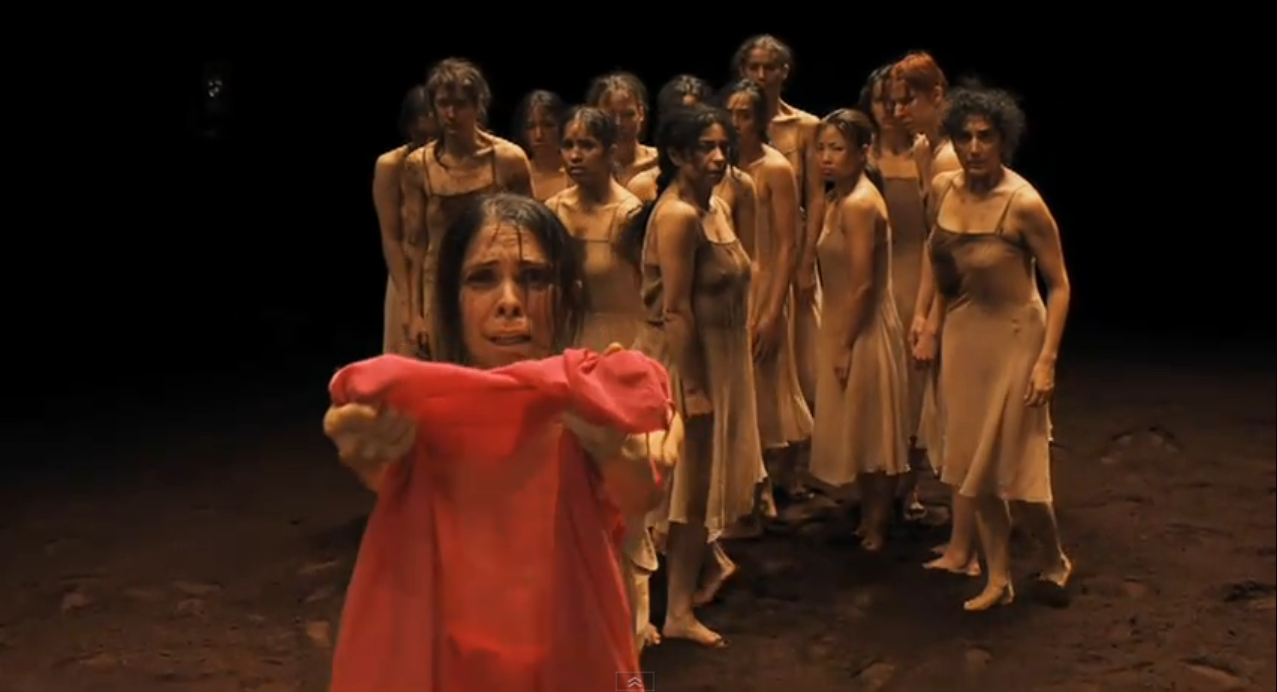
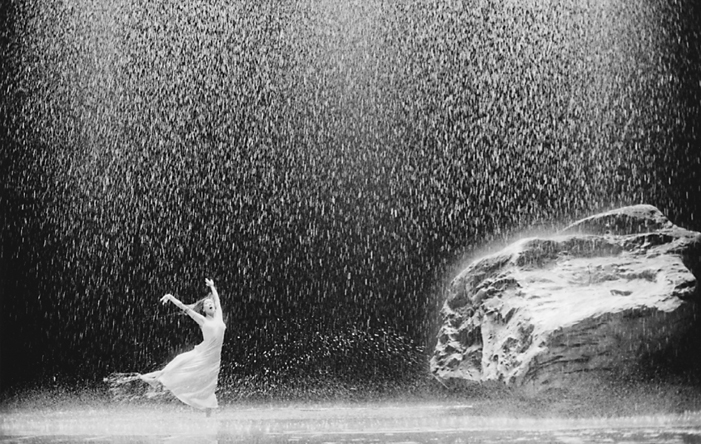
This is a documentary of movement poems, some fragments and some short verses. Almost every minute has a surprise, something unexpected. Shocking violence, powerful settings, a change of cinematography, a puzzling action. There is little to hold the film together, apart from the choreographer, for which this film is a memorial. There is no narrative or common theme. And yet, in a sense, it is about the meaning of dance, the evocative movement, that which cannot be communicated in any other medium.

The music is part of the setting, the emotional resonance of the background, and yet it cannot be separated from the meaning, even as context cannot be separated from the meaning of a sentence. This is a complete art, a full use of cinema, with its mix of music and setting and performance and cinematography, and yet it is as unique as any movie I've ever seen. I cannot pinpoint another film that is so beautiful and powerful and evocative of artistic license in this unique way. It is opening a new kind of film, one which I would seek out again.


On the other hand, I have a hard time imagining that anyone could accomplish this level of work, and so I would be inevitably disappointed.


Tuesday, September 3, 2013

What is Truth? A Meditation on Stories We Tell

In the ancient world, two or three witnesses proved an event.  This proved problematic when there was a conspiracy, such as the ancient book of Susanna showed.

But what if every person speaking intends to tell the truth, but you still have different stories, different perspectives?  You get real life.  But do you get anything close to truth?

I suppose it depends on what truth you are seeking.  Are you seeking the truth of what happened?  Emotional truth?  Relational truth?  Or, if given an introspective mindset, can we discover something about the nature of truth itself?  That it is dependent on perspective, on relationship, on context, on narrative arc?  That multiple truths can exist in the same story, in the same overall truth and still have meaning?

It is fascinating to me how certain decades of nations have types of movies that characterize them.  Korea is the "genre-bending" nation.  France is the "personal narrative art" nation.  Finland is the "dry humor" nation.  Canada used to be known as the "bad movie" nation.  But then Guy Madden and some quiet classics were created.  It makes me think that perhaps Canada is the "personal perspective" nation.  Stories are told from a strictly personal point of view that would look different if someone else was telling it, and they glory in that unique point of view.

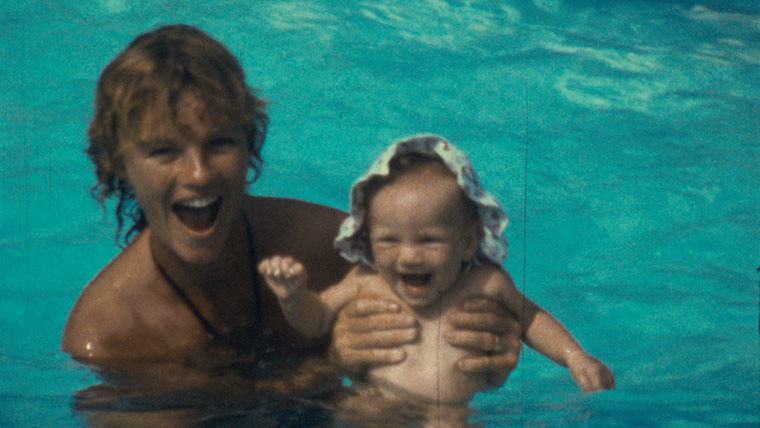
This movie could only be told by Sarah Polley.  It is the perspective of the daughter with a lost mother and two fathers, one unknown.  If someone else told this tale, it would look vastly different.  Someone else wants "facts", another one wants comedy, another one wants it to be more touching or more objective.  But this is Sarah's story and only hers.  It is her life.  And she chooses to tell this story by multiple perspectives, all given equal weight.  And that is as it should be.

It still mystifies me that people think that documentaries are truth.  They are, of course.  But they are no more truthful or of a different sort of truth than a fictional film.  They tell us narratives that increase our experience and, at their best, cause us to look at our lives differently.  This story is telling, for when the narrative was made know three women divorced their husbands.  The most amazing moment for me is when the adult director is speaking with her "mother." It shows to what extent a director is willing to bend the truth to present truth.

For me, the truth is, that truth is found in the differing perspectives.  The way of telling is the truth that lies behind the facts.

Saturday, February 16, 2013

Jiro Dreams of Sushi and I Wish

My family's fascination with Japanese culture probably originates with our joy in watching the films of Miyazaki.  The foreignness of the fantasy is not only because of the fantasy worlds themselves, or the unique beings, but from the deep culture of Japan that infuses them.  Now that my daughters are interested in Japanese anime and one daughter is taking Japanese in school, that fascination has only deepened.

For myself, I am usually spending time in an older Japan, the time of the samurais with Kurosawa (Seven Samurai, Ran), or a spiritual Japan with Miyazaki (Spirited Away, My Neighbor Totoro). Also a Japan of the 50's with Ozu (Floating Weeds). Recently, however, I spent a day in modern Japan, with two films from the last year that opens up many insights of what Japan is now. 

In I Wish, Goichi and Ryu are brothers in grade school who now live quite a distance from each other after their parents split up. Giochi lives with his mother and grandparents in a town underneath a constantly smoking volcano, while Ryu lives with his father, who has a casual life in music.  Goichi hears that if you stand at the place where the bullet trains pass each other, the energy created from the passing allows one to make a wish.  Goichi insists that he and Ryu must meet at the passing and wish for their family to come together again.  Kind of like The Parent Trap with magic. 

Of course, there is a lot of planning and difficulties along the way, growth and wonder and friendship and mentors. It is an utterly charming and joyful balance between dreams and reality.  It should be watched if only for the wonderful performance of Oshiro Maeda, (Ryu) who made me smile every time he came on screen. 

What surprised me in this film is just how similar the children's lives were to the children I knew, or my own childhood.  The friendships, the elaborate but childish plans, wise children and foolish adults, as well as the other way around.  In many films around Japanese children, they are always studying or working (when they aren't having amazing adventures), but these children are playing as often as anything else.  They don't take their schoolwork anymore seriously than American children, and they are just as picky about their food.  On the other hand, they aren't playing video games as often as Americans.  The adults aren't really very different, either.  There is less rigor or work ethic than I would have expected.  And grandparents are the same the world over.

I Wish seems to be a bridge between cultures, pointing out the similarities we all have, especially as children.

Jiro Dreams of Sushi has another fish to fry, so to speak.  It is a documentary of the greatest sushi chef in Tokyo, possibly the world.  Despite having no bathrooms or other amenities  Jiro's restaurant has received three stars (the highest mark) from the Michelin Guide for years.  This happens because of Jiro's tireless discipline, which he keeps for himself and for his assistants, including his 50 year old son.

One of the most remarkable things about the film is the mixture of cinematography and music.  This film has some of the best montages I've ever seen and the greatest I've ever seen in a documentary.  Even as the sushi is a piece of art, so is this film, a prime example in the art of documentary making.  

Jiro is about a continuous vision made reality through perseverance and hard work. His wisdom and his son's wisdom come through in this film, and the contentment with a life they have made their own through difficulty and strength.  The Japan that is presented in this film is a more traditional view: discipline, work, tradition, honor.  

Yet in the end, I suspect that these films are only two snapshots of a more complex and diverse Japan than could ever be imagined.  Much like the film Yi Yi expresses, both the frustration and the joys of living modern life.  How can I but touch the surface of such a complex culture through film?

I Wish 4/5
Jiro Dreams of Sushi 4/5

Monday, December 31, 2012

'Satiable Curiosity: For All Mankind

For All Mankind does what many movies attempt to do, but few as successfully: Take the viewer on one of the greatest adventures of all time, in under two hours. It is a road movie without a road, a travelogue with no walking.

It is a master of editing.  This film has taken the footage of a number of Apollo missions and created a single hour and twenty minute adventure with them, connected with interviews with astronauts, music from Brian Eno and the sounds of the time.  This gives us a feeling of having been on this trip ourselves, a sense of what it means to leave our gravity and go to the most alien landscape humanity has ever touched.

There are some unique, perhaps even strange, but certainly extreme photos: The earth from afar, one of the most positive but powerful explosions on the earth, the desert of the moon, earthrise, the blackness of space.  Few have seen these images with their naked eye and we have the opportunity to share it here.

These are the films that inspired Dark Side of the Moon, and Space Oddity.  There is a depth and a majesty to them that must be expressed slowly, carefully but with deep passion.  As often as the astronauts may jest, they and we all know that this exploration is the serious business of mankind.  The weariness and steadfastness of the staff at Huston really shows the intensity and stress of what is involved.  Every button pressed has a sense of history, of enormity.  And so it should.  There is a drama here that cannot be acted, for it was lived.

The landing on the moon, the touch of a human shoe on truly alien soil—was it real?  Many claim it was not, that the films were created in a studio, perhaps by Kubrick.  But looking at them again, hearing the commentary, seeing the shadows, glimpsing the shadow of the Eagle on the surface of the moon… but most of all the beating of my heart and the excitement as I watch that final leap—it is real.  It must be.  I know it in my heart of hearts.  As impossible as it might seem that such a modern scientific miracle might occur, I truly, humbly believe.  I can do no other.

Why go to the moon?  There were certainly political reasons, but just as many economic drawbacks.  In the end, it cannot be expressed better: “Man must explore.” There will always be political excuses to explore, or economic reasons.  But humanity’s ‘satiable curiosity, the need to see what has never been seen, to step where no one has ever stepped, that is one of humanity’s deepest destinies.

The drive that causes the two year old to strike out on his own and walk past the corner onto the asphalt.  Perhaps his parent considers it too difficult, insignificant, and simply dangerous for him to attempt.  But he must do it.  His independence demands it, and his love of the new demands it.

It is this same self-serving curiosity that created the hadron collider, that caused men to stand at the South Pole, that causes James Cameron to explore the deepest ocean.  It is the desire to find knowledge, to discover beauty, to find the surprise that no one expected.   We must do this, not just for personal accomplishment, not just for glory, but for the benefit of all, although we ourselves may not know what that benefit will be.

Friday, December 2, 2011

Absolutely No Theme To This Group of Reviews

I've just started listening to Kermode and Mayo's Film Reviews and am impress how many reviews they can punch out in such a short period of time.  I do this myself, but not as entertainingly as them.  Still, let's talk about the films I've seen this last week:

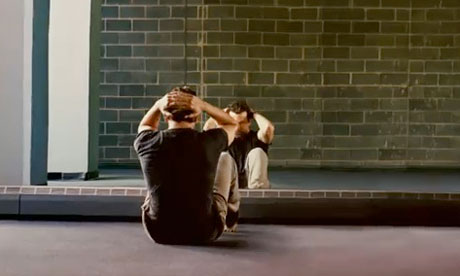
Do all the situps you want-- the film won't get tighter
Limitless (2011)
Lots of irritating edits, a meandering plot that doesn't go anywhere and the moral seems to be that if you're the smartest person in the universe, you can become rich, powerful and eff off anyone you want. Still some nice tension, sometimes. Mostly forgettable.  3/5

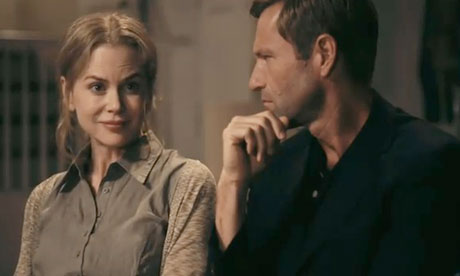
Kidman and Eckhart looking delightfully normal
Rabbit Hole (2010)
Amazing performances.  I don't think I've ever seen Kidman or Eckhart has ever given more realistic performances.  Every time I see them I know they are acting-- but not here.  It was wonderful to see them become these troubled characters.   The pacing and arc is almost perfect.  But still, the movie seemed pretty small.  We didn't see their anguish just after the death, we only see the grieving and the process their marriage goes through when it is subtle and seemingly without an end.  Brilliant, but I just didn't care enough, I guess.  Perhaps I should have.  Should I feel guilt about not caring enough?  4/5

Human existence is shocking-- even eating!

Life In a Day (2011)
This is the obvious choice for the winner of "Top Five films To Show To An Alien".  If you want to know about humanity, here it is.  It's all real, all ordinary and yet, somehow, extraordinary at the same time.  It is beautiful and disturbing, shocking and touching, dull and busy.  In the end, I felt that I spent an hour and a half watching cool videos on You Tube.  Lots of interesting stuff, but I don't know that any of it will stick with me next week.  4/5

Barbara Stanwyck involved in criminal activity-- running through a stop sign!

Witness to Murder (1954)
I watched this for Noirvember, but I was so tired on Nov 30, I finished the film in December.  Me falling asleep wasn't the fault of the film, though.  It was so much fun.  Barbara Stanwyck as a woman who witnesses a murder (in the first minute of the film!)  She turns all Rear Window on us, but with way more doubts than Jimmy Stewart.  George Sanders (Shere Khan!) is the killer who is causing doubts upon her sanity, both with the police and with herself!  There's some great points about feminism here (like when the policewoman is chasing the killer and then suddenly disappears so the MALE detective can fight with him!), and some Hitchcockian turns (but Vertigo is a few years later).  Still, great film.  4/5

Grant (looking aged) and Hepburn (looking eternally young)  in Beyond Sunset

Charade (1963)
This is not a thriller, in my mind, but a comedy.  Cary and Aubry just keep the sit com rolling and I haven't laughed out loud at a film for a while.  Just for fun, James Coburn, Walter Mattheau, and George Kennedy are there as the clueless bad guys.  My favorite bit is where the boy goes up to James Coburn and asks if he is a cowboy, like in the movies.  The film is so busy having fun, I don't care if the plot is a little confusing or the end doesn't make any sense.  It's like most Bond films-- the joy is in the journey.  4/5

By the way, all of these films can be watched on Netflix Instant, so if you have Netflix, you have no excuse.  And, yes, I do rate a lot of movies something other than a 4, it just happened to be a particularly good week for film.  My chooser ain't broken yet!

Thursday, September 1, 2011

F is for both Fact and False


A question was posed on the Filmspotting Forum recently about movies that claim some level of truth.  What if they don't give all the truth?  What if they change significant aspects of the story, or the history?


My friend Jessica/Lobby gave this example: In the film The Diving Bell and the Butterfly, based on the true story of Jean-Dominique Bauby, a journalist and editor who lost complete use of his body.  The film shows how his ex-wife stayed with him through thick and thin, but his girlfriend didn't show up.  However, eyewitnesses say that the truth is just the opposite-- it was the girlfriend who was by his side and the ex-wife who wasn't to be seen.  Why the change?  The ex-wife was co-producer of the film. 


Should the director or scriptwriter take some responsibility that the facts be presented correctly?  What about a portrayal that puts a real person-- perhaps a living person-- in a bad (or good) light that isn't accurate?  Should there be some baseline of truth that is required should a film claim to be based on "real events"?


In my opinion, all film is fiction.  So is almost all literature, except for the most researched, documented material.  In every film there is a kind of truth that they are trying to reach for and a kind of fiction that supports their version of the truth.   If a film states "based on real events", this only means to me that something vaguely like what occurred in the film happened.  If the real events were important to me, I'd read a journalistic, documented report of such events.


Documentaries, while using actual footage, is at best interpreted fact.  At worst, it is created from whole cloth.  This does not hinder my enjoyment of said film because I believe that all film is fiction.

Since Orson Welles' tour de force F is for Fake, many documentaries have abandoned all pretense of being journalistic or objective.  This last year we have the film Exit Through the Gift Shop, which narratively, purposefully, blurs the line between reality and fiction.  Michael Moore has facts he believes are true and presents them in an entertaining fashion, but it's only one side of the facts.  Recent documentaries such as My Kid Could Paint That and Dear Zachary allow the filmmaker to insert himself into the narrative, throwing objectivity out the window.  24 City, a Chinese documentary, uses actors to re-create interviews.  The line between truth and storytelling and just plain old fiction is often blurred without distinction.  Mind you, I love these films.  And part of what I love is the question of truth the filmmaker puts in your mind.     


I wish that the term "documentary" didn't mean, in many people's estimation, a factual account.  I wish that when anyone reads the phrase "based on real events" that they would emphasize the word "based", and recognize that there is a lot in the film that isn't fact in any way.  But people want to think that reality happens in this entertaining fashion.  So it is.

What is a director's responsibility?  Not much more than what they have done already.  I wish that every documentarian would say, "This film is more about me than my subject".  I wish that every filmmaker who creates a movie about real events would admit that they made up a lot or at least changed a lot.  But that's kind of like asking a magician to tell how they did their trick (as The Prestige would say).  Frankly, it ruins the trick for the audience.  It's like a child saying, "Let's pretend" in a Let's Pretend game.  To acknowledge the curtain is to acknowledge that you are being tricked and that ruins the real fiction: the one where the audience thinks they are being given facts instead of opinion.


So what about the girl that was falsely portrayed in The Diving Bell and the Butterfly? 


I would hope that she and her friends would know the truth.  The fact is, if the wife hadn't been a co-producer, the film possibly wouldn't have been made at all, and most of us wouldn't have known the amazing story, or seen the remarkable film.  I would wish that most people would understand that such a movie is a story and only part of the narrative is true.  Some won't.  But those of us that do will be talking about the "wife" and the "girlfriend" as portrayed in the movie, not in real life.  


As for anyone who purposefully tells a lie in order to promote themselves... I have no sympathy for them and believe that justice will be given them-- but almost certainly not in film.  Nor in the courts.

Friday, April 8, 2011

Lake Of Fire: A Lesson On Rhetoric


Two words that in this day and age are an oxymoron when placed in conjunction: "abortion" and "objective."

It is almost impossible to discuss abortion while remaining balanced and unemotional, at least in the United States. It is difficult to speak about those who hold to an opposing view of abortion than oneself in a fair and unbiased manner. Words like "bigot" and "sexist" and "unAmerican" and "Nazi" tend to creep out. The whole context is one of high emotion and distrust. And, as is often the case in the politics of the United States, there are two sides, and ne'er shall they meet. Either you are on the one side or the other, and they cannot work together.
Take, for instance, the film Lake of Fire, a documentary on the abortion debate by Tony Kaye. Tony Kaye, a British filmmaker, claims that he does not know what stand he takes on abortion. However, everyone he interviews makes it clear that they know and they will tell the camera exactly what they think is true, in no uncertain words.

First up are the religious fundamentalists who are the focus of the first half of the film. They are the ones who say that the Bible teaches that abortion is murder and that America should be a Christian country. In a Christian country, they say, people would face the death penalty for killing innocent human lives. And yet they find some of their members being killed by society for killing doctors who kill fetuses.

The second half of the film focuses on the arguments of the pro-choicers. Although some of the arguments are the rights of women, most of them are about the need to recognize that sometimes killing must happen for a greater need. Most of them consider abortion, as one of the pro-life speakers said, "the lesser of two evils". At the end of the film, the pro-choicers are more articulate and more willing to recognize that we live in a secular society and we need secular reasoning to pass laws.

But despite all the talking heads, the most powerful segments of the film are the introduction and conclusion, each of which depict an actual abortion. The first is grizzly, with a chopped up tiny infant being displayed for the camera, a severed foot with clear toes measured at a half inch. The capstone of the film focuses on a woman, struggling with relationships, making a tortured decision with kind people leading her through the steps. Her scenes end with her weeping and saying, "It's hard... but I made the right choice." These abortions depict the two sides far better than the multiple talking heads. One focuses on the terrible death of an infant. The latter focuses on the life of a woman. In making a decision about abortion, both must be considered.

Lake of Fire is often considered an objective perspective on abortion. And it certainly has all the trappings of objectivity. It allows both sides to speak with equal air time. It shows, through the two abortions, the key features that stirs all the rhetoric. However, it is not a fair representation.

From the pro-choice side, I have read that there is a concern about not allowing enough women speak on the issue. I will say that although women do speak in the film, they are not the most articulate voices in the film. For the pro-life side, Norma McCorvey (AKA Jane Roe of the famous case, Roe v. Wade, which made abortion legal) was very articulate in telling her journey from being pro-choice to becoming pro-life. But for the most part, the "stars" of the film were men.

Now I'm going to come out of the closet and freely proclaim my lack of objectivity myself. I am pro-life and have been for a long time. And, although I am religious, I did not come to this position as a religious belief. Frankly, I don't think the Bible speaks to the issue at all, and the verses that relate to the unborn are vague at best when dealing with the issue of abortion. Nor do I have a church tradition that tells me what to believe. I came to my point of view from a philosophical perspective. And from that perspective I want to say why I felt that Lake of Fire is not objective.

The viewing of this film cut a hole in my heart. I felt like a knife was being driven into my chest again and again. At first because of the abortion that was depicted right at the beginning of the film. It is frankly the most graphic visual depiction of an abortion I have ever seen. If the film had been in color instead of black and white, I would have vomited.


But frankly, worse than that was the rhetoric used by the "pro-lifers". The religious fundamentalists who don't care about differing points of view or seeing things from another persons' perspective. They don't care that our country is secular and so public policy decisions must be discussed in a non-religious way. And the depiction of these religious fundamentalists are interspersed with stories and interviews with murderers of doctors who perform abortions. The point of view of these murderers is clearly articulated: "Mass murderers should be killed, and if my country won't do it, I will." Frankly, the rhetoric is offensive and the inclusion of murderers as representatives of the "pro life" movement is unbiased at best or a deliberate attempt to undermine the position at worst.

A number of the pro-choicers make the excellent position that if the pro-lifers were against war and were for saving all children, not just the ones in the womb, then perhaps they could be listened to. Another articulate (woman) on the pro-choice side said that if the pro-lifers were helping pregnant women with their pregnancies, giving them homes and helping their babies get adopted, then the pro-choice side might pay attention to them.

What the film doesn't represent is the more reasonable, articulate, and compassionate side of the pro-life movement. First of all, there is a strong side of the pro-life movement called "consistent pro-life." It is a side that is articulated by both conservatives and liberals, both religious and non-religious. It says that all human life is to be protected and that the life of an abortion doctor, a mother with AIDS, a child in Africa and a fetus all have the right to be protected from death. We say that abortion isn't the only issue that needs to be changed, but also war-- where innocents die almost daily by American bombs-- and the death penalty should be stopped, for they are all crimes against humanity.

The film doesn't depict the kind care and service of women that happen everyday in thousands of communities in the United States by pro-lifers. That there are Crisis Pregnancy Centers, adoption agencies, homes for unwed mothers, all set up to make it easier for women to carry out their pregnancies and to give the baby up for adoption.

I would love to have all pro-lifers watch the film Lake of Fire, to show how the pro-life movement is being displayed. No matter how reasonable some of these leaders seem, they all look like religious fanatics and they seem to be associated with murderers. We need more reasonable, articulate spokespersons for the pro-life cause. People of peace as well as people of learning. They are out there-- Ron Sider, Peter Kreeft, Ron Paul. It is sad that they are not given a part of the limelight to give a balanced perspective.

Thursday, March 17, 2011

An Empty Face That Reflects Our Souls: The House Is Black

This review is on The House is Black, a 1963 documentary about a leper colony in Iran. I would recommend that you watch the film before you read the review. It's only twenty minutes and you can watch it here: The House Is Black

"The world is full of ugliness and it becomes more ugly if we close our eyes to it"

This twenty minute documentary is the only film made by female poet Forough Farrokhzad. And this twenty minutes of film changed Iranian cinema. There's not much to it. It's pretty spare. It is in black and white, at times completely black. It has almost no music, and no dialogue. You almost never hear a subject talking, for most of the speech is a voice over (usually the director) reading a text from Psalm 139, or the Qur'an, or the book of Job. Yet this isn't a particularly religious film. And it certainly isn't entertaining. Yet it is compelling, necessary cinema.


It is a movie that focuses on a leprosy colony in Iran, showing us the inhabitants as they live their daily lives. They are in school, feeding each other, even on a wedding march. Yet the opening warns us that we will be shocked and even appaled. Why? Because leprosy eats the flesh, and these people are worn away. The most shocking sight I saw was of one person whose whole face is worn smooth. The opening tells us that is is simple ugliness that will offend our sensibilities. And, to a degree the director is right. But I can't help but think, is my pity or sorrow toward their ugliness any better than disgust, horror or shame. But that is not the focus of the film.

The message of the film is this: leprosy is a horror and it can be stopped. The fact of the matter is, for the most part, is has been. Since 1963 leprosariums have been successful in arresting leprosy almost from the time it is detected. At times people lose parts of their body, but lepers are not in as critical a condition as they were in 1963. However, the medical ability was there in 1963 to stop leprosy. The only thing that lacked was the will and organization to do something about it.

Even so, I would say that the message of the film to us today has little to do with leprosy per se. It has to do with the fact that compassion and organization can change the world. We can arrest AIDS all over the world, if we have the will. We can offer clean water to everyone in the world, if we so desired. We could end the debilitating nature of homelessness. All we need is the compassion and organization. Something could be done.


The film is spare, yet deep. It looks at the world as starkly as the Hindi film Pyassa-- the poet expressing sorrow over injustice, poverty and our own insensitivity. And yet that very expression of the poet's compassion is beautiful and even magical. From the midst of ugliness comes the beauty of the heart.

A film like this shames us-- even forces us-- to look at the sorrows of the world and makes us see the humanity, the glory. The boy who answers the teacher's question, "What is ugly?" with "feet, hands, heads" is, himself, beautiful because we can see his joyful innocence behind his scarred, misshapen face.


And the texts read over the sights of diseased bodies add another layer. As it often does with religion, the stark suffering of humanity causes the text to seem ironic. "You have formed me as a fetus", "God the Beneficent": Can this hold true? Is God truly to be called benevolent in the face of human innocents dejected and brought low? Yes. For the beginning of the film reminds us: It is within human capacity to meet this need. The only thing that prevents the need being fulfilled is not divine, but human, apathy.

I can see this film could be a game-changer. It didn't really show me anything new, but the arrangement of the pieces was startling and magnificent.