Showing posts with label Pixar. Show all posts

Sunday, March 16, 2014

Ratatouille and the Pixar Magic

There are no spoilers in this analysis of an aspect of Ratatouille, but I’m assuming if you're interested in reading this, you’ve seen the film.

Ratatouille isn’t standard children’s fare, but it is a child’s fantasy: suppose a rat was a foodie, a natural chef, and suppose he could control a human well enough without speech to cook food on the very highest level.  Not very believable, but fine for a kid’s film.  Then, the final test comes, Anton Ego, the most pompous critic in town, arrives to review this restaurant he’s heard so much about.

Until this point, Ego is a stereotype, the shell of a human being, the negative critic who could be expected to sniff at the food.  Of course, Ego could be expected to exclaim his loud praise and run into the streets demanding people come in to eat this food.  That would suit the character of the film, but not the film's character.  At this moment Ego is fleshed out and we see who he really is: a particular man, an introvert who has high expectations, but when those expectations are met or exceeded, then he does not yell, but his emotion is just intense. 

And just as personal.  His response is not only about food, but about his childhood experiences.  He knows that his reaction is subjective, but he can't help it.  He has experienced art in the deepest, most intimate level, and this experience changes his life.  This is really about the response every artist dreams about-- the inner touch that only that one lover, the loving mother, the life-long friend can have.  An artist only has a moment, perhaps a matter of hours, to touch a human being so deeply that they will never forget it, and it changes how they see the world around them.  Suddenly, the world is brighter, clearer, closer.  This is the true moment of every artist who has ever lived.

Ego is suddenly packed with humanity and life.  It isn't enough to say that Bird gives critics a good shot while others' dismiss critics.  Some films skewer critics, while others literally have them killed (in the film, of course).  Bird makes his critic not only his eloquent spokesperson, but a genius who perfectly combines opinion and word to elevate everyone's perception of a particular piece of art.  Ego is the personification of the power of criticism, an artist in his own right.  Some claim that critics are leeches, at times borrowing, at times darkening the shining glory that is art.  But in Brad Bird's world, the critic is the artist who can empower art to be art, or to dissolve the work of the faux artist.   Perhaps Bird has such a good opinion of critics because even when his work was less than very successful (Iron Giant), the critics sang his praises, saw his art for what it really was.
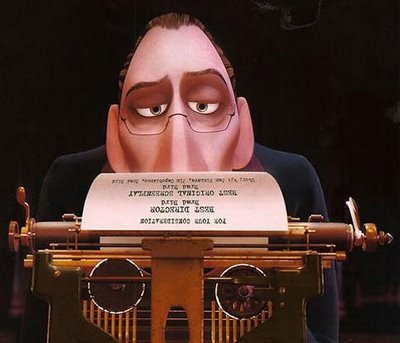

Bird gives the power to critics that they sometimes deserve.  And in turning shallow creatures (Linguini, Ego, and to a lesser extent, Colette) into full characters in the final act, he also enriches the film to be a fuller film.  It is no longer about childish fantasy, but about a unique perspective on adult realities.

Pixar magic, when they take the time to use it, is not just about excellent storytelling, but also about taking the time to make characters more than a millimeter deep.  Ego could have been just a throwaway one-note character, but instead they take the time to give us a background and a more complex motivation.

They do this a lot with supporting characters-- Jesse the cowgirl in Toy Story 2, Doc Hudson in Cars, Mirage in The Incredibles, Gil in Finding Nemo.  How many animated films take the take to make real people out of side characters.  But it is this that makes many Pixar films full worlds and not just fluff.

Monday, July 29, 2013

Brave: Three Meditations

Part I: Mor'du


I was not always as you see me now.

I was once a powerful man, a ruler of men, a commander of armies.  While my father was the High King, I ruled under him, taking charge of his armies, conquering peoples and making his empire strong.  When my dear father gave me my charge to conquer, he handed me my most precious possession: the Ring of the Double Axe.  It was too dear to me to place on my finger, so I wore it on a metal chain around my neck, so it might never be removed.  Then I set my face to gather land for my father.  And so I did.

My three brothers were nothing and did nothing.  Mortek, the oldest, spent his days travelling from one pub to another, drinking his fill with masses of peasants and merchants. Morbus lived in libraries, always putting his nose in a book.  Moder, the youngest, spent his days in the forest, where his companions were rabbits and squirrels.  What did they know about ruling an empire?  They had no real experience.

Yet when my father died, they all stood to take charge of the empire.  Morbus presented a proposal that we should rule the land together, but I refused.  I was the only one who understood warcraft, the handling of men, the manipulation of real power.  How could I share such power with the weaklings my father produced?

But they dared to stand against me.  Morbus had a number of the army on his side.  And though his forces were small, they were smart and underhanded and diminished my forces.  Moder called up the animals of the forest, and his army of bears and antlered deer slashed the leather armor off of my men, damaging them.  Mortek rose up an army of peasants, and his merchants paid for armor and swords.  They were inexperienced, but they had passion.

In my rage, I rose up personally against my brothers, but I knew that I could not reach them, surrounded as they were by soldiers and bodyguards.  So I went to the Witch of the Woods and demanded that she give me the strength of ten men.  She warned me, however, that the spell would only cease if "that which is broken be mended".  What would that matter to me?  My strength is what was significant.

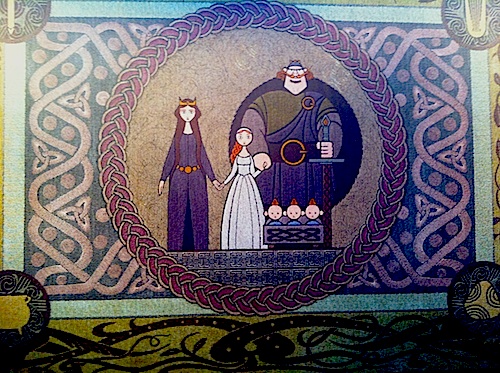
So I called my brothers to a meeting under a flag of truce.  They gathered, with their men-at-arms in the cave where our father had placed the treaty stone, with the image of all four of us standing together.  When they arrived, I took the potion, and they watched as the transformation took place.

It was not as I expected.  I did not turn into a Hercules, a god.  I turned into a bear.  And my blind rage took over my powerful paws.

I broke the stone of treaty, and reached out and killed my three brothers.  The rage dissipated, and I was left with brokenness and blood.  Only then did I realize that I needed Morbus' knowlege, Moder's natural powers and Mortek's community connection.  Only then did I see my folly.  And I could not mend what was broken.  I had broken too much.

After a day my rage returned.  I have lived by instinct ever since. 


Part II: Tiers of Pixar

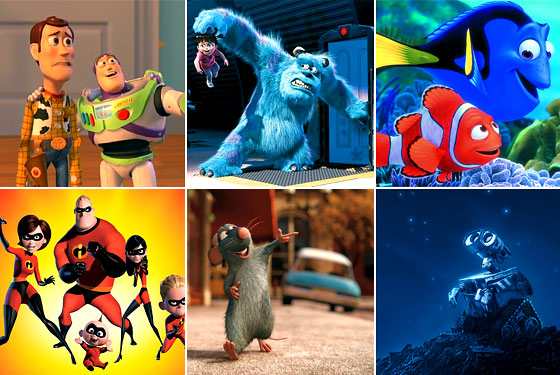
Pixar has a few tiers of film. There is the entertaining film: Cars 2, A Bug's Life, Monster's Inc.. There are the films that are so stunning that it is hard to speak after the first watch: Wall-E, Up, Ratatouille. Then there are the films that grow on you.

Perhaps I didn't think much of the film first time I saw it. It's okay, pretty, fun. But nothing deep. Then your kids watch it again, and you happen to be in the room. Hum. And again, but this time you sit down and watch it with them. Soon, you find deep lessons for your life in the film, and as simple as it seemed the first time, it is more enriching the more you watch it.

That's Finding Nemo. And Brave.

Just watched it again yesterday and as much as I enjoyed it in the theatre, it didn't make me cry like yesterday. This second full viewing really spoke to me and a lesson for all of us. Relationships are more important than our pride. That's what makes us have satisfying lives.


The animation is so excellent in this film as well. No, this film doesn't stun me. And it doesn't speak deeply to my heart. But it is that most precious of all films for me. It grows.

Part III: What is the Message of Brave?


***Warning!  Major spoilers below!!!***

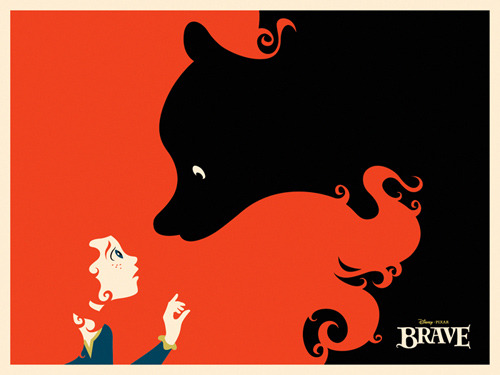
The main story of Brave is easy to see: a mother/daughter tale, where they needed to understand each other better, and only when the mother is transformed into a bear could this occur.  The story might seem too similar to another Disney film, Brother Bear, but Brave makes more sense, is funnier and has more sympathetic characters.

The key to the film, however, is to determine what breaks the spell.  What is "the bond torn by pride" that must be mended?  Merida thought that it was the tapestry, and many viewers thought the same.  However, just because the tapestry was mended, it didn't break the spell.  Part of the tension of the film has to do with Mor'du's spell, which is broken at his death (after which he turns into a will o' the wisp), but even then Merida's spell isn't broken.

Certainly the "bond" has to do with the relationship between Merida and Elinor. But we see them getting along quite fine in the forest, and Elinor already signaled Merida to declare a compromise that both could approve of.  So their conflict is finished, right?  Yet the spell is not broken.

The "bond torn by pride" is their relationship, but it was broken by both sides.  Elinor agreed that she had gone too far, and delayed a betrothal (Although it must be noted that a betrothal was not set aside.  The original contract between the four peoples was that a marriage would occur between Merida and one of the three boys.  That still held, they just gave the young people time to make their own decision as to which one it would be.)  How did Merida break the bond?  What did she need to do to mend it?

The key is in Merida's many declarations of innocence after he mother turns into a bear.  She is constantly deflecting blame for her actions.  She blames Elinor, blames the witch for giving the "wrong" spell.  But it isn't until the final moment that she admits her own responsibility for harming her mother.  

That act of repentance at the climax of the film is what breaks me.  It is the sorrow of the prodigal, the shame of the morally weak, the breaking of the pride that tears.  And in the end, that is what is complex and beautiful story is about.  To truly mend the tears between relationships, we must admit our own actions.  We must have sorrow for our own wrongs done.

The relationship was torn by two parties, as is most of the time the case.  And there cannot be true restoration until both parties confess their actions in causing the rift.

Friday, July 19, 2013

Seeing and Feeling Love: Wall-E

#26-- Wall-E
It fascinates me, over the years of expressing my love for this film, that there are a number of men who agree with me, but most women I have spoken to think that it's okay, but not one of the greatest films ever made.

This is my guess as to why:

Wall-E works best as a fable about love. The environmental stuff is cool, the side characters are fun, but that's not where it tugs the heart. Yet this love-fable is really from a male perspective. Wall-E is how many men see themselves at their best. Working hard at an impossible task; lonely and romance is idealistic; we love our hobbies, but no one really understands. Finally, we fall in love, and the woman is strong, but distant... possibly even destructive (with her words, perhaps not with a laser cannon). But if a man is loyal and caring, even when she is unresponsive, he can eventually win her love.

This movie, along with perhaps City Lights, 50 First Dates, and Knocked Up (all speaking toward bumbling and perseverance winning the romance) give a particular male perspective to the idealized romance. The female version of this we have seen many times in romantic comedies-- Sleepless in Seattle, Pretty Woman. One isn't more realistic than the other, but the perspectives differ.


So call Wall-E the male (nerdy) version of a romantic comedy. But the other aspect of this film is the silence. With but a few words, all was communicated. Which makes me wonder, can we, as humans, actually recognize love without words?  Even with words, how do we know it?

You can show you care by making a Wall-E sandwich!
In the film, Eve didn't recognize Wall-E's love at first.  She thought he was cute, an idiot, imaginative, unique. The indications of his love were there when she was conscious-- the symbol of the flame, the scenes from Hello Dolly!  But it wasn't until she saw his everyday perseverance and care.  Perhaps his actions were sometimes useless or silly, but every one showed a concern and an over-the-top desire to please, to treat, to respect, to assist in achieving the other's goals.  Suddenly, Eve understood.  Perhaps for the first time she understood what love really was.  Not the hand-holding or the dancing, but the everyday concern.  

That kind of love doesn't happen right away.  It doesn't fit the quick mold that many movies require for falling in love.  It takes time and patience.  And this is why Wall-E is one of the great pieces of cinema.  It doesn't talk about love, it shows it.  It takes the times to display love in an entertaining fashion-- all with using as few words as possible.  Amazing as it is touching.