Showing posts with label Animated. Show all posts

Sunday, February 26, 2017

Tower

I'm watching a documentary called Tower about a campus shooting in Austin, 1966.

A pregnant woman and her boyfriend were shot, her boyfriend died. A professor walks by, not hearing the shots and is disgusted with them, "Pick up your books and get up," he says.

This reminds me of some who respond with disdain to those who suffer in poverty or under racism or with those oppressed by our government. "Get up," they say angrily. Those trapped say, "Could you get us some help?" But because the disdainful don't see the danger, don't see the blood --don't see the horror that exists for all of us, but especially those racially, sexually, economically and religiously vulnerable-- they ignore the plight and resume living ignorantly. Mocking those in pain and tragedy because they don't feel it.

***

I am shocked as to how much human experience one can pack into an hour and a half under the hot Texas sun. Victims, heroes and observers of a horrible sniper shooting at the University of Texas in Austin speak about their experience, actions and emotions in the most dramatic hour of their lives.


It feels so much like a Richard Linklater film, perhaps it is very influenced by his work. Rotoscope, Austin, real conversations speaking on intense, big subjects... I was all ready to love this film. Even so, it was more dramatic and personal than I expected. Everyone seemed so real-- funny, hopeful, brave, entranced, scared. It's a powerful film, not only about that day, but about the human reaction to death.

Monday, September 29, 2014

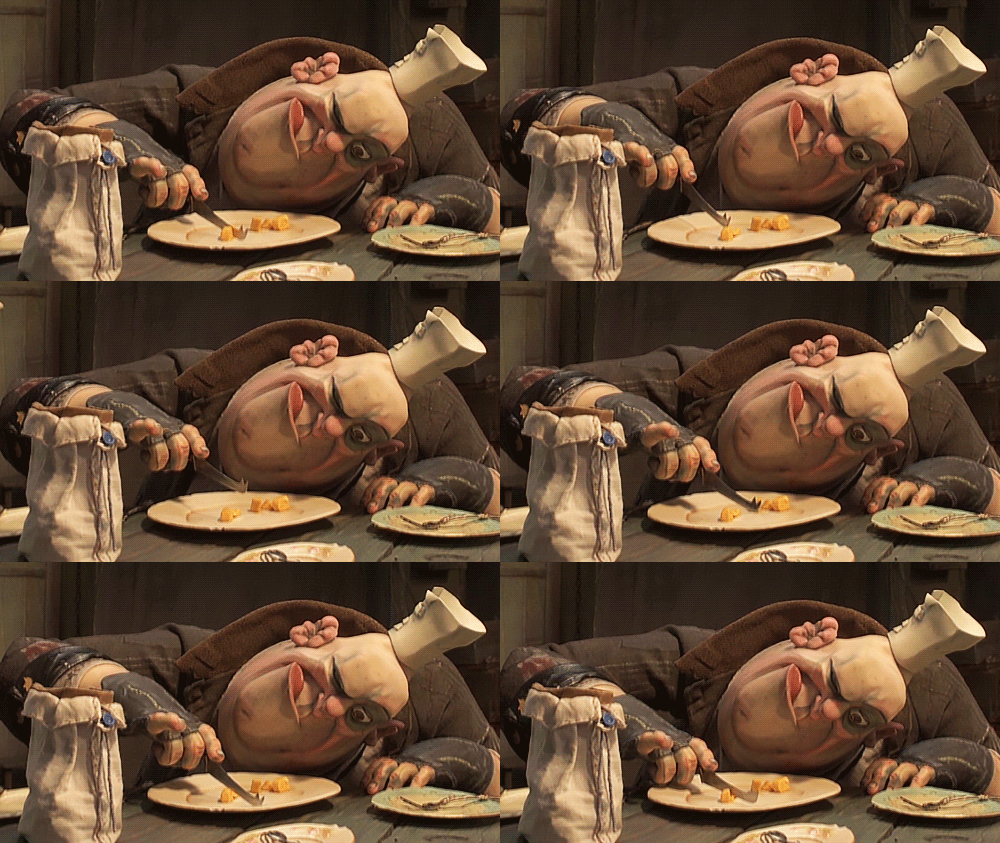
The Boxtrolls: A Poetic Meditation

"My fear is greater than your fear


for to support my terror I


have automatic ammunition


at such speeds that cannot be seen.


I have clubs and armors.


I have motors and missiles and mortars.


What have you?


Barely a toothpick to poke me with?


Your fear is but a paltry thing--


mine is the greater concern


that you must acquiesce to


as I crush you beneath my boot.


I must control and destroy your little life


for you inconvenience my comfort."

Friday, July 11, 2014

How to Train Your Dragon for Peace

How to Train Your Dragon
This is perhaps the third or fourth viewing of this film, in preparation of watching the sequel.  And it is as fresh and funny as when I first saw it.

As silly and fanciful as the world is, the characters of Hiccup, his father, and Astrid are excellent characters, better than the majority of characters in any comedy, let alone a children's film.  While it deals with the common themes of a child/parent relationship and a late bloomer, these are not the focused themes of the film.  It is about choosing peace with one's enemies instead of warfare and how it works far better than persisting enmity.

Many of us live in a nation that thrives on enmity, and all parts of the nation must persist in fearmongering and pinpointing who we should hate next in order to have unity.  When an enemy outside the nation isn't clear, then we must target enemies inside the country to be our target.  If we did not have hatred, it would seem, we would have nothing.  In the end, How to Train Your Dragon isn't a film pointed at children at all, but it is a message about welcoming diversity and working together with one's enemies against one's hatred.  It demonstrates that as powerful as the weapons and strategies of war seem to work, the most effective tools for peace are the tools of peace. 

It is easy for parents to dismiss this message because of the context of the film-- it is a highly entertaining comedy (I am chucking right now at the perfectly delivered line, "Thanks for nothing you useless reptile"), and it is a children's film.  But someday I hope that this film along with others will be pointed at as indicating a turning point that is to come, when we realize that creating peace has to do with understanding instead of greater firepower.

How to Train Your Dragon 2
This is one of those rare sequels that plunges into new territory, rather than simply rehashing what made the original film wonderful and popular.  Not only do we go to new lands and explore new storylines, but even the characters of the first film reflect the growth of five years.  There is a shadow of the familiar characters, but they aren’t the same, as if we were meeting our old friends at a high school reunion.

That is the glory of this follow up.  We have no idea where this film will go because it is so new.  Hiccup is different, as is Astrid.  The town, of course, must be different, but we spend very little time there, even as Hiccup himself is determined to explore the broader world with Toothless, his best companion.  This film has fewer laughs, but we hardly notice as it has more action and higher stakes.  And it has it’s first bad guy—Drago, who is both evil and vulnerable.  Everything is so fresh, so powerful, so quick that we don’t even have much time to feel.

This film also continues the theme about enemies and violence.  We see the source of Hiccup’s ability to be a peacemaker, and that impulse is affirmed.  In this film, as opposed to the first, the peacemaking tendency is balanced with the need to protect and, ultimately, with the need to vanquish an enemy who won’t recognize and actually threatens the peace. 

As a storyline, there’s not much to complain about.  As a philosophy, I am disappointed.  All the ideals of the first film—seeing the enemy as more than enmity, meeting the fear with provision of need—is undermined by the second film.  Drago is presented as a man who pursues violence because of fear... those fears could have been met.  But instead Drago was too much of a threat and had to be eliminated. These two points of view could be seen as a balance—a time for peace, a time for war—but in a week in which a victimized nation turns around and victimizes another nation because they “have to protect your own”, it seems clear that the two philosophies can’t work.


Enemies are truly vanquished through love and sacrificed, not war and destruction.  I am so glad to see Toothless and Hiccup come into their own in this second film.  But if I were to make another sequel, it would show how the demand of protection destroys other islands around them, simply because they didn’t belong. 

Thursday, January 16, 2014

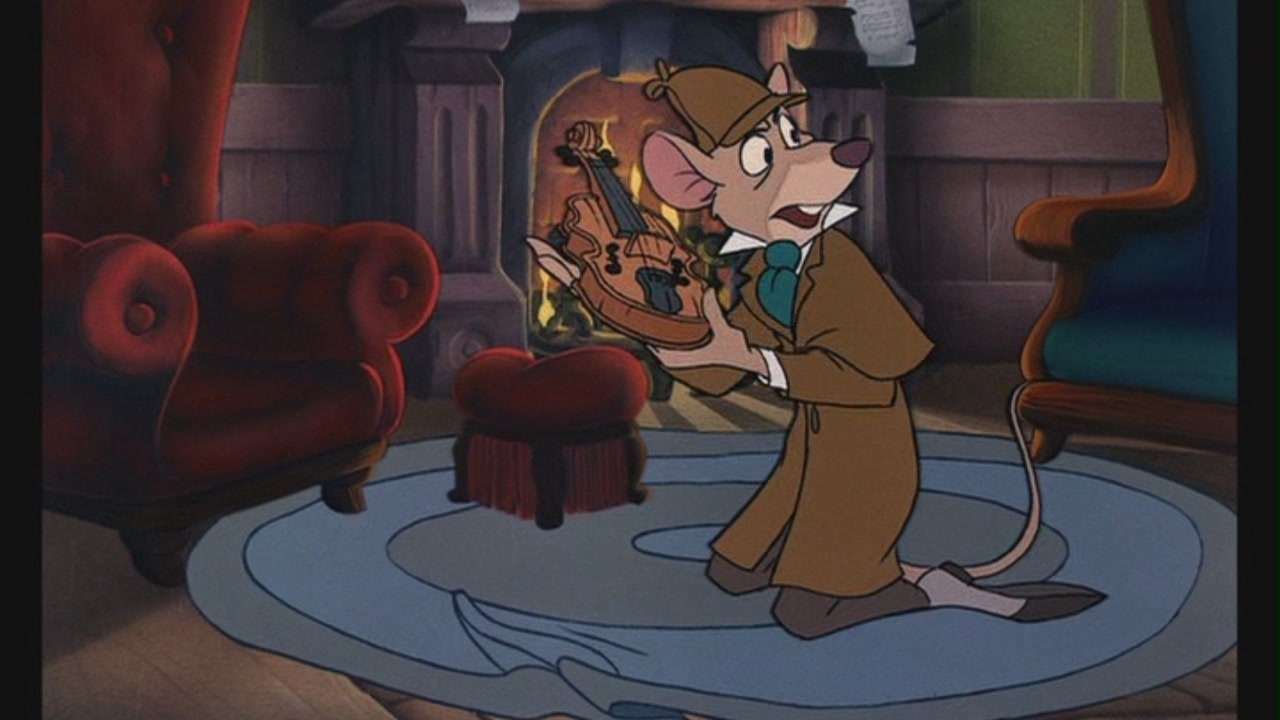
The Great Mystery of The Great Mouse Detective

The Great Mouse Detective is just a slice above the standard fare Disney was producing in the 70s and early 80s.  Basil (the mouse version of Sherlock Holmes) is an amusing interpretation with fun errors and the occasional deep depression. Vincent Price plays the joyful and occasionally scary Rattigan, who wants to rule the mouse world.

Where does this world come from? It seems that The Rescuers and this film are all located within this strange world in which some animals (but not all) have created a parallel existence alongside humans. What kind of circumstances created this?

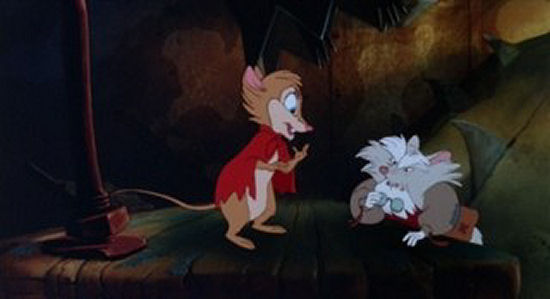
I think it all begins with Mrs. Frisby and the Rats of NIMH (or, the movie, The Secret of NIMH). Humans experimented on rats and gave them great intelligence, some of which were greater than humans. We see in that movie that rats passed this along to some mice, and even started interbreeding with them, creating intelligent children. Suppose they brought some other species into this, using the human experiments? The occasional bat (which they would think were normal because they seem so rat-like, but it didn't work out), some birds, and other animals. But some animals would have the intelligence-gene and some would not.

As for rats, because they were the first to gain intelligence, many of them would think that they should rule this animal world. However, the mice, because of their quick breeding, quickly took over and created underground societies. This led to many minor skirmishes between mice and rats, such as the one in this film.


BTW, I really prefer the title, "Basil of Baker Street". It flows so much easier.

Sunday, October 27, 2013

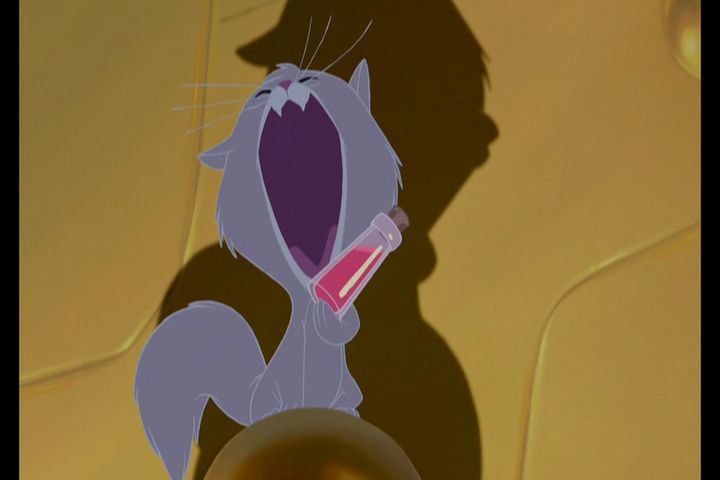
The Emperor's New Groove: It's just Funny, Okay?

There are many who were disappointed in this film before they even saw it.  It was to be called The Kingdom of the Sun and was to be the follow up to the dramatic and powerful Lion King.  Then someone *cough*MichaelEisner*cough* took the film away from Roger Allens and gave it to the comedic director Marc Dindal, reduced the budget and took away almost all the songs written by Sting for the original production.

Others don't care for this film because it's simply too light.  There is no dramatic tension, pretty much no sympathetic characters, and the moral is as obvious as the nose on a llama's face.

Nevertheless, for my money, this is the most entertaining of Disney (non-Pixar) animated films.

I grew up on Loony Toons, watching Bugs Bunny and Wile E. Coyote almost every day of my young life.  This film has the zaniness and the non-sequitur humor of those old films.  It also has a few times when the most awkward of adult conversations are placed in, just for fun. (An adopted son speaking to his mother about her much younger boyfriend: "So... he seems nice."  "Oh, he is.").  It pokes fun at every aspect of real life, from the self-importance of those who have always gotten what they wanted to brilliant ideas that occur to us in the middle of the night to the desperate importance of a minor talent of ours ("And I never liked your spinach puffs."  "Oh, she's going down").

Perhaps the voice-over narration is irritating, but if we get into the film, the irritating nature of David Spade is part of the fun, and how David Spade's character gets irritated at the David Spade narrator, tells him to "go away" and the narrator is silent throughout the rest of the film is not only brilliant, but a revenge on voice-over narration in all films.

How I love this film!  I count them by quotes that my family throw at each other almost every day:

"Uh huh, uh huh, uh huh."
"Point three: Look what I can do." "What does that have to do with..." "No, wait, he's got a point."
"Why do we even HAVE that lever?"
"Bring it on."
"No touchy"
"It's not the first time I've been thrown out of a window, and it won't be the last."
"Oh.  I feel it."
"Is that MY voice?"

Okay, I won't bore you with the silly quotes.  Enough to say that this movie works for us.  Yes, it's only entertainment.  It entertains us.  And that's what a movie is really all about, right?

Monday, August 26, 2013

Spirited Away: A Guide to the Perplexed

I have been shocked at how many of my friends have called my favorite movie of all time “incomprehensible” or “really weird.”   Well, let’s get this part out of the way: Yes, Spirited Away is my favorite movie.  The top of all my Top 100 Movies lists.  In a range from 1 to 10, I give it an 11. I honestly have a hard time imagining that another movie would ever beat it, but it’s possible.  And Hayao Miyazaki is my favorite director.  I have four of his films in my top 100.

Now, back to my friends.  It stuns me how many people watch Spirited Away for the first time and just don’t get it.  It’s too confusing, too gross, too weird.  But I’ve never felt that.  Sure, there have always been details I never got, but the heart of the film always made sense to me. 

So I write this guide to assist those who don’t understand the film.  Partly because I want you to love it as much as I, but mostly because I at least want the film to have a chance.  If it’s just one weird image after another, that’s no fun.  And Spirited Away IS fun.  I just watched it again last night and I had a big silly grin on my face all throughout the film.  Okay, let’s try to stick to the facts.  I’ll try to calm my uber-geek down.

What is this world?
So Chihiro (the girl) and her parents wander into an abandoned theme park where there seem to be ghosts and weird creatures.  And Chihiro runs into a large, beautiful building, which we are told is a “bathhouse for the spirits”, but what does that even mean?  What is this place, anyway?

This is where your Religion 101 comes in handy...  What?  You never took a Religion 101?  You were drunk when you went to Sunday School? Okay, let’s start from the beginning.

The basis of almost every religion is that there is an alternative world that we will conveniently call “the spirit world.”  It occupies the same space that we do, but we cannot see it or feel it.  Occasionally the spirits of this alternative world (which we can call “ghosts” or “demons” or “angels” depending on your spin) make small changes in our human world, but mostly they leave our world alone.  They have their place, and we have ours.  Oh, and they can see our world, but we can’t see theirs.  That sucks, huh?

Hayao Miyazaki’s universe (an alternative universe to our own, which all his films are in) is deeply influenced by Shintoism, an organized folk religion in Japan.  In fact, Miyazaki’s film My Neighbor Totoro is an excellent introduction to Shintoism.  Like many other religions, every place, every body of water, every forest and desert has their own spirit.  Totoro is a forest spirit, and the two girls are learning the way to respect and live comfortably with their local spirits, which summarizes what Shintoism is about.

What happens to Chihiro and her parents is they wander into a place where the spirit world and the human world intersect.  You can read about these places in the Bible, too—ever hear of Jacob’s Ladder?  That’s what happened to that lying thief when he stumbled across a cross point between the spirit world and the human world.  Spirited Away is about Chihiro’s adventures in one of those crossover places.

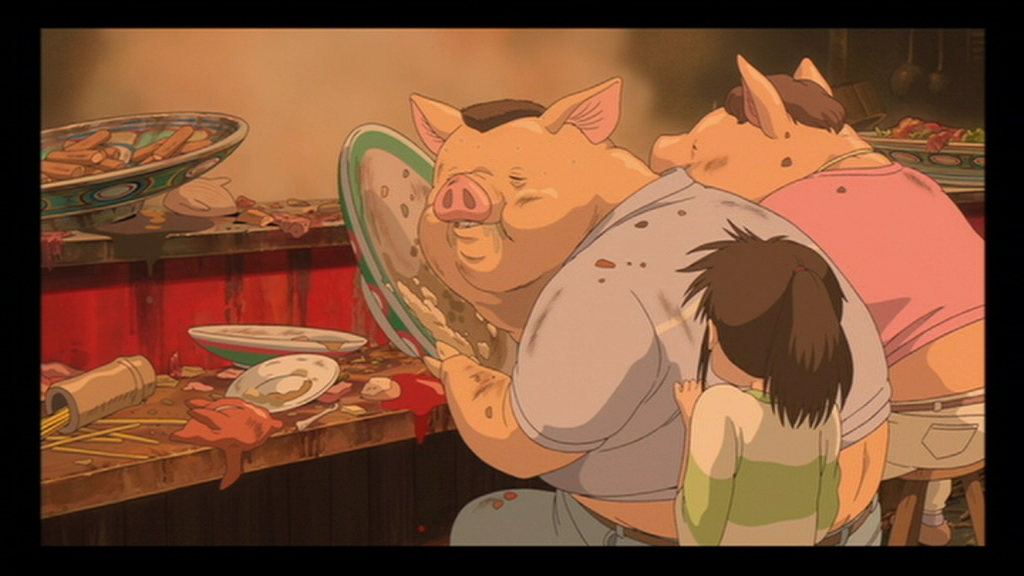
Why do Chihiro’s parents turn into pigs?
When you have crossed over to the spirit world, one of two things happen.  The first is you disappear.  That’s because humans don’t belong in the spirit world, so they wouldn’t exist there.  Haku has Chihiro eat a bit of the spirit world’s food, which gives her a place in the world.

Second, in the spirit world, you look like who you really are.  So the beautiful cheerleader who teased you in high school?  In the spirit would she’d be as ugly as her inner person was.  Even so, Chihiro’s parents showed themselves to be gluttons, so they turned into pigs.  The fact that Chihiro remained herself, shows how strong her character was.

Why does Haku help Chihiro?
Haku from the very first is concerned about Chihiro and her well-being.  But why?  As we find out more about him, we know that he isn’t a tenderhearted guy.  Everyone talks about him as the kind of person who would see a baby on the ground, crocs coming to eat him and he’d cross over on the other side of the road.  And maybe kick the baby a little closer to the crocs, just for fun.  But he goes out of his way, even to get himself in trouble, to help Chihiro.

And that’s because, we find out later in the film, Haku is a slave to Yubaba.  He’s stuck and he doesn’t know who he is, or where he came from.  And his only clue is that he recognized Chihiro.   You can see it as soon as he glances at her.  So Chihiro is his only way to escape the slavery.  Somehow, she is a clue to his identity, which he can use to escape Yubaba’s clutches.  So he has to care for her until he is able to figure out how he can use her for his own escape plan.

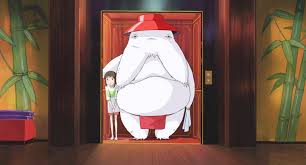
So why is he so mean to her in the elevator?  Because as long as he is in the bathhouse, under Yubaba’s influence, he has to be 100 percent henchman.  If she suspects that he has some connection to Chihiro, his plan is lost.  So this means that all those girls fantasizing about a romantic relationship between Haku and Chihiro… nope.  He’s not interested.  Besides, he’s a spirit—they aren’t even of the same species.

Why does Yubaba take Chihiro’s name and give her the name Sen?
Yubaba is the spirit/witch who runs the bathhouse with authority and a business-like charm.  Her character is based on the Slavic folk story Baba Yaga, who was an old witch who lived in a house with chicken legs, who was sometimes mean and sometimes very helpful.  Possibly Yubaba’s sister Zeniba is supposed to be the nice side of Yubaba?  She just gets cranky around thieves.

In the ancient world, to have another’s name is to have power over them.  So Yubaba has her workers sign away their names, so that she might obtain power.  Not just the power of them forgetting who they are, but she can use the name to put curses or other magic on people through the use of their name.  It’s interesting that Yubaba lifts most of Chihiro’s name off of the paper, leaving only the word “Sen” (because the writing style they were using is pictorial, not phonetic).   This also means that everyone’s real name in the bath house is different from what they are called.  And everyone in the bath house is desperate for money—is this so they can buy back their names and escape slavery?

What’s going on with Stinky?
Yubaba claims that a stink spirit” is coming to the bath house and everyone does their best to dissuade him away, but it’s no use.  He comes in, smells up the place like a porta-potty that no one has ever drained, and he takes his bath with Sen helping.  Sen then finds a “thorn”, which Yubaba figures out, and after Lynn ties a rope onto the thorn, everyone in the bath house has to pull it out, which is a bunch of garbage.  Yubaba then declares that it is a river spirit, and he provides everyone with wealth.  Okay, what?

So a river spirit would be a spirit that lives in a river, but is also identified with the river.  So whatever happens to the river, happens to the spirit.  The river was polluted severely to such a degree that it smelled to high heaven.  He came to the bath house to get the human debris cleaned out of him.

The great thing is how everyone works together here.  Sen had the compassion to see that something was wrong.  Yubaba had the experience and smarts to put the pieces together.  And it took Lynn and the rest of the bath house to clean the river and send him on his way.  In this movie, the little girl doesn’t do all the saving herself—she is simply the key through which saving can be started.  But it takes a community to make peace.  Or to clean up a stinky river.  Pretty clever parable, there, huh?

What’s the deal with No Face?
Although it’s kind of a side story, the plot surrounding No Face takes up the center of the film and it is arguably some of the most dramatic parts of the film.  And it is a key to the main theme of the movie.  Besides, much of what happens with No Face is simply gross, and why is Miyazaki putting us through all that?

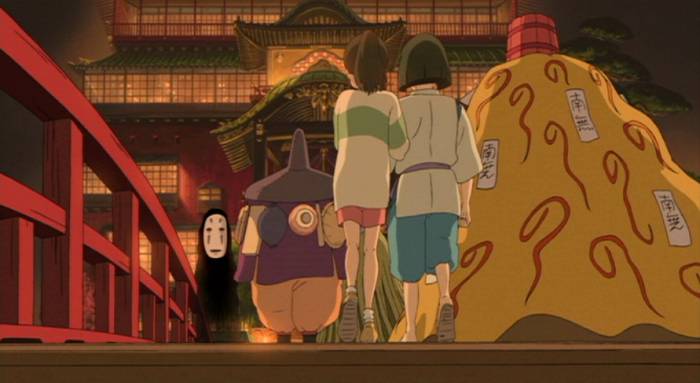
No Face first appears on the bridge as Chihiro is trying to get across. He notices her immediately.  Later, Sen invites him into the bath house from a side window (oops, broke a rule there).  In response to her kindness, he tries to help her out—stealing bath tokens, for example.  He wanders about for a while, swallows a talking frog, offers some gold and demands food.  A lot of it.  All the food in the house, practically. All the while throwing gold about for everyone to get rich, while he turns into a huge, hideous monster.  Sen stumbles across him, and he offers her a huge pile of gold, which she wasn’t interested in.  Gold had nothing to do with helping Haku or her parents, so she didn’t care.  No Face then goes in a rampage, swallowing other attendants and demanding Sen.  Yubaba tries to help, but to no avail.  Finally Sen comes in, tells him he has to leave, and gives him a piece of medicine.  No Face starts vomiting all over the bath house, all the attendants and froggy comes out fine, and then he throws himself in the river, where he follows Sen to go to Zeniba’s house.

What is this insanity?

First, about No Face—he is a spirit without a center, without a base character.  He, like Haku, notices her immediately, but not because he remembers her.  He notices her because she has such a strong center.  Chihiro/Sen, from the time she enters the spirit world is determined to save.  She needs to save her parents, and then she needs to save Haku, and later she needs to save No Face.  Her center is her compassion or “love” for all of these people.  It is her determination to love that is her center throughout the film.  No Face, being an empty, lonely spirit, recognizes this immediately and is drawn to her. 

But once he gets in the bath house, he is turned away from Sen by the powerful center of the bath house itself, which is greed.  Everyone in the bath house is infected by Yubaba’s greed.  Some have the greed for gold that she does, but others have a greed for freedom, a greed for food (mmmm, roasted newt!), a greed for whatever they don’t have.  Caught up by this gluttony and avarice, he (literally) ingests it, and demands more and more, using his magic to make dirt look like gold, and an orgy of greed ensues.

But what No Face really wants is a true friend, someone who really cares about him.  So when Sen refuses his trade of gold-for-relationship (if only he had listened to the Beatles!), No Face is confused and goes on a rampage.  Realizing that Sen is the only one in the bathhouse that will give him the love he needs, he demands her like a crying toddler after his mommy.  Sen finally meets with him and realizes that he is sick, just as sick that Haku was with the paper wounds.  So she offers him the medicine, and he begins vomiting out the illness—the greed.  Only after the greed was completely expelled was he empty enough to accept the subtle but caring touches Sen offered him.

This greed v. love theme is the center of the film.  Haku got trapped in a cycle of greed when he came to the bathhouse, coming to steal magic and becoming a slave to Yubaba’s greed instead.  But he is set free from her curse by Sen’s love and compassion for him.  The parents are trapped because of their gluttony to eat that which did not belong to them, assuming that their money would buy anything.  Sen’s love and determination frees them.

Greed is a slavery that love delivers us from.  Do you hear that, capitalist pigs?

What is Spirited Away about, anyway?
Ultimately, Spirited Away is a coming of age movie, not too unlike Miyazaki’s film Kiki’s Delivery Service.  Like that movie, Spirited Away shows a girl who’s determination and hard work causes her to mature. 
But Spirited Away goes further.  At the beginning Chihiro was a normal pre-teen girl—grumpy, anxious, full of irrational complaints  (apologies to my pre-teen daughter).  The only thing that saved her in the movie was her determination to save others.  Only when she realized that her parents, Haku, No Face and others depended on her to deliver them, did she have the power to grow up.  Hard work is a factor, like all Miyazaki movies, but the hard work that makes changes in the world is the effort of compassion. That’s what makes the world better.  That’s what makes US better people.  Some people are lazy gluttons (the parents), and some people are hard working for their gold (bathhouse attendants), but to grow up, we have to determine to work for others.

I love this movie because I love watching the imagination just go crazy.  I love watching the fanciful characters, and the adorable characters like the soot creatures, Kamaji the boilerman, and the Radish Spirit.  Yes, the Radish Spirit.  Love that guy. 


 But mostly I love this movie because I get to see Chihiro grow up.  She becomes a confident young woman, ready to face the world.  No longer naïve, but really understanding the power of compassion and how it changes people.  So awesome. 

Friday, July 19, 2013

Seeing and Feeling Love: Wall-E

#26-- Wall-E
It fascinates me, over the years of expressing my love for this film, that there are a number of men who agree with me, but most women I have spoken to think that it's okay, but not one of the greatest films ever made.

This is my guess as to why:

Wall-E works best as a fable about love. The environmental stuff is cool, the side characters are fun, but that's not where it tugs the heart. Yet this love-fable is really from a male perspective. Wall-E is how many men see themselves at their best. Working hard at an impossible task; lonely and romance is idealistic; we love our hobbies, but no one really understands. Finally, we fall in love, and the woman is strong, but distant... possibly even destructive (with her words, perhaps not with a laser cannon). But if a man is loyal and caring, even when she is unresponsive, he can eventually win her love.

This movie, along with perhaps City Lights, 50 First Dates, and Knocked Up (all speaking toward bumbling and perseverance winning the romance) give a particular male perspective to the idealized romance. The female version of this we have seen many times in romantic comedies-- Sleepless in Seattle, Pretty Woman. One isn't more realistic than the other, but the perspectives differ.


So call Wall-E the male (nerdy) version of a romantic comedy. But the other aspect of this film is the silence. With but a few words, all was communicated. Which makes me wonder, can we, as humans, actually recognize love without words?  Even with words, how do we know it?

You can show you care by making a Wall-E sandwich!
In the film, Eve didn't recognize Wall-E's love at first.  She thought he was cute, an idiot, imaginative, unique. The indications of his love were there when she was conscious-- the symbol of the flame, the scenes from Hello Dolly!  But it wasn't until she saw his everyday perseverance and care.  Perhaps his actions were sometimes useless or silly, but every one showed a concern and an over-the-top desire to please, to treat, to respect, to assist in achieving the other's goals.  Suddenly, Eve understood.  Perhaps for the first time she understood what love really was.  Not the hand-holding or the dancing, but the everyday concern.  

That kind of love doesn't happen right away.  It doesn't fit the quick mold that many movies require for falling in love.  It takes time and patience.  And this is why Wall-E is one of the great pieces of cinema.  It doesn't talk about love, it shows it.  It takes the times to display love in an entertaining fashion-- all with using as few words as possible.  Amazing as it is touching.

Wednesday, November 28, 2012

Can We Live In Our Dreams? (Paprika, 2006)


83. Paprika (2006)

In Brazil, Sam chases his dreams.  In Inception, dreams are visited.  In Paprika, the line between dream and reality evaporates. 

In order to provide therapy for patients, dreams are viewed and eventually enter the real world.  But this becomes problematic, as the dream world is, at best, a cracked reflection of the real world, and our own personas in dreams are unlike who we are in reality.  In dreams, even our desires and ambitions are warped and unlike our awake selves.

Should there be no separation between dream and reality, it would be as if our evil twins came to life, accomplishing feats we would not wish to see out of our dreams.  But who can say that it is not ourselves?  Should we do an evil act in a dream, we can say that it was “only” a dream.  But if dream becomes reality, then are we not the source of the evil act, and should we not be held responsible? 

No, let it never be.  Let our dreams remain in their own ethereal, nebulous world, where they belong, mysterious and unknowable.

Friday, April 6, 2012

Classic Cartoons of 1957

You may find that I am posting more about movies of 1957, like Paths of Glory in the last post.  The reason for this is because my movie comrades and I on the Filmspotting Forum are participating in Retrospots, where we grant awards for film of years gone by.  For our first round of Retrospots, we have chosen the year 1957.  This is a year of truly great film, like 12 Angry Men, The Sweet Smell of Success and Witness for the Prosecution and many others.

It was also a pretty good year for cartoons.  Yes, cartoons.

I like cartoons.  I grew up watching repeats of classic Popeye, Loony Toons, Woody Woodpecker, Droopy, Hanna Barbera, Japanese anime, and even Super Chicken.  And so, to provide a *ahem* service for the Filmspotting community, I watched a whole bundle of cartoons from 1957 and reviewed them.  For your reading pleasure, I share them with you, along with my rating out of five stars.  If you'd like to watch any of them, they are all available on YouTube under the name given.


The Candlemaker
A pretty standard Christian moral tale with a conclusion of working hard.  Occasionally the animation is interesting, but nothing exceptional here.  2.5/5


Ali Baba Bunny
A Bugs Bunny/Daffy Duck classic.  Some good laughs.  The tension the duck causes and the brains of the bunny are always enjoyable, and it’s a standard good time.  Hassan chop!  4/5


Piker’s Peak
The Bunny and Yosemite Sam, climbing the “Shmaterhorn”.   Sam is just sad.  3/5

Hooky Spooky
Casper the friendly ghost.  It started out so well, with a “night school” for ghosts, but as soon as Spooky wants to go to the zoo instead, the imagination ends. 3.5/5


The Story of Anyburg, USA
A Disney moral tale of who is responsible for good driving.  It’s not funny, and the point is pretty dumb, actually.  2/5

The Truth about Mother Goose
A history lesson on the background of three nursery rhymes by Disney.   Disney proves once again that they know how to educate better than anyone and that they really don’t know solid history.  Still, it was fascinating to watch. 4/5

Bedeviled Rabbit
Taz v. the Bunny.  Taz is smarter than he is in other cartoon, and it is better for it, although it really only makes him a substitute for Elmer.  Amusing.  3/5

Red Riding Hoodlums
A Woody Woodpecker knock off with his niece and nephew.  They try so hard and are occasionally funny, but they are just stealing jokes from Warner Bros, and the animation isn’t near as well done. 3/5
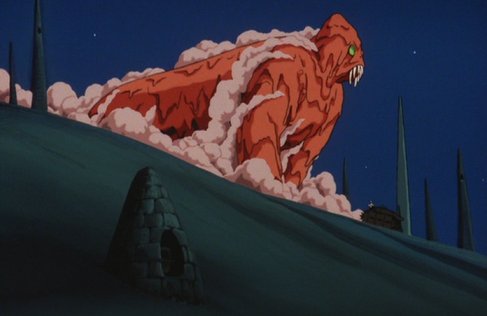
Byl Sobie Raz (Once Upon A Time)
A first effort by Polish/French director Borowczyk.  It’s got a lot of imagination put into it, but in the end it is simply too basic.  Not enough to keep ones interest even for its eight minute run. 
What’s Opera Doc?
Well, this is the star of the year, and no wonder.  It isn’t really funny, but it draws in a lot of elements—from Fantasia, Wagner and the basic plot from Bugs and Elmer—and it is dark.  Really dark.  It is the most different of any of the Warner Bros. cartoons, and the animation is truly artistic.  If you haven’t seen this since you were a kid, try it out.  (I still prefer Duck Amuck)   Kill the rabbit! 4/5

Romeo Rabbit
Elmer has to babysit a romantic (enormous) rabbit for his uncle who promises him 500 dollars to do the job.   Frankly, Elmer deserves every penny.  He forces Bugs to help him out, and Bugs at first is no match for the duo.  Of course,  he wins in the end.  A couple surprises, but a lesser Bugs. 3/5

Steal Wool
One of my favorite WB series is the Sam the Sheepdog and Ralph the Wolf (who is just Wile E Coyote behind a red nose).  These are just two working stiffs, doing their jobs, one to protect and the other to steal sheep.   The action between the bookends is pretty typical Road Runner stuff, except that Sam is almost miraculous in getting out of Ralph’s traps.  The ending of this one is one of my favorites. "Morning Sam."  "Morning Ralph."  4.5/5

Mucho Mouse
Time for a Tom and Jerry mini marathon.  Jerry is a Spanish mouse, who can never lose.  Tom is the champion mouse-catcher from the States.  Tom is too outmatched, it isn’t really fair and all the characters speak, which to me is breaking the rules.  I had no idea the series was created by Hanna Barbera, but this cartoon certainly has the look of later H/B series.  3/5

Tom’s Photo Finish
Spike is framed by Tom for eating the chicken, but Jerry has it all on film, and he begins placing copies of the photo all over the house where the masters will see them.  This is classic T & J.  And Tom doesn’t get beat up too badly.  4/5

Feedin’ the Kiddie
Jerry has a nephew visit for Thanksgiving, who is so focused on food that he doesn’t pay attention to the trouble he gets into with Tom.  I prefer the ones where Jerry actually has a challenge—he’s more fun on the defense than the offense.   3/5

Timid Tabby
Tom has his cousin George visiting, who is scared of mice.  Jerry thinks he can use this to his advantage, but because he can’t tell the difference between Tom and George, he is fooled.  Nice to see Jerry on the taking side for a change.  3.5/5

Tops With Pops
Tom and Jerry and Spike with his son Tyke.  Jerry hides with Tyke, whom Spike loves and protects from Tom.  Some good laughs here, although Jerry is infernally smug.  4/5

Give and Tyke
An unnamed dog is stealing Spike and Tyke’s dog collar so he doesn’t get taken into the pound.  While Spike’s voice is an imitation of Jimmy Durante, the unnamed dog is exactly like Yogi Bear.  However, Yogi Bear doesn’t appear until 1958, when Hanna Barbera open their own studio.  So this cartoon must be part of the vocal development of that most famous character.   There’s a lot of give and take here, but little decent comedy.  Still, this is historic, showing the development of MGM Hanna Barbera to their own studio work.  3/5

Scat Cats
Spike and Tyke have to keep a group of alley cats from getting into the masters’ house when they are away.  Another historic document.  Not only does the voice of Yogi return, but the alley cats clearly precede the series Top Cat, which began in 1961.  Some good laughs in this one.  3.5/5


Tuesday, November 15, 2011

Miyazaki's Saint


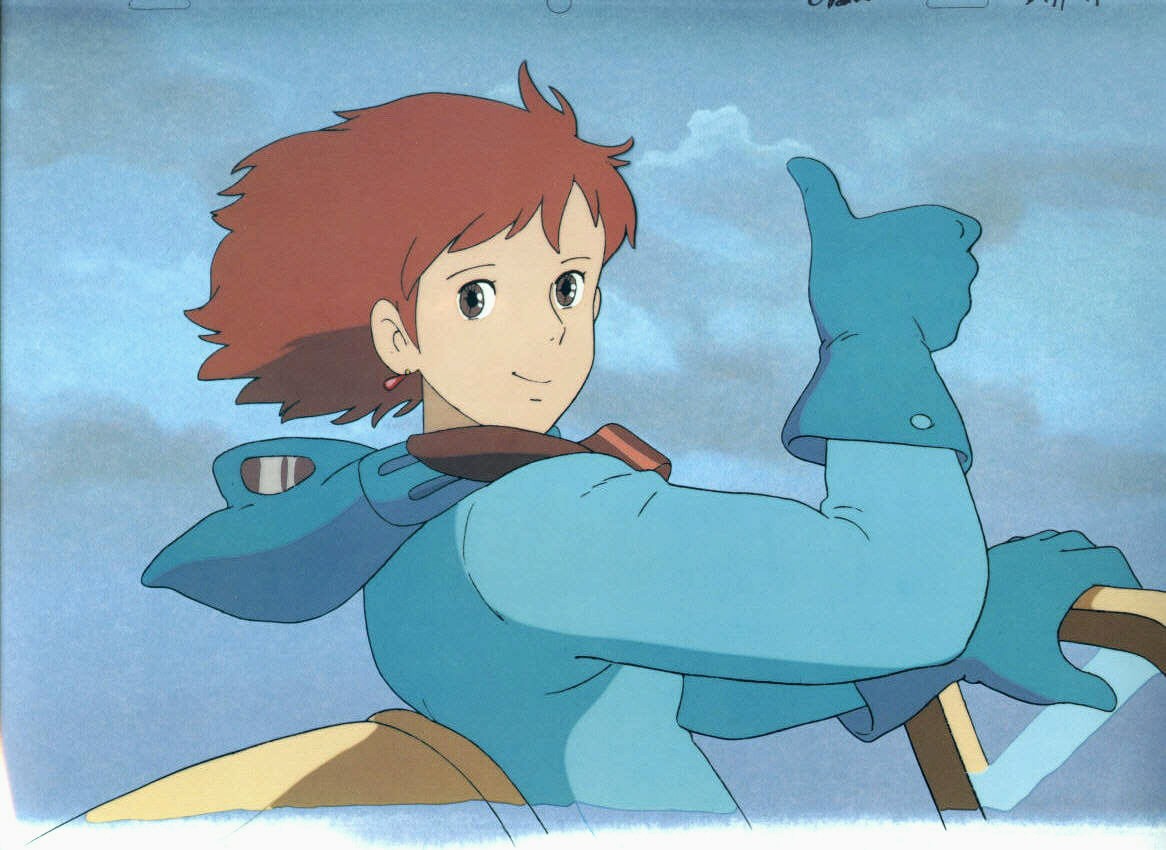
As a Miyazaki fan, it is my sworn duty to occasionally post a review of a film by the greatest animated film maker ever.  No, I do not consider that hyperbole.  Today, it is on Nausicaa of the Valley of the Wind.  Deal with it.


Some important facts to know about Nausicaa:

-She is a princess.  Who flies. But she doesn't sing which is why she isn't a Disney princess.

-She lives in a poisoned world.  Poisoned by us modern warmongers.  Yeah, she lives in the future.

-She is a badass.  She's not all sweetness and light. She can carry a machine gun twice her size with a wounded leg.  When she really gets ticked off, she can kill a dozen men twice her size in a heartbeat. I guess that's another reason she's not a Disney princess.  

-She is an environmental scientist. She not only creates a garden pure from the deadly radiation that makes nature become poisonous, she also figures out how nature was cleansing poison out of the earth on its own.

-She is a nature goddess.  She can communicate with animals and they do what she says.  Maybe she's really Dr. Doolittle in disguise.

-She does NOT go around naked without any pants.  Her pants are flesh colored.  That confuses and embarrasses a lot of men. 


Someone once mentioned that it is a pretty long title, but with Miyazaki one must expect that occasionally, such as Ponyo on the Cliffs By the Sea.

Nausicaa is Miyazaki's second feature film, and the first that begins using the themes that reflect his later films, among which are relationship between humanity and nature, flying machines, and war. It is based on a much longer, more complex manga written and drawn by Miyazaki.

Nausicaa takes place a thousand years after human war has poisoned the soil of earth to such a degree that poisoned jungles grew up, insects became gargantuan and huge protectors of nature were created-- Ohms. There are a number of human kingdoms, but the film deals with only three, Tolmekia-- a war-like kingdom that wants to rule the others; Pejite, the sworn enemies of Tolmekia; and the Valley of the Wind, a struggling utopia that gets caught up in the other kingdom's war. 

Nausicaa herself is Miyazaki's saint-- the ultimate peacemaker. She is frankly an ideal Buddhist saint, who communes with all creatures, and seeks to make peace with all. She is especially focused on creating harmony between humanity and nature, trying to heal the 1000 year old rift. Throughout that thousand years, the poisoned jungles and humanity have been warring with each other, each attempting to overthrow the other's rule. Only Nausicaa realizes that humanity would perish without the jungle and that the jungle can flourish under humanity's enlightened guidance. Nausicaa is somehow able to understand the true nature of whatever she is facing. Instead of reacting to a threat, she responds to the fear behind the threat. Instead of seeing the death of the toxic jungle, she sees the beauty of it. She works with the nature of whatever is before her in order to create harmony with all creatures.

On the surface, this film seems weaker than other Miyazaki. Most Miyazaki are amazing in the detail of the world that was created for the film, and Nausicaa is no different in that. But the dialog is less rich and entertaining, the colors seem washed, and the style of animation is not as fluid as other Miyazaki films. Part of this, though not all, is due, I think because Miyazaki is trying to communicate the bleakness of the world in disharmony with nature. War-- both human and natural-- has taken its toll, draining life from everything. At the end of the film, the colors suddenly are brighter and everything changes. 

Despite it's weaknesses (including a truly lame 80s score), this film is one of my favorites of all time. Despite it's bleakness, it is possibly the most joyful and optimistic of Miyazaki's films, and it plots out the general outline of hope for the future. Other Miyazaki films may communicate that war is bad and that bad guys aren't really all that bad, but this film actually lays out what would need to be done to end war, to change people's hearts. It isn't childish in any way, nor simplistic, if perhaps naive. It communicates that self sacrifice, listening to the another's heart, boldness for another's good and some basic reasoning can create a path out of the bleak world.

Perhaps I like this film because it is very much a religious philosophy I agree with. Perhaps it is because Nausicaa is such a strong character that to me she is the perfect moral hero. But with each time I watch it, the higher my estimation of it is.


The final important fact about Nausicaa is:


I may be secretly in love with her.  You can go ahead and tell my wife.  She already knows.


Saturday, February 26, 2011

Summer Wars: Googles of Fun


Kenje is hired by Natsuki to be her "boyfriend" for the weekend during her grandmother's 90th birthday celebration. The bad news: the world collapses over the weekend and it's partly Kenje's fault. The good news: Natsuki's family is there to make things right!


The characters remind me of Miyazaki, especially in their friendliness and work-hard attitude, but there is little depth or real emotion going on, apart from embarrassment, especially on the part of the two in the romantic focus. The best character is the grandmother, Sakae, who is shown to be insightful, tough and imminently confident. However, the whole group is fun with all their little quirks and attitudes. The English dubs are pretty well done as well, if you are thinking about going that way.

The visuals are magnificent and detailed, especially when dealing with Oz, the internet world that everyone seems to be going on. There's a lot to see, and a number of fun little details.


The plot reminds me of .hack more than anything else. It's kind of silly, but the best part is how they integrate all the characters into this fun story. It's a perfect plot for today's gaming teens and pre-teens. It connects the gaming world with the real world and also connects family with internet. It is illustrating a chance for the isolated internet junkie to be worthwhile and connected to his or her world surrounding them.


This is probably the most fun I've had with a movie in the last year, and certainly deserving of consideration in next year's Filmspots.

Steve's rating: 4.5/5
Mercy's (my ten year old daughter's) rating: 5/5

Wednesday, February 9, 2011

Spirited Away: The Greatest Film of All Time


"An alternative universe coinciding with our own"

I really appreciate what a co-movie lover said recently, that as one gets to the top of one’s all time favorites list, that it becomes more personal. I think that is really true. My top ten is peppered with films that mean something important to me personally, but may not be as thrilling to others: Wendy and Lucy, The Mission, Being There. They all carry double meaning for me: not only being well done films in their own right, but also expressing messages that are important to my life. They not only speak to others in a general way, but they speak to my life directly in a way others might not understand.

So, with Spirited Away, I can give you the many reasons why this favorite film of my favorite director is generally excellent. The animation is top notch, for one. In re-watching Ponyo, I realized how much we are missing in focusing on computer animation instead of hand-drawn. It has taken hand-drawn animation almost a hundred years to reach this place, while computer animation is still a teen. Computer animation is wonderful, but it still has a long ways to go to establish a set of symbols we recognize as human emotion. Miyazaki, however, has taken the step that Disney never did to make characters that are so real we feel that we know them. This is certainly found in the writing and the voice acting (even the dubbed vocals!), but especially in the drawing. It is not because they are more realistic looking, but because we grew up with this kind of animation, and Miyazaki, adding in expressions found in manga and older anime, has given us a visual language we can truly connect with.


"Living in the stream of life, led by love"

Also, Spirited Away is one of the magnificent stories of imagination. Setting aside the Japanese spiritism (which we will talk about in a moment), the amount of imagination that creates both the setting—a bath house for spirits—and specific unique characters such as No Face and the Radish Spirit, takes even the imaginative achievements of The Wizard of Oz, The Neverending Story and Labyrinth to new heights. But more than that, this imaginary story is realized perfectly visually. We can see this world existing. This isn’t just an amusing tale with muppets or dressed up humans or poorly executed claymation. This is another world that we have the opportunity to visit for a couple hours, and that experience gets added to our own.

I am just saying what could really be said of almost any of what I call “first tier” Miyazaki. As well as this: Miyazaki’s characters are fully realized. These are real people, even the spirits are of a type of character we recognize. While there is sometimes comedy, it is the comedy of real life, not just pratfalls and one liners. When there is achievement, it is rarely of the deeply heroic kind. Rather, it is the daily success of those who act noble in small ways. In this way, Miyazaki can connect to us in ways that blockbusters rarely do. There are scenes in Miyazaki that, despite the outlandish settings, we can see as reflections of our lives. Or our lives as we wish them to be.


"Look, I can do it, too!"

There are two reasons, however, that Spirited Away especially speaks to me personally. First of all is because we get to see Chihiro/Sen grow up. I have three children of varying ages—17, 14 and 9—and they are all in different stages of development. All of them are, in a sense, Chihiro. At the beginning she is whiney and grumpy and self-centered. The move is hard on her, her parents realize this, but it is necessary and they need her to stay strong through the difficulty. But it is when her parents become self-centered that she is forced to grow up and become stronger than she—or her parents—ever thought she could be.

Step by step we can see her shed her self-centeredness and fully take on the task of being responsible as the best of grown-ups are. This is in contrast to Kiki of Kiki’s Delivery Service who begins the movie responsible and hard working. Chihiro had to struggle through every step of the way. First she expresses the moral outrage many young people express when they see grown ups acting irresponsibly. Then she follows important instructions for how to live in the new world (something most fairy tale protagonists fail to do). Then she learns boldness and tenacity in the face of threat. Then she learns about hard work under someone else’s orders. Then she learns about loving people even when they seem to not be lovable at times. Then she learns about sacrifice for love. And finally, she learns that intelligence balanced with care and wisdom is what truly saves the day.


"Soaring high"

These are the life lessons I want all of my children to learn. They are the lessons I see them learning, bit by bit. The art of raising children is the art of seeing them become the Chihiro at the end of Spirited Away. Every once in a while, as a parent, you can think to yourself, “I taught them that”, but most of the time you can’t. These are lessons they have to learn themselves in the midst of the struggles they have to face in life. But at the end of the movie, I am so proud of Chihiro, the buttons on my vest would burst, if I actually wore a vest. She is my children. My son becoming a responsible adult. My oldest daughter being self-confident and self-reliant. My youngest daughter learning to speak with respect and act in mercy. This is all I hope for my children, in the strange worlds they will have to challenge.

My final reason is my strangest, and probably my most significant personal reason why I love this film. I am only going to tell you guys, and I hope you won’t tell anyone else. Not because I’d get in trouble, but because it’d be difficult to explain to my denomination and especially my congregation. I could do it, but it wouldn’t do any good, so why bother? Anyway, here it is: the metaphysics of Spirited Away is pretty close to how I see the world functioning.


"Christianizing Shintoism"

No, I don’t think that spirits have their own bath house and restaurants. I don’t think that if humans eat spirit-food that they turn into pigs. Nor do I think that young girls could be hired by someone to serve spirits. I do, however, believe that there is an alternative universe, that runs on its own physics, that runs parallel to ours. I do think that there are beings—and you could call them spirits—that live in that universe. I also think that most of them are morally neutral, neither good nor bad, just trying to live their lives by their own values. And I think that, at times, the two universes can converge, and allow communication between them.

This is not an unusual worldview, in the broader scheme of things. Historically, before the Christian era, almost everyone in the world believed that summary of mine. Certainly the ancient Jewish people did, as well as the first Jewish Christians. It is Plato and his disciple Augustine that began to turn the world away from this notion. They saw the spirit world as either the realm of ideas or as under the control of a single unified being. Under their philosophy, the spirit world is neat and orderly, with everything politely lined up perfectly, within the mental grasp of humanity.

The ancient pagan world, the ancient first temple Judaism and the first century Christian church saw the spirit world as full of chaos as it was of spirits. Each spirit had its own focus and desires and hopes. They had their own realms of responsibility—jobs, if you will—of rivers and vegetation and winds and planetary beings. Part of the spirit world is described as a sea, filled with dragons of chaos, battling against spirits who desired order and peace in both the spirit world and on earth.

Spirited Away, although a fantasy, is based on Japanese spiritism, a form of that ancient worldview. In a twisted sense, the metaphysical basis of that movie is somewhat the same as the writers of the Bible. This is how I see the world working. I do not deny scientific reality—our world does operate on the laws of physics and development of life as discovered by scientists. But looking at the physical realm is only a part of the story, like Chihiro’s parents seeing an abandoned amusement park.

Some are content with this world and understanding its laws. Others get to see the wonder and magic of the world below the surface, on a level not usually seen by eyes. I wish to be one of the later.

Any who are concerned about my right to be a pastor, or my sanity, I would be glad to give the phone number of my denomination, and you can rat me out. I understand. Sometimes I don’t think I’m completely sane, either. By the way, my wife already knows, so you don’t need to bother calling her.