Saturday, July 26, 2014

The Madness of Sorcerer (1977)

It is one of my wife's pastimes to play Sims on the computer while I watch a film on the other side of the room with headphones in. She knows when a film is really good because I can't keep quiet. I'll moan or talk to the characters or gasp, and she sits there and smiles. When I watched Sorcerer, she had a full evening's entertainment, without ever hearing a single line of dialogue. I was especially noisy that night.

I honestly think that William Friedkin of the 70s is one of the greatest storytellers of cinema. The French Connection, The Exorcist, and Sorcerer are three of the best told stories we have. In Sorcerer, we are thrown immediately into the action in Jerusalem where a bombing occurs. Then in Paris, where an executive is threatened with jail. Then in New York where heist goes all wrong. And these disparate stories are not only captivating, but they introduce us to the world through the film's eyes-- desperate and without hope. Every time hope emerges, there is another dousing of ice cold water to bring us back to this reality. This doesn't mean the film is always dark, but we can understand the motivation behind the characters because desperation leads to extreme choices.


And the film is extreme. To a degree that a kind of madness took over even during the making of the film, where William Friedkin, looking back, regrets putting his actors in an extremely dangerous situation to film the famous bridge scene. And the insanity comes through. By the end of the film, I was desperate myself and the ending had me throwing up my hands, exclaiming. Which amused my wife to no end.

Thursday, July 17, 2014

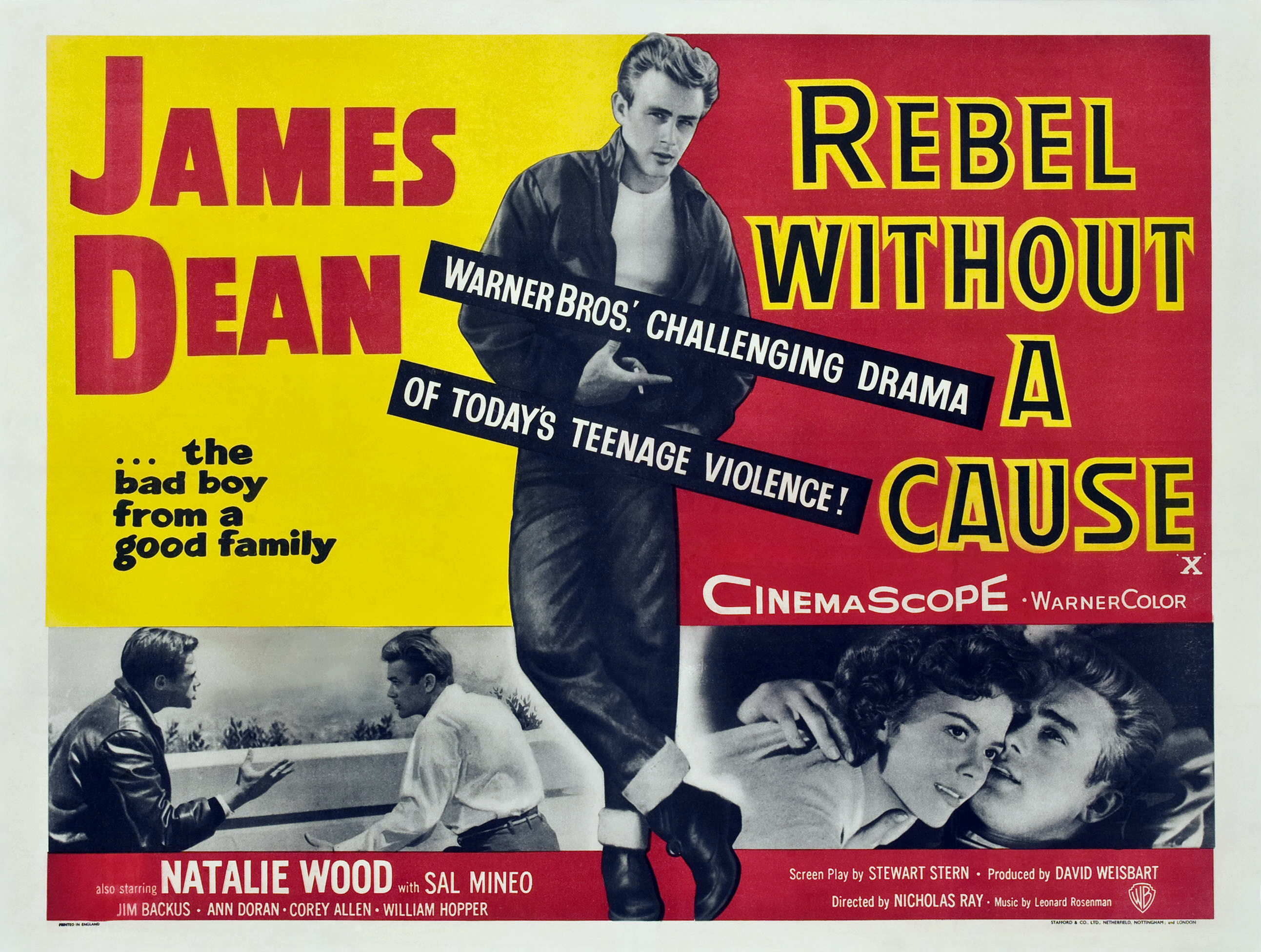
The Everyday Rebel Without a Cause

Mic Eddy is a homeless, with red hair and pale skin and an outgoing disposition. He's in his twenties, and has obtained and lost some jobs, but he doesn't care about that. What tears him apart is the lack of respect that he experiences daily, because, frankly, everybody dislikes him. He acts like a child, gets in people's faces, destroys property without thinking. He does this because he must have attention and if he can't get positive attention, he'll get whatever attention he can. He drinks so that the negativity that surrounds him doesn't bother him. Honestly, he's a friendly, gregarious, fun-loving person. But he is caught in a cycle of doing all the can to obtain respect, but losing it with every outgoing step he makes.

I thought about Mic throughout this whole film. The film is focused on the relationship between disheartened teens and their broken parents, but deeper it has to do with honor and what one would do to obtain honor. And what one lives with when honor isn't available, or at least the kind of honor that really matters.

There are a number of weaknesses to the film, not the least of which that I recognize a couple actors from later television sitcoms (although I recognize that isn't their fault-- actors gotta work. But every time I see James Dean's father I see Hurston Howell III, and wonder if Dean's character isn't called Jim Howell...). Occasionally the actors are playing out a silly set of lines, or a shot looks too obvious or purposely pretentious. The fact that all the movement and emotional changes happen within a 36 hour period is a bit too fast.


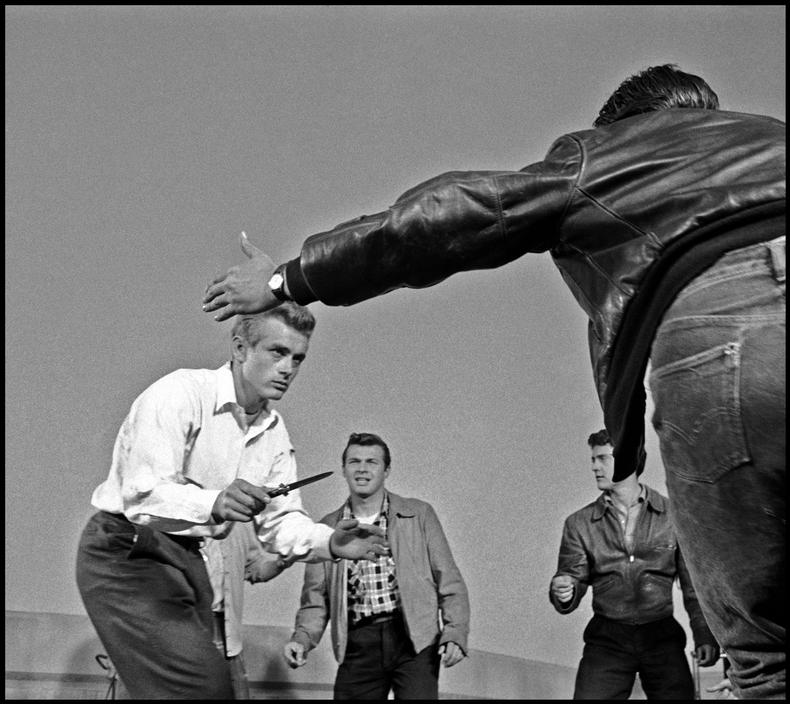
But when this movie works, it is tremendous. The game of "chicken" is bursting with cinematic power. James Dean is perfect, innovative, hard to take my eyes off of him. The movie captures my attention and doesn't let go. Despite its shortcomings, I can see why this is counted among one of the greats of cinema history and deserves its lofty reputation.

Friday, July 11, 2014

How to Train Your Dragon for Peace

How to Train Your Dragon
This is perhaps the third or fourth viewing of this film, in preparation of watching the sequel.  And it is as fresh and funny as when I first saw it.

As silly and fanciful as the world is, the characters of Hiccup, his father, and Astrid are excellent characters, better than the majority of characters in any comedy, let alone a children's film.  While it deals with the common themes of a child/parent relationship and a late bloomer, these are not the focused themes of the film.  It is about choosing peace with one's enemies instead of warfare and how it works far better than persisting enmity.

Many of us live in a nation that thrives on enmity, and all parts of the nation must persist in fearmongering and pinpointing who we should hate next in order to have unity.  When an enemy outside the nation isn't clear, then we must target enemies inside the country to be our target.  If we did not have hatred, it would seem, we would have nothing.  In the end, How to Train Your Dragon isn't a film pointed at children at all, but it is a message about welcoming diversity and working together with one's enemies against one's hatred.  It demonstrates that as powerful as the weapons and strategies of war seem to work, the most effective tools for peace are the tools of peace. 

It is easy for parents to dismiss this message because of the context of the film-- it is a highly entertaining comedy (I am chucking right now at the perfectly delivered line, "Thanks for nothing you useless reptile"), and it is a children's film.  But someday I hope that this film along with others will be pointed at as indicating a turning point that is to come, when we realize that creating peace has to do with understanding instead of greater firepower.

How to Train Your Dragon 2
This is one of those rare sequels that plunges into new territory, rather than simply rehashing what made the original film wonderful and popular.  Not only do we go to new lands and explore new storylines, but even the characters of the first film reflect the growth of five years.  There is a shadow of the familiar characters, but they aren’t the same, as if we were meeting our old friends at a high school reunion.

That is the glory of this follow up.  We have no idea where this film will go because it is so new.  Hiccup is different, as is Astrid.  The town, of course, must be different, but we spend very little time there, even as Hiccup himself is determined to explore the broader world with Toothless, his best companion.  This film has fewer laughs, but we hardly notice as it has more action and higher stakes.  And it has it’s first bad guy—Drago, who is both evil and vulnerable.  Everything is so fresh, so powerful, so quick that we don’t even have much time to feel.

This film also continues the theme about enemies and violence.  We see the source of Hiccup’s ability to be a peacemaker, and that impulse is affirmed.  In this film, as opposed to the first, the peacemaking tendency is balanced with the need to protect and, ultimately, with the need to vanquish an enemy who won’t recognize and actually threatens the peace. 

As a storyline, there’s not much to complain about.  As a philosophy, I am disappointed.  All the ideals of the first film—seeing the enemy as more than enmity, meeting the fear with provision of need—is undermined by the second film.  Drago is presented as a man who pursues violence because of fear... those fears could have been met.  But instead Drago was too much of a threat and had to be eliminated. These two points of view could be seen as a balance—a time for peace, a time for war—but in a week in which a victimized nation turns around and victimizes another nation because they “have to protect your own”, it seems clear that the two philosophies can’t work.


Enemies are truly vanquished through love and sacrificed, not war and destruction.  I am so glad to see Toothless and Hiccup come into their own in this second film.  But if I were to make another sequel, it would show how the demand of protection destroys other islands around them, simply because they didn’t belong. 

Sunday, July 6, 2014

Perfection In Depicting the Evil in All of Us: Schindler's List

I have a short list of films, including Rear Window, Citizen Kane and The Godfather which I consider "perfect." There is not a frame out of place, not a sour note, not a dull moment. In these films, the great directors were at the top of their powers and they created their master pieces, that which we could all point to, which declare their greatness.

I will have to include Schindler's List in that short canon of films.

I feel, at times, that I am Schindler. The man whose motivation is questionable, but whose compassion and humanity grows through time and relationship and crisis. He who had to be led by the hand to mercy, but in the end weeps because he has not done enough.


There are Schindlers in every age, every era, stumbling upon a small way out of the horrors of prejudice and dehumanization. This film is not just about a moment in history, but about every moment. A call to sacrifice for those who die around us.

* * *

At this point I need to apologize to Liam Neeson for my "Rule of Liam Neeson", which goes, "An excellent actor, in order to obtain the maximum praise, must choose films in which he is the best aspect of the film."  Clearly, Schindler's List does not fit that restriction, despite the fact that The Phantom Menace, Taken, Les Miserables (1998), Clash of the Titans, Non-Stop, and many other films he starred in do qualify.  

- It is interesting to note that a film about the real life Schindler has been talked about since 1951 when Poldek Pfefferberg spoke to Fritz Lang about the possibility.  Poldek finally enouraged Thomas Keneally to write the novel on which this film was based.


-Spielberg didn't take a fee for this filming, feeling that if he did it would be "blood money".

-Auschwitz scenes were only filmed outside the gates, not inside, out of respect for the dead.

Monday, June 30, 2014

Noriko's Dinner Table

This is not the best made film. It feels like a pulp film, inexpensively put together with questionable acting skills. The cinematography wasn’t excellent and even when the shots were carefully thought out, no magic displayed itself. But it was one of those rare films that, after it was finished, made me sit and think about the themes of the film. No matter what the technical problems of the film, the plot, themes and development weren’t among them.

This film acts as a companion to Suicide Club, which I have never seen, but the events of that film are referred to in this prequel. Can it really be called a prequel, since it shows event both before and after the previously made film?

Anyway, we’ve got Noriko, who is unhappy at home. She feels that she could find happiness on the internet and then she thinks she can find happiness living in Tokyo with her internet companions. But her friend, Ueno Station 54, AKA Kumiko, isn’t interested in helping Noriko find happiness, but to change society.

After Noriko runs away, her sister Yuka, puzzles out her own unhappiness and eventually pursues Noriko to Tokyo, only to find that she is no longer Noriko, but Mitsuko, an actress paid to act like missing family members to those who could pay for the service.

A heavy curtain of mystery weighs over the film, especially over the first two thirds. What is the real purpose of this group? Is there a Suicide Club or not? If not, why the mass suicides? What is Kumiko’s real purpose? There are answers to these questions, but not without our effort to piece them together along with Tetsuzo, N and Y’s father.

This is a more than worthy movie, with equal parts pulp and social commentary. 

Friday, May 16, 2014

Judy Garland's A Star is Born

This musical has more in common with the musicals of the 60s like Camelot, Funny Girl and Fiddler on the Roof, which all begin with joy and new experiences, and descend into sorrow. But I'd say that A Star is Born is more emotionally complex and wise than any of them.

The film is certainly all about Judy Garland. I even wonder if they drew some from Judy's background for Esther's background, because they are so similar. Every musical sequence stars Garland's powerful, rich voice, and I have no complaints about that. There's not a lot of dancing, or a lot of scenes from the alternative "musical world", but some amazing music. My favorite is The Man That Got Away with a jazz combo, but Garland's performance in Someone At Last was a wonder to behold.

The version I saw was a "restored" version which had audio sections of the film restored with stills from the scenes. Although I'm happy to have the cut scenes because it made the story richer, but having long sections of stills instead of video was distracting. I wonder if I would have been better off without those scenes in overall enjoyment of the film.


Just having the dual story of rising star and falling star but married is a powerful story. Because one's gain can be the other's loss, adding up to a losing proposition. Yet, as we see in the number "Lose That Long Face" the rising star still has to act happy performing when she is torn apart. The final scenes of the film clearly communicate Esther's emotional state and give every opportunity to be empathetic without manipulation. If the end of the film leaves our eye dry, then there is something deeply wrong with us.

Sunday, May 11, 2014

Love and Dogs: Amores Perros

Three intense stories about love and dogs. A young man in love (lust?) with his brothers wife, uses his brother's dog in fights to raise money to steal her away. A just-discovered model gets in a car accident and begins losing her grip on reality. A down-and-out assassin does one more job while pining for his lost daughter. Any one of these stories is enough to fill a film, but together, it makes for an intense two and a half hours.

Director Inaritu keeps it all cinematic, even though the plot could lose that focus. He mixes up the stories and pumps up the intensity and gives us a variety of music that highlights both the similarities and differences in the stories.


In the end, it all seems to be about humans fruitlessly fighting against fate. But that sounds so depressing and dull and the movie is not really that. Because our protagonists are complicated, we both love and hate them, and we wonder if their futures are better or worse for having gone through the drama of these stories.