Monday, October 20, 2014

Struggling with the Void: The Hours

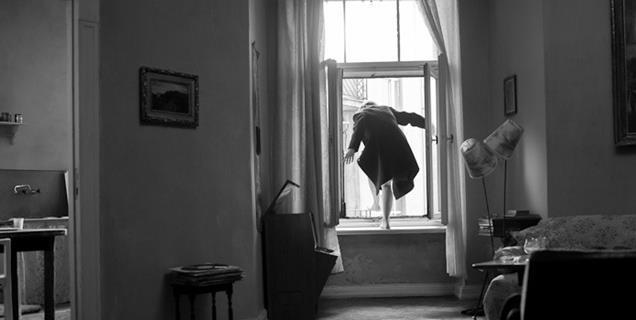
The Hours is a film of three stories about three women all living a form of the life of Mrs. Dalloway, the lauded novel by Virginia Woolf.  The first story is that of the author herself played by a gaunt, frail Nichole Kidman.  She uses the novel to struggle with her inner demons, to which she eventually subcumbs (as we see in the first scene of the film).

Then there is Mrs. Brown, a housewife in the 50s, masterfully played by Julianne Moore. She has the perfect life, the perfect husband, the perfect, beautiful son, yet she is inadequate for this very life she is living.  The third woman is Clarissa, played by Meryl Streep, a book editor who struggles to keep her dear friend, poet and ex-lover involved as he struggles with AIDS.

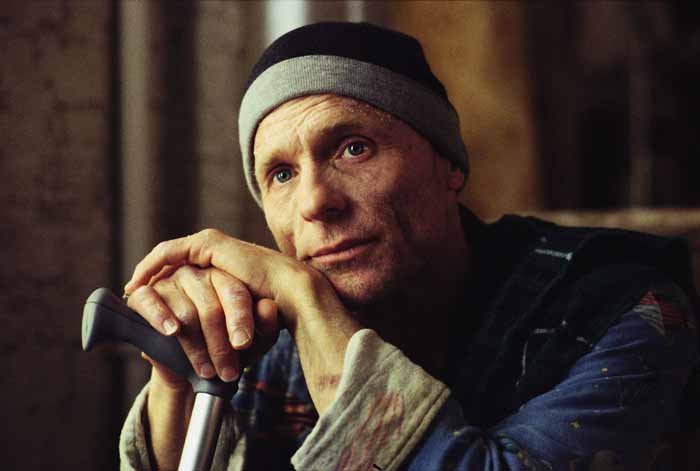
The brilliance of this film is the weaving of these three stories into one coherent whole about life and happiness and relationship.  This is cinematic literature, depth in film at its finest, even if it wears its literariness on its sleeve.  The film is held strong by its amazing cast, including John C Riley and Ed Harris, who take the great ideas and encapsulates them into a reality that touches us and breathes.  Even the editing is top-notch, clearly spelling out a narrative that could easily be confusing for frustrating, but never is.

One of the greatest aspects of the film are the touchstones of themes in the story.  There is a desperate kiss in each story, each protagonist collects flowers to maintain a semblance of normalcy, and they all have an individual that keeps them alive and breathing, often out of duty.  The deeper we look into this film, the richer we find it.

*  *  *

Is the purpose of life happiness?

Happiness is so fleeting and life continues long after happiness has passed.  A life might be spent pursuing happiness, but that goal might be too lofty to be achieved, yet does that make the life any less meaningful?  Certainly life must have a certain level of contentment, a low level of happiness, a sense that "yes, this is the direction things should be going in."  We must have a satisfaction with who we are, what we do, lest we perpetually be in transition.  At the very least, we must hope that who we are will eventually be enough to satisfy ourselves.

But what if we have obtained happiness, all the things that we have reached for we finally achieve, all the hope realized and then, mysteriously, we are still not content? Some might say we are ungrateful, but the inner emptiness has noting to do with appreciation.  We can be amazed and thankful of how far we have come, but it simply isn't enough.  Perhaps the goals we achieved were wrong headed to begin with, or perhaps our emptiness will never be filled.  We don't know.  And the ache becomes more and more unbearable.

To obtain contentment, we must have peace both in our environment and in our hearts.  To claim that one or the other kind of peace is all that is necessary leads to despair, causing one to fall in the personal void of discontent.

Struggling with this void comes naturally to those who have no control over their own life decisions. Their lives are taken out of their hands and their happiness and contentment is determined by those who only see a shadow of their deeper selves.  There may be fleeting glimpses of bliss, or the opportunity to build the life of another, but this is inadequate to avoid despair over the long haul. When we have no say in our own lives, the natural result of this is discontentment.  The vulnerable life is the despairing one.

Perhaps contentment is essential, but if we see the basis of life as our own personal happiness, that would deepen the discontentment, because it can never be ultimately achieved.  But what else is there?  Compassion?  Building society through family or other means?  This is the core of our being, and we must discover it for ourselves.  In the end, the determination of what gives our life purpose is a solitary determination.

Monday, September 29, 2014

The World's End: A Poetic Meditation

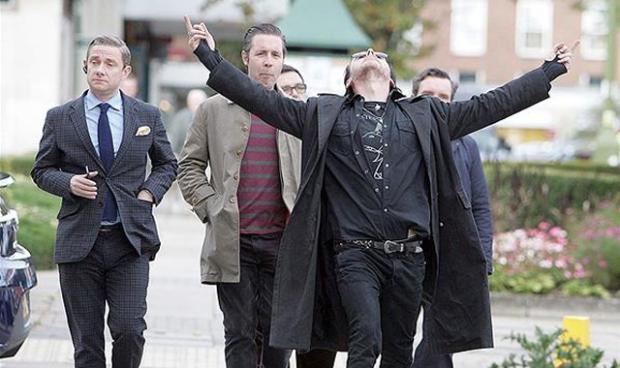
Glory to the crude!


All praise to the crass!


The very gentle capers


When passed through our nature


Becomes crap!


Sans humus we are not human.


May the lowly be raised!


Omnipotence to chaos!

The Boxtrolls: A Poetic Meditation

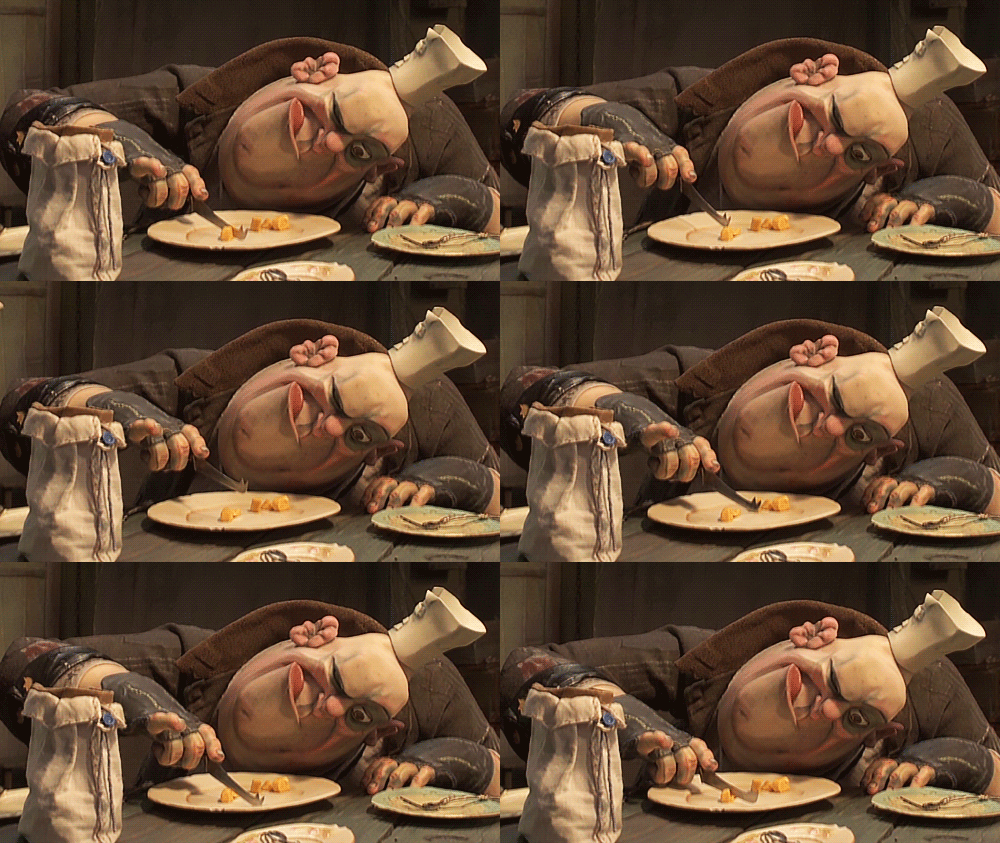
"My fear is greater than your fear


for to support my terror I


have automatic ammunition


at such speeds that cannot be seen.


I have clubs and armors.


I have motors and missiles and mortars.


What have you?


Barely a toothpick to poke me with?


Your fear is but a paltry thing--


mine is the greater concern


that you must acquiesce to


as I crush you beneath my boot.


I must control and destroy your little life


for you inconvenience my comfort."

Sunday, September 28, 2014

The Beauty of Ida

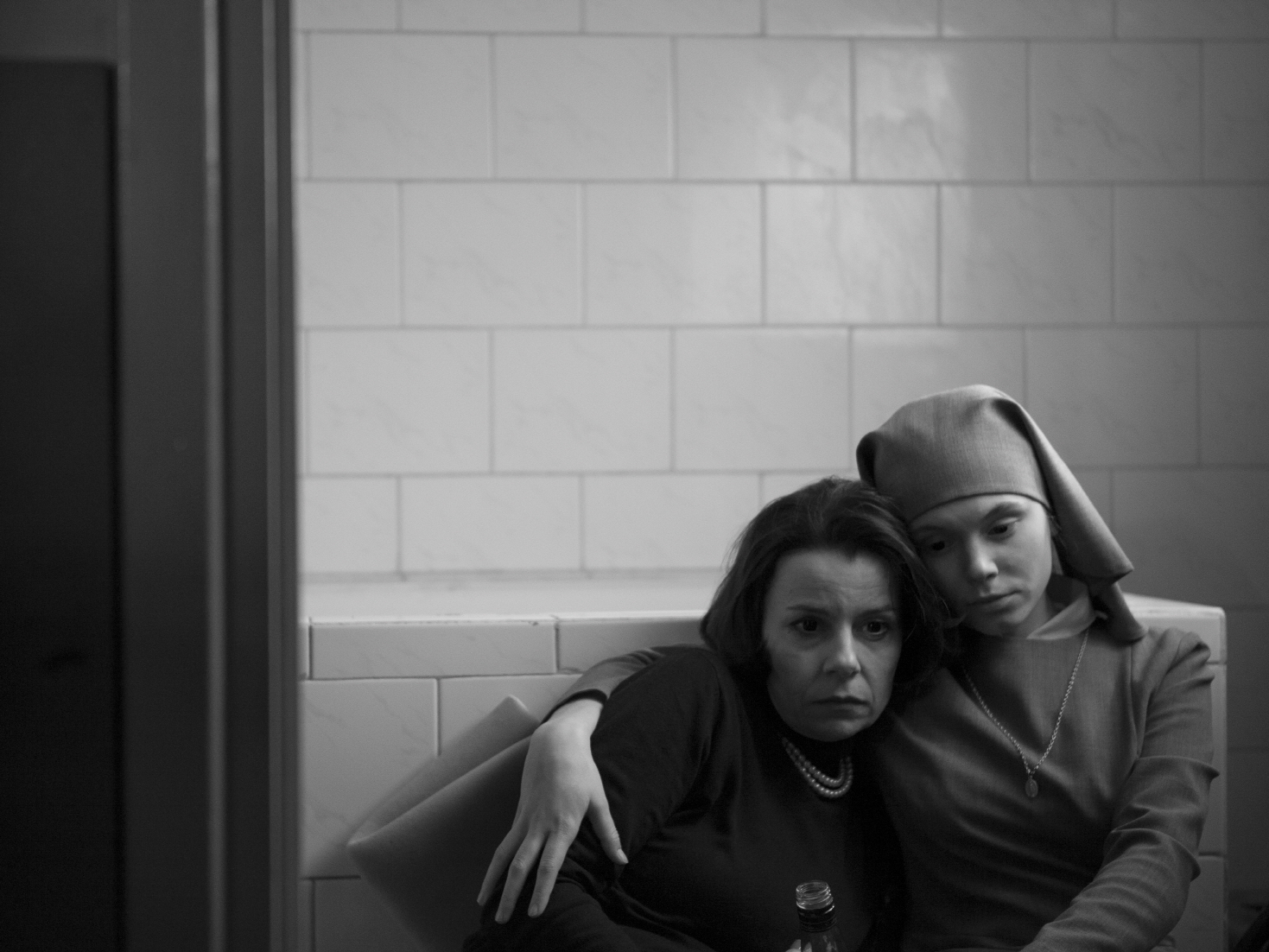
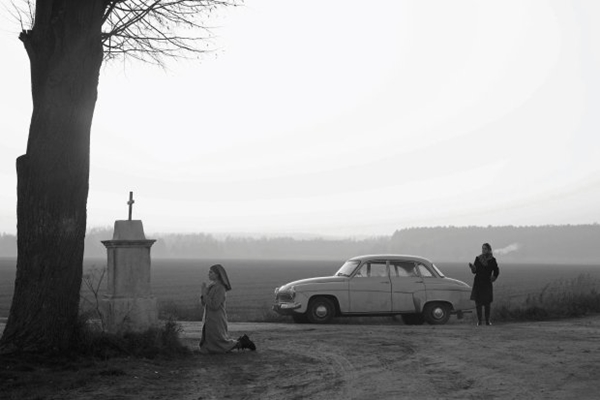
Some of the themes have been explored before: a young woman discovering herself (e.g. Blue is the Warmest Color), guilt and revelation about the Holocaust (e.g. Dekalog 8), a woman forced to seek herself before entering a convent (Viridiana). But never have these themes been executed with such beauty and composition.  Every scene is expertly posed, I would want a still from every one on my wall. 


Ida herself is almost a still-- completely passive, doing as other's recommend and command.  She is quiet, meek and serene, even in the face of startling revelations and great life moments.  Until the very last scene where she is striding, almost running, toward the only decision we see her make: how she will spend her life.  In a way that stands against modern sensibilities, this is a film about independence in its freest sense.

Saturday, August 30, 2014

John Donne Meets the Tortures of Cancer: Wit (2001)

Christian theology screws a lot of people up. At this point, this is a truism, but it is partly true because people do not understand the basic, everyday terms of the original idea. Take "salvation" for instance. The original idea of "salvation" isn't spiritual or other-worldly at all, but it means moving from a state of need to a state of the satisfaction of need, from starvation to being filled, from neglect to honor, from sickness to a state of wellness. When we spiritualize the simple, then we complicate that which is very basic, and turn what we understood at our mother's knee into a state of confusion and anxiety.

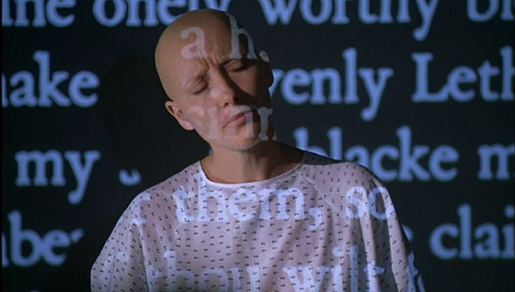
Poor John Donne. When observing the sufferings of Professor Vivian Bearing, the "treatment" which is no such thing, we observe the flayings of Donne upon his soul who wishes to be forgotten by God, because he cannot bear under the sight of a God whose vision is so cruel as to judge that which cannot change.

If lecherous goats, if serpents envious
Cannot be damn'd, alas, why should I be?

This is not unlike the sufferings of Vivian, but while Donne spiritualized his sufferings, imagining the loving Mother who seeks him no matter how much he might hide as a horrible abusive monster, even so Vivian doubts that compassion and touch and a simple act of kindness could be a greater balm than the deepest understanding of the medical profession. How we complicate that which is quite simple, really, and then find ourselves of need to walk through a morass of maze-like corridors to come back to that which we learned at our mother's knee.


But that doesn't speak to Emma Thompson at all. Suffice it to say, I could listen to her speak all day. The fact that she is reading some of the greatest lines ever written, just causes me to close my eyes and bask in the delightful lyrics. But only briefly, because she is like Dryer's Joan of Arc (The Passion of Joan of Arc), beautifully deformed by her anguish.


Tuesday, August 5, 2014

Chatting with my Bud, Darren Aronofsky about Noah

I called up my bud Darren Aronofsky last year and said, "So you're going to release a biblical epic this year, huh?  Which one?"

"Noah"

"Okay, I can see this working.  Will this be an imaginative interpretation of it?"

"Oh yeah. Lots of innovation."

"Well, that's good because every culture has had a reinterpretation of the flood story. We need a new one."

"Well, it's new-ish."

"What do you mean?"

"Well, it's pretty strongly based on the Bible story.  Highly interpreted, but still from the Bible."

"Well, there's some great themes there.  And you're interpreting it for modern audiences?"

"Absolutely.  With a strong environmental message.  The animals are innocent so they get saved, but humanity is judged because they kill animals."

"So... it's a vegetarian message?"

"Environmental."

"So you say.  We'll see.  Still sounds interesting.  What about the racial slant, you're getting rid of that, right?"

"Racial?  What do you mean?"

"You know, the part where one race is good and another race is bad and we have to get rid of the bad race?"

"Oh, uh, well, I kept that bit."

"Really?"

"Well, it kinda drives the plot."

"At least you made Noah a pacifist, right?"

"What do you mean, pacifist?"

"Well, in the text the world was wicked because they were murdering each other without consideration.  Noah, in context, was righteous because he didn't kill anyone.  He refused to judge."

"Huh.  I didn't read that."

"So, you didn't make him a pacifist?"

"Not exactly..."

"You had Noah kill?"

"A little bit.  I mean, what do you expect?  It's Russell Crowe!  It's in the contract-- someone has to be killed! By Russell!"

*shakes head*

"Hey, but I got giant rock monsters in there!  That's good, right? And Jennifer Connelly really knocks it out of the park.  Every one of the dozen lines she and Emma Watson speak are perfect."

"I'll watch it on DVD."

Tuesday, July 29, 2014

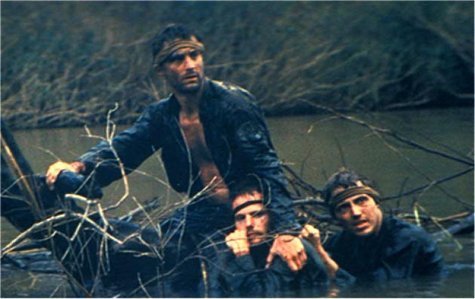
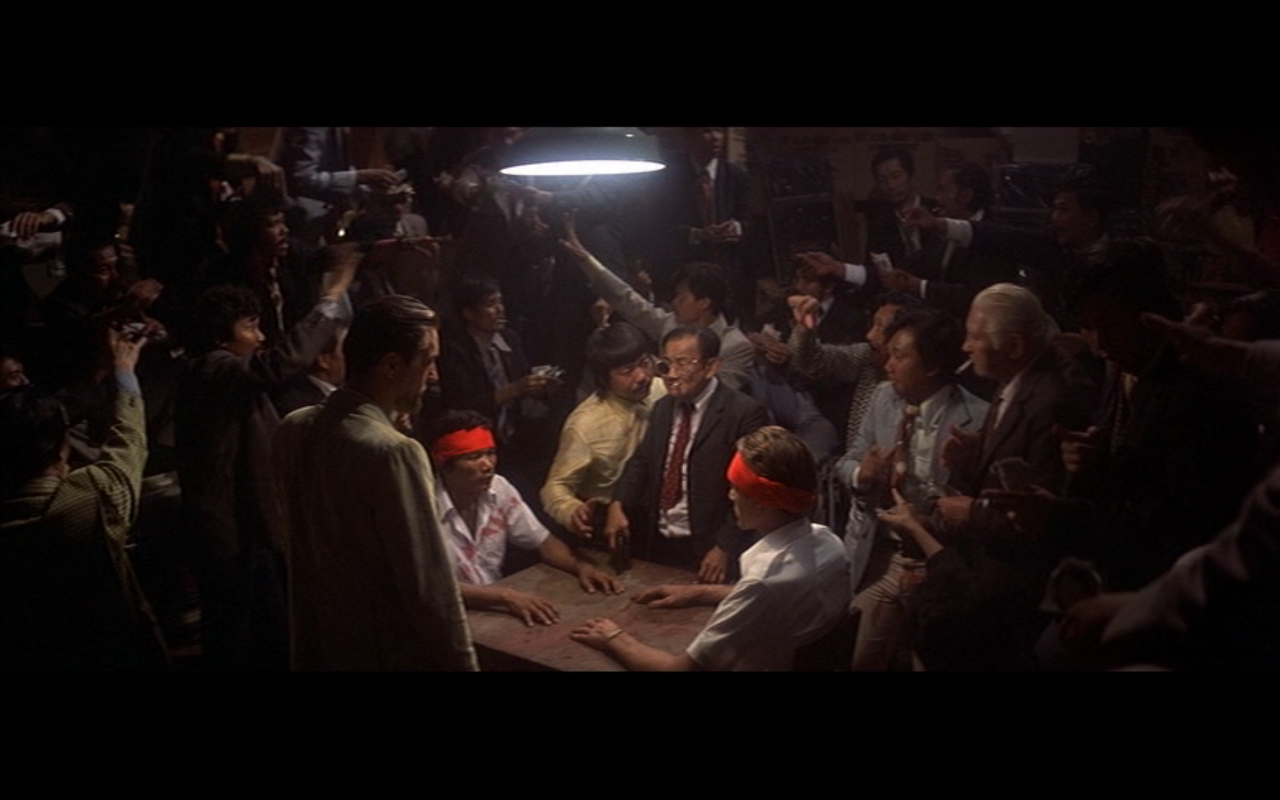
The Three Acts of The Deer Hunter

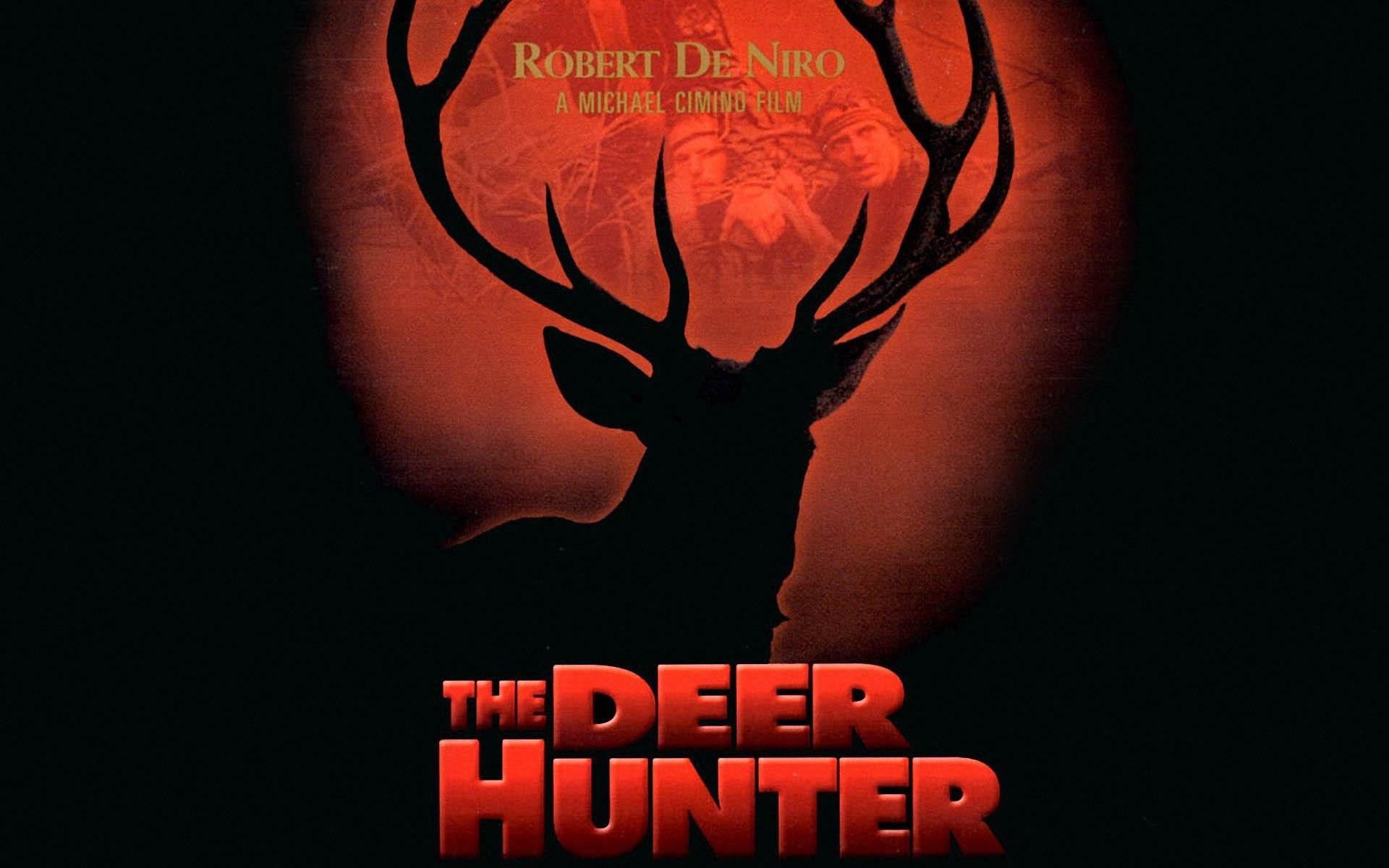
Yes, it is long. Three hours long. But it is neatly segmented into three distinct acts, with clear divides between them, so it is not much of a burden to watch.


Act One: The Wedding
It is amazing that he spends a full hour setting up characters and setting, without much going on. It reminds me of Dazed and Confused without the nostalgia, or perhaps the first segment of Fanny and Alexander. We are watching our main characters and most of our supporting characters in their everyday life, over a single 24 hour period. The wedding is central, but it isn't the only event, and it arguably isn't the most important event. What stuns me about this segment is the detail. Every bit of every frame is used, and filled with details. This is a film that deserves to be seen on the big screen or else you couldn't possibly see it all.


Act Two: War
As rambling as the first act was, so this act is direct and fast paced. The minutes fly as the action keeps us attentive. It is brutal, but after so many war films we are almost used to that, but what amazes me is the repetition. The "game" is repeated countless times in this film, but the intensity is never less. I can understand how one might be addicted to the game, even perhaps playing the game. The danger, once one is used to the level of stress, draws one to it's inevitable tragedy. The various reactions to it feel very true to life. And once we think about it, we realize that war itself is just a version of the game, whether one is a revolutionary or a defender or an invader or a defender. It is an act of suicide through which one intends to harm one's enemy.


Act Three: Home  (Spoilers below)
By this time we realize that setting is everything in this film, and the points are left to the end. You can't step in the same river twice. Community changes as the goal of community are met. Life's a bitch and then you die. Tragedy changes everyone, even those who haven't experienced it. Suffering isn't always for good. And any number of other cliches. Yet watching it, we see that when people are living it out, these life lessons cannot be reduced to a cliche. By this time, these are real people and we can't just dismiss them or their experiences. All the characters are caught in a catch-22, unable to live and unable not to live.


Certainly some brilliance there, especially in the cinematography and direction. It's one of the few times I can say that I saw a movie with Meryl Streep and she wasn't the best thing about the film. It is big and sweeping and somewhat tragic and, probably unforgettable. A great achievement. Epic.