Showing posts with label War film. Show all posts

Tuesday, July 29, 2014

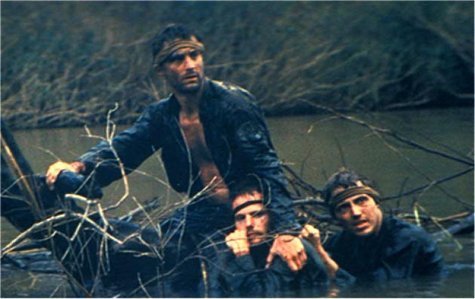
The Three Acts of The Deer Hunter

Yes, it is long. Three hours long. But it is neatly segmented into three distinct acts, with clear divides between them, so it is not much of a burden to watch.


Act One: The Wedding
It is amazing that he spends a full hour setting up characters and setting, without much going on. It reminds me of Dazed and Confused without the nostalgia, or perhaps the first segment of Fanny and Alexander. We are watching our main characters and most of our supporting characters in their everyday life, over a single 24 hour period. The wedding is central, but it isn't the only event, and it arguably isn't the most important event. What stuns me about this segment is the detail. Every bit of every frame is used, and filled with details. This is a film that deserves to be seen on the big screen or else you couldn't possibly see it all.


Act Two: War
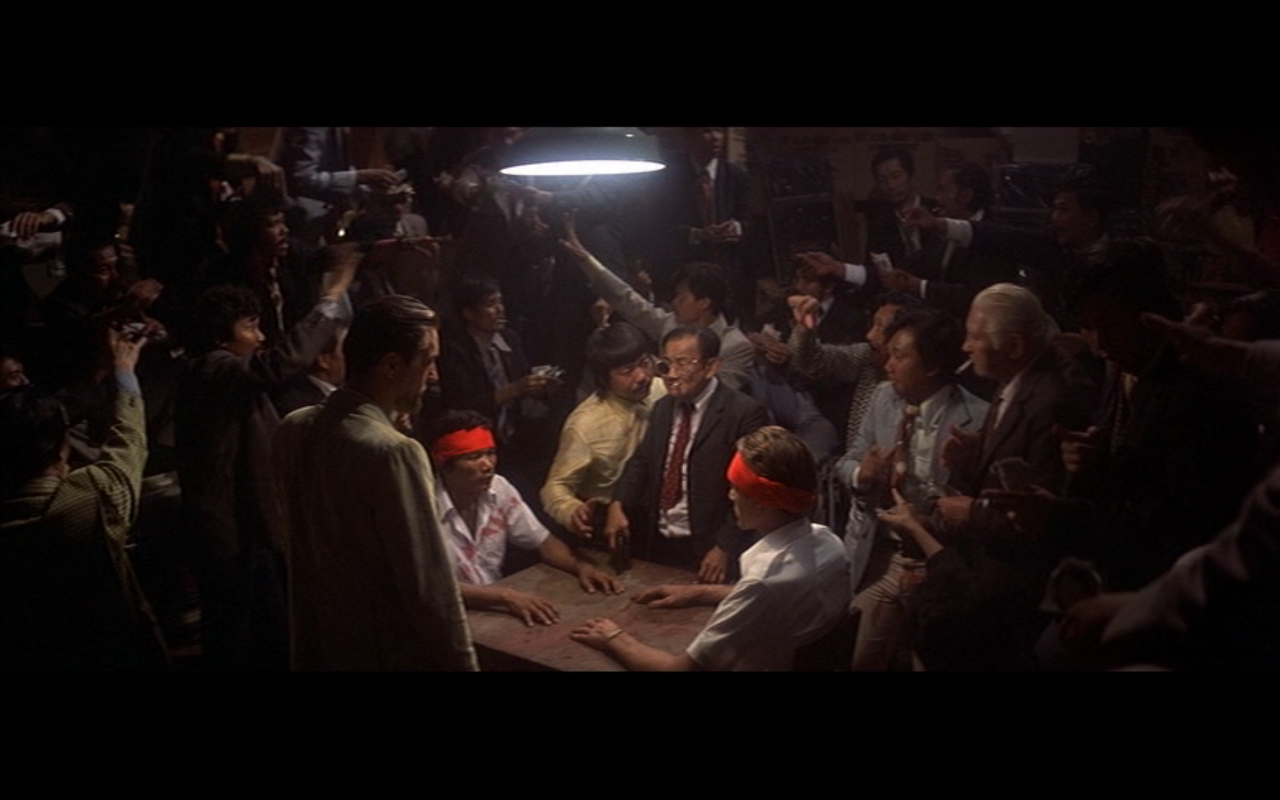
As rambling as the first act was, so this act is direct and fast paced. The minutes fly as the action keeps us attentive. It is brutal, but after so many war films we are almost used to that, but what amazes me is the repetition. The "game" is repeated countless times in this film, but the intensity is never less. I can understand how one might be addicted to the game, even perhaps playing the game. The danger, once one is used to the level of stress, draws one to it's inevitable tragedy. The various reactions to it feel very true to life. And once we think about it, we realize that war itself is just a version of the game, whether one is a revolutionary or a defender or an invader or a defender. It is an act of suicide through which one intends to harm one's enemy.


Act Three: Home  (Spoilers below)
By this time we realize that setting is everything in this film, and the points are left to the end. You can't step in the same river twice. Community changes as the goal of community are met. Life's a bitch and then you die. Tragedy changes everyone, even those who haven't experienced it. Suffering isn't always for good. And any number of other cliches. Yet watching it, we see that when people are living it out, these life lessons cannot be reduced to a cliche. By this time, these are real people and we can't just dismiss them or their experiences. All the characters are caught in a catch-22, unable to live and unable not to live.


Certainly some brilliance there, especially in the cinematography and direction. It's one of the few times I can say that I saw a movie with Meryl Streep and she wasn't the best thing about the film. It is big and sweeping and somewhat tragic and, probably unforgettable. A great achievement. Epic.

Sunday, September 22, 2013

The Human Condition: A Personal Perspective

***Mild spoilers below***

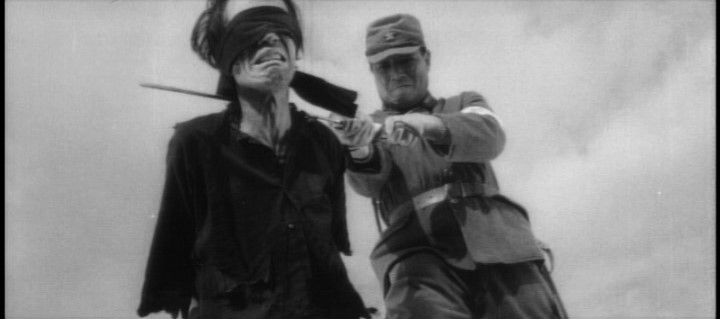
The Human Condition is the story of Kaji, a leader in fascist Japan with a heart of compassion.  He travels all over occupied Manchuria from 1943-1945 and leads a bold but quiet fight against the heartless nature of the military machine.  He is a labor organizer, a soldier, a lead private, a refugee, a POW and a homeless beggar. 

It is a nine hour film and it is not for the faint of heart.  It is divided into six equal measures of an hour and a half, and it was meant to be watched over a period of time,  not one day.  But it doesn't feel long for all that. This film is also one of the most powerful experiences of my life.  

This is the most personal film I’ve ever experienced. I feel like I’ve lost my best friend and my very self to despair and madness.  To say this film is “depressing” doesn’t get to it.  I am devastated, in mourning, in almost physical pain.  And yet I would watch this film again, right now.  All nine hours. There is so much I missed and I want to experience it all.  And I don’t want to lose my relationship with Kaji, the man who is in every scene of the film. He is my friend, my counterpart, even in his lowest points.  He sees the world as I see it, with all the naiveté and sorrow and struggle that accompany such a vision.

Ever since I spent months in India decades ago, observing desperate poverty and experiencing a mild form of it myself, I see the world as a battle between peace and collapse.  Peace, as I understand it, is wholeness.  A self wholly at peace, a community united, a nation set on providing needs, a religion of love and compassion for all people. 

That’s a big order, really.  Especially in a world that is filled with powers attempting to break that shalom.  There are billions of hungry, wars in many nations, violence on almost every major street, the chronically ill in every family.  And there are those who, just in the normal course of things, require more attention: children, those nearing the end of their lives, the infirm, the very poor, the mentally ill.  To battle this requires stamina, focus, strength and resources.

That’s how I see the world.  It’s how I’ve seen the world since I visited India in 1985 and saw real poverty and suffering and my own complacent reaction to it. From the beginning of 1986 I determined that I would do all I could to combat it, with whatever I had.  If that is taking my paltry life in its fragile eggshell and throwing it against the stone wall, so be it.

The film The Human Condition comes from a similar viewpoint.  Although locked into a very specific cultural construct—Manchuria from 1943-1945 from the viewpoint of the Japanese invaders—it introduces the idea of the poor and the lowly again and again.  Draftees in boot camp, forced workers, POWs, refugees, women forced to trade sex for survival, some lost in the wilderness, the homeless, the despairing, the lost.  Each of these are given their fair time and a voice in this film.  They are able to express their anguish and the corner that they are put in.  This movie is, more than anything, about the plight of the lowly, and how they suffer not only their everyday sorrow, but beating, raping, insults, forced hunger, unpaid labor, and more leveled on them.

Why do the lowly suffer this way?  Because some have power over them.  The power forces the lowly into their place of suffering and the lowly must, in their way, support the system that causes their suffering. These powerful are not only the thumbs of the system, but they also heap on additional abuse onto the lowly that isn’t required or even legal by the system they represent.  Why should they do this?     It isn’t just their power, but their assumption of superiority that makes them so deadly.  They “deserve” the better treatment as opposed to the lowly, and the lowly “deserve” the additional abuse heaped on them.   Their petty complaints are really more important than the survival of the lowly. It’s as if some people think that being homeless isn’t enough, they also must be criminalized and harmed to teach them that being homeless is a bad idea.  Who would do that?  Oh yeah… we do.

Kaji is our protagonist, he is the mediator between the outcast and the powerful.  He has charismatic power that gives him authority even when the system hasn’t given him that authority.  He is like Joseph in the Hebrew Bible—no matter how low he lands, he still rises to the top of the heap.  He is smart and courageous and strong and determined.  He is also compassionate for the plight of the lowly, but that compassion isn’t all.  It is that he stands up for better treatment for the lowly, so that they may thrive, or at least survive.  He is the persistent voice of justice for the outcast.  He is sometimes listened to, always reluctantly.  More often than not, he is mocked and derided.

Kaji attacked by both sides.  By the powerful because he is seen as subversive, by the lowly because he is seen as an oppressor.  What is funny is that he is not subversive at all.  He gathers what resources he must to allow the lowly to survive and thrive.  Nor is he oppressive.  He is in the place of power so that he might cushion the attack against the lowly, but the lowly only feel the attack, they don't see the softening of it.

I understand Kaji, better than many, if I may be so bold.  I just read some critics wondering if Kaji is a realistic character, standing with compassion when the rule of the day was prejudice.  I have been given the opportunity to be a pastor of the homeless and the mentally ill in a United States that thinks the poor are lazy and unworthy of compassion.  The treatment of the homeless and the mentally ill by the police here in Portland and its suburbs is comparable to the treatment of the POWs after WWII or the Chinese by fascist Japan.  Their possessions are stolen from them or destroyed by local government forces.  Even as some of us attempt to assist these very poor, we are hindered by others.  The local housed people consider themselves superior to the homeless and consider the homeless worthy of being punished just because they are homeless.  The neighbors of our church and the local government wants to stop us from providing showers or overnight shelter on the coldest nights because they have fears or policies.  Me and my kind have stood up, attempting to help the community see the homeless as human beings, worthy of respect as anyone else, local citizens and not criminals unless they have actually done criminal activity.  And for this work, we have been insulted by the neighbors, threatened, yelled at by the police, knives drawn on us, and kicked out of our homes. 

Because of this background, I truly appreciate Kaji.  I haven’t been through all he has, but I understand his perspective and I can appreciate his suffering, even if I haven’t been through it all. Kaji represents my heart, and when he speaks I can see myself speaking the words, even if I am at times uncomfortable with them.  At this point, I am older than Kaji ever got, and sometimes I think of him as a younger version of myself and I’d love to give him some counsel.

When Kaji is naïve, in the first film, I understand, for I was once naïve and considered that I could change the world myself.  I want to sit down with Kaji and explain to him that his difficulties came from thinking that the uncompassionate, oppressive world would just see the justice of his position and agree to it.  He is so humble that he fails to see the assuredness of the oppressors superiority.  The lowly aren’t just lowly because of some twist of fate but because they “deserve” their position in some karmic insanity.  And their suffering is “good” for them in some twisted logic.  Kaji can’t understand this logic so he keeps speaking the language of compassion, of empathy with the lowly, which the powerful cannot understand.  So Kaji is alone and persecuted.

Kaji is also like Jesus.  Not in some false Christ-type many movies attempt to throw in.  In many scenes, however, he is willing to suffer and take on the beatings and tortures that would have gone to the lowly.  He
accepted it so they wouldn’t have to.  Perhaps that was his own hubris, that he could handle the suffering better than they.  But in a way this was true.  Because he was taking on suffering out of nobility, not out of some false sense of justice.  No one who punished him considered him worthy of punishment.  Rather they punished him because they had to release their own wickedness in some way.  Kaji accepted it so others would not.

Eventually that suffering broke him down.  He is only human.  In the second film, Kaji becomes angry, sometimes irrationally so, lashing out at his persecutors and I wanted to have another session with him.  I understand why he is angry.  He is angry because his body cannot endure such suffering anymore.  He is angry because he cannot endure the irrational punishment any more.  But I’d like to remind him of the result of his anger. His anger wouldn’t create compassion for the lowly, nor would it force the oppressor’s hand.  In fact, he is undermining his own compassion, for he fails to see that the oppressors are enslaved by their own actions and that they need deliverance as much as the lowly do.  Perhaps he can’t help it, but if he can, he should control it, for other’s sake.

In the third film, Kaji cannot forgive himself for his own acts of oppression.  Again, I understand, as I too have oppressed and beat myself with guilt.  What I wanted to comfort him with was that the system of power makes it all too easy to oppress those who are weak.  We can oppress with a word, with a glance, or by simply ignoring the lowly.  We must resist those impulses, but we will slip into them.  When we do, we cannot beat ourselves up because of our failings in a system of destruction, but resolve never to do it again.  We must remain strong so as to both help the needy and fight the system of injustice.  And it is easy to fall into the trap of weakening ourselves with shame or a too-quick-surrender.

Finally, Kaji snaps and takes his vengeance out on one who caused the death of the lowly. Again, I wish I could have spoken to him, even yelled at him.  Take your vengeance out by changing the world!  See your ideal flourish!  Look at the long view-- he isn't the problem, and you can't take vengeance out on a system.  You are just participating in the system by being the criminal against it.  You are fitting into their idea of you!  I don't know that he would listen to me, though. 

What kept Kaji going, waking up each day, was the thought of going home to his wife.  My home is even more distant than his: I see a world of justice, a world where the poor aren’t oppressed, a world where governments and religions are organized around compassion instead of a false sense of justice.  My home is where the poorest of the poor have a home and a comfort and can contribute creatively to society. 

Now I’m going to get all religious on you, that the film never went.  In this view of the world, Kaji had to go mad.  His hope was pointless.  In fact, in the third film there are hints that his wife was probably raped, beaten, starved or sold her virtue for food, possibly dead.  The home that Kaji longed for probably wasn’t there. 

In Christianity, we are told that we will get to the end of our lives and not find this home we seek, a world of justice and hope for the lowly.  The next world is where we will find it, and those who gave mercy and suffered for would get a second chance at life, successfully creating a just world that could not be done in this life.

And I’ll be honest.  I am often stumbling in the snow, wondering if my hope is in vain.  The way I figure it, Kaji, is that even if there is no home to come to, I have done what little I can to make the world a place where others can have home.  Perhaps this world wasn’t meant for us, Kaji.  Perhaps we were never meant to find home.  But isn’t it enough to know that we offered comfort to others?  Isn’t it enough that our lives were lived for the ease and survival of others?  We may not have done much.  Helped a few hundred people.  But isn’t that enough to keep living for?  Even if that means we go to Siberia, isn’t that enough? Certainly better than dying of frostbite, longing for a home we’ll never have.


Isn’t it?

Thursday, May 16, 2013

Passion Without Prejudice: The Mortal Storm


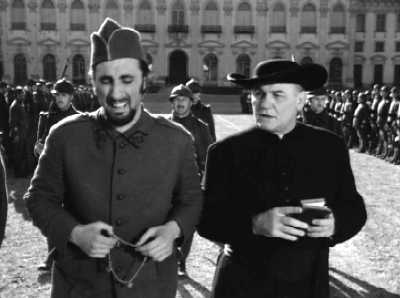
Frank Borzage is the master of melodrama, and who better to direct the forerunner to many of the best dramas that take place in Nazi Germany.  I could see this movie's touch on many other great films: The Sound of Music, Cabaret and Schindler's List among others.  Yet this film both deserves to stand with those films and is to be honored as a special film in it's own right.

The surprising thing is that despite it being a melodrama about Nazi Germany, there is almost not a single stereotypical character, or a character that doesn't have its own strengths and weaknesses.  There are bad guys, but the biggest evil is narrow minded ideology, or fundamentalism as we call it today.  Truly, this is an honest film and a bold one at any time, let alone a year before the U.S. entered WWII.  It is clearly anti-Nazi, but all the characters are German, whether good or bad or mixed.  And many of the Nazis are sympathetic.  Even though this was made before the propagandistic push of later years, it is still a strong statement.

In this way, it is also the forerunner to films like, say, The Reluctant Fundamentalist, Zero Dark Thirty, or The Visitor, in which we are allowed to look into the face of a Muslim, even one who has some agreement with terrorism and to see different sides. It is a powerful experience when a film can take the prejudices of one's culture and say, "But wait, there's a human being under there."

In comparing it to the other Borzage films I've seen, it hits the same notes of effective melodrama.  I knew the scene with the bridal cup was coming, but when it came it still got dusty in the room.  I didn't expect the end, though I could have.

Great filmmaking.  I also recommend Borgaze's other films, especially Seventh Heaven (1927) and Lucky Star (1929)

Sunday, January 20, 2013

A New Kind of War Film: Zero Dark Thirty


I had tears in my eyes throughout most of Zero Dark Thirty.

Mind you, I’m ill (keeping away from everyone, though), and so I might be a little more prone to emotionalism.  And I left the film utterly exhausted because of that.  But the film as a whole pained me to no end.

This is less the fault of the film as it is the fault of the ideology I bring to the film.  I am a pacifist, and I am opposed to revenge and this film is, no matter what else it is, certainly a film about revenge.  So to spend two and a half hours seeing a Federal assassin track down her victim—even if the victim is Osama Bin Laden—is painful for me to watch.

I recognize that most others will watch this film with different eyes, and that is how it should be.  Because this is a film that will feed almost any ideology.  What you get from the film is what you came in with.  This doesn’t mean we won’t learn something about how spying works today or about war in a post-9-11 era.  But if we are opposed to torture, we can see that in this film.  If we think that any amount of cost is worth such a lofty goal, there is evidence for that in this film.

A new era of war requires a new kind of film to describe that war.  In the 40’s, war films were mostly propaganda, with the rare film showing the subtleties of personalities (Colonel Blimp).  Some aspects of war were criticized in film in the 50’s, but there is always a noble soldier for us to identify with (Paths of Glory).  In the 60’s there was quite a bit of discomfort after the Cuban Missile Crisis (Dr. Strangelove), but war was still often glorified in film (The Green Berets).   It wasn’t until the 70’s that film turned firmly against war, deconstructing the whole war film, showing it to be destructive to the soldiers and to the nation (Platoon, Apocalypse Now). 

After 9-11, though, war changed.  It is no longer nation against nation, but one nation in opposition to small enclaves of well-funded, well-organized enemies.  It requires subtlety, and the moral ground is different than it used to be.   Terrorists are horrible, but they are human beings as well, and they might even have a point.  The new war film is less ideology-heavy and more documentary style, allowing the viewer to be on the ground, seeing what we could never possibly see, giving us the experience of warfare, not an entertainment.
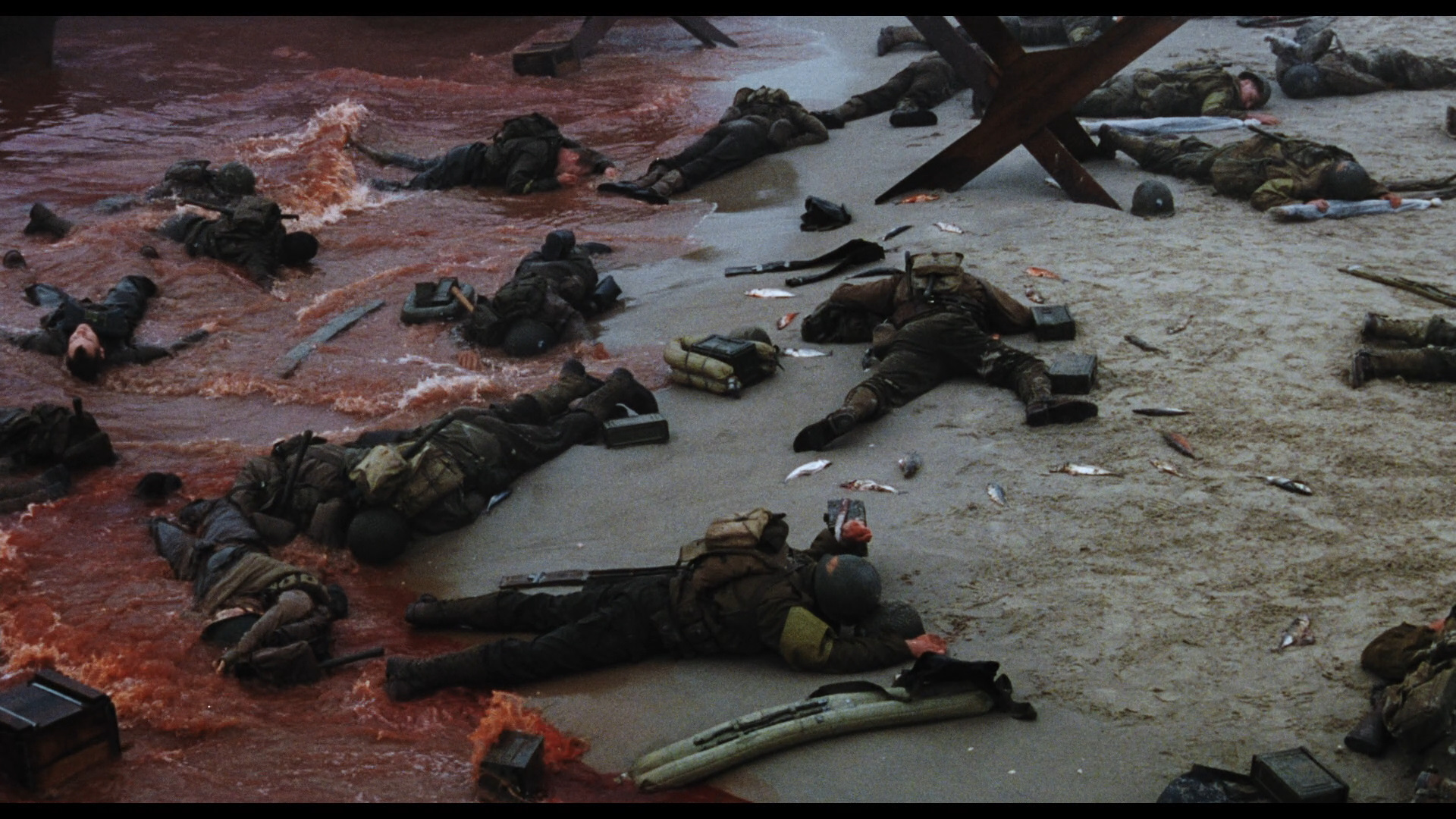
This was first done in a famous, amazing scene in Saving Private Ryan.   We had the opportunity to experience D-Day as it has never been seen before.  We were an allied soldier, hearing—even feeling!—the mass of bullets missile past us, seeing our comrades fall, the gore, and we feel the difficult courage it takes to keep moving up that deadly beach.  However, that scene was surrounded by a film deep in the old ideological presentation of war.

Paul Greengrass is the one who really introduces this new perspective on terrorism and war in two films: Bloody Sunday and United 93.  They are objective, documentary-style and while they give a very particular point of view, we have a sense of objectivity that we have never experienced before.  We were there, we are not just viewing the tragedies so much as experiencing them as they unfold in time, seeing people’s reactions as they happen.  Yes, it is a movie trick, but it works.  We are involved in these experiences like we have never seen.  This continues with Steve McQueen’s Hunger and with Kathryn Bigalow’s  The Hurt Locker.  Yes, they are told from a certain perspective, but we are on the ground with the characters, able to judge or to applaud them as we felt.

Most of all, these films didn’t tell us how to feel, but they opened discussion.  They gave us facts, and ideas and powerful experiences that we could look at and draw our own conclusions.

In Zero Dark Thirty, Bigalow continues this, showing us not only a documentary-like view of Bin Laden’s discovery, but also showing us the heart of the United State’s war on terror.  The new war, the new spying, is less about capturing cities, but about discovering who we are at war against.  Names and locations are hidden, and even with massive amounts of technology at one’s disposal, they are almost impossible to find.  Politics also gets involved and public opinion can cut funding even in an essential operation.  Researching and the military go hand-in-hand, but it feels like the scalpel is replaced with a sledgehammer—the two approaches make for strange bedfellows.

Nevertheless, the new war has heroes.  Tenacity and courage is still what wins the day, whether a soldier or an analyst.  No matter how we feel about the proceedings, we still see Maya as a powerful person, one we admire, a force of nature.  But we see the other side as smart, and those being tortured as very human.

Despite all the torture, the bombings, the threats, the shootings, the killing of parents in front of children—we are not told how to feel about all of this.  Yes, this is a film about revenge, but not like Inglorius Basterds, where we cheer the brutal killing of Nazis and then we are slapped on the wrist for being like them.  Again, we are given a difficult, even brutal, experience, and we are emotionally impacted, but not told what to think.

At the end of the film, Maya cries.  This isn’t a spoiler, really, although it is an amazing ending of the film.  But why does she cry?  Does she cry for her colleagues who suffered so much to get to this place? Does she cry for relief because it is done?  Does she cry because the tortures and deaths were too high a cost?  Does she cry because she doesn’t know what to do with her life now?  We don’t know.  We might guess, but that is putting our experience on Chastain’s marvelous performance. 

The new kind of war film is objective, but not emotionless.  Zero Dark Thirty made me feel, in turns, frustrated, laughing, angry, excited, relieved, and outraged.  But we know the difference in this: the new war film doesn’t leave the audience clapping.  They walk out in silence, both deeply considering and deeply stunned by what they have witnessed.

Thursday, April 5, 2012

Paths of Glory: System of Leadership


The court martial movie is a well-trodden path.  And no wonder: it has the semblance of rebelling against authority, while supporting the system of authority.  It provides an opportunity for true actors to really shine in highly dramatic roles.  It has the best of both stage-- a presentation before a limited audience-- and the movies, providing context and drama outside the courtroom.  Some of the greatest movies have been court martial films: Mutiny on the Bounty, The Caine Mutiny, Breaker Morant, and A Few Good Men are among them.

Paths of Glory is certainly among them.  It stars Kirk Douglas as a Colonel in World War I, who is first ordered into a dubious battle and then forced to defend his men from accusations of cowardice.  Beside being a marvelous court martial movie, it  has one outstanding characteristic above the other films: it has amazingly good war scenes as well.  It isn't focused on the court, although it's focus is upon justice and the misuse of authority.  The most dramatic scenes are on the field.  Like another great war movie, The Life and Death of Colonel Blimp, PoG allows us to see inside the whole war machine, from those who command generals to the lowliest private.

The amazing thing about this film is that it doesn't just target a single bad commander.  Rather, it shows how the system as a whole is built to create those commanders to make decisions that unnecessarily costs lives.   How both a general and a sergeant are supported in evil decisions in order to cover their butt or to obtain a little more glory at the cost of many lives.  And it also shows how such a corrupt system cannot abide by integrity, nor even understand it.

And this makes Paths of Glory unique.  It isn't exactly an anti-war film, because Kirk Douglas, our hero and man of integrity, begins and ends a soldier.  And it doesn't just decry the misuse of authority.  Rather, it says that there is a systemic problem in all military leadership.  That is a remarkably bold statement.  Especially for a film made in the mid-50s.

I do wish that more of the supporting cast had been as stellar as some of the lead roles.  But the sound and cinematography are worthy of Academy Awards-- although the Academy didn't even give it a single nomination. The central battle scene is amazing and it seems to have influenced at least Spielberg, as I can see Saving Private Ryan and War Horse borrow aspects of it.   While not a perfect film, it's a keeper and worthy of the Kubrick label.

Oh, did I fail to mention that it was directed by Stanley Kubrick?

Sunday, January 22, 2012

The Ultimate War Movie


War movies are spotty.  It seems to be their nature.  There is only one war movie I can say that I enjoyed pretty much all of it (Apocalypse Now), but most of the rest of them have aspects which are wonderful, but the film as a whole doesn’t quite work.  And war movies should work.  There is heightened drama, high stakes, danger at every turn, and lots of opportunity for powerful performances.  It seems that perhaps most war films assume that the audience is involved in the heightened drama as well, or that an excellent beginning will woo the audience into buying the rest of the film.  But it never worked that way for me.  I can be wooed by beauty, by a great performance, even by a score that is emotionally resonant, but the drama of war doesn’t do it for me itself.  It needs something else.

I’ve gone so far as to make a list of scenes that I could put together to make the greatest war movie in the world.  If we could just put them together, it’d be magnificent.  Well, maybe not, but that’s my dream. 

Here’s my ultimate war movie:

The opening dialogue from Inglourious Basterds 


Boot camp from Full Metal Jacket


D-Day from Saving Private Ryan 


Surfing from Apocalypse Now  (can you imagine this right after the sequence of SPR?  Talk about an increase of tension)


Riding across the desert from Lawrence of Arabia (How the Arabian Desert became adjacent to Vietnam is an interesting subplot)


The President and his staff consider dropping the bomb: Combination of 13 Days and Dr. Strangelove (don’t ask me how to work that out, I’m not a screenwriter)


Capture and torture of David Bowie from Merry Christmas Mr. Lawrence (significant aspect of any war movie)


Peace and a concert between enemies from Joyeux Noel 


And finally: Ending it all with dropping the bomb from Dr. Strangelove and blowing up the world from Escape From Planet of the Apes (because I want my film to be the final word in war movies).


(In the comments, I invite you to post your favorite war scene that you’d like to see in the greatest war movie ever)

Ah, that’s a great war film.  It covers a variety of aspects of war, sees how it all works together, brings great flimmaking, deep emotional drama,  intense action, comedic elements and a bit of a dig at war all in one film.  But who could make a film like that?  Who could make it interesting?  And who would be able to keep all these different elements from contradicting one another to make a coherent film out of a mess of themes?


Of course, Stephen Spielberg.   Or at least Spielberg back in the day.  The Spielberg who made Close Encounters or Raiders of the Lost Ark, he could do it.  Saving Private Ryan had a great opening sequence, but it didn’t carry that intensity throughout the rest of the film.  But if Spielberg was at the top of his game, he could do it.

Honestly, I had thought that the best Spielberg moves were behind us.  I will always appreciate his early masterpieces, but even A.I.: Artificial Intelligence, which I love, was admittedly mixed in tone and theme.  Schindler’s List was the final great Spielberg film, and although it takes place at war time, it isn’t really a war film, but a Holocaust film, which I consider to be a different animal.  But War Horse proved all my assumptions wrong.


War Horse is that perfect war movie. It can carry different emotions and different themes because instead of telling the story of one soldier, or one troop,  or the story behind a war, it uses a horse as a means to carry us from one aspect of World War I to another.  Although I might be overly praising Spielberg in this review, at least equal credit should be given to the screenwriters, Richard Curtis and Lee Hall, who took a book and magnificently brought a complex story to the screen, so that the group of children I saw the film with were in turns enraptured and shocked, both silenced and unable to stop talking about what was happening on the screen.

Wait, did I say children?  At a war movie?  Yes, children.  There are some intense sequences in the film, and a young child wouldn’t understand what was going on, but a ten year old and up would be entranced by this marvelous film.  I brought my eleven year old daughter to it, and while she was disappointed by the absence of blood, she loved the cinematography and the story almost brought her to tears.  Almost.

I had no such option as being simply “dusty eyed”.  No, the tears rolled freely down my face as the final set of sequences occurred.  In fact, I would say that the final half hour of this film is probably the most moving cinematic experience I’ve had with a 2011 film.  No, War Horse isn’t going to be my favorite film of the year.  But if it were a less magnificent year in film, it certainly would be. 


Did I cry because it was manipulative?  Oh, yeah, it manipulated me.  In the same magical way Close Encounters does or Schindler’s List.  It wasn’t cheap sentiment.  It earned it.  It gave me time to feel for the characters, even a couple horses, and the final sequences gave me a couple surprises I didn’t expect.  My daughter said, “I knew it would end like that” and I gave her a list of the things we couldn’t expect, and she agreed.   Yes, sentiment wins the day, but why not? 

It is a rare animal (so to speak) to have a war film that determines to show the good in every man instead of the evil.  And isn’t it true that in war the altruistic and  compassion could be seen as well as the evil monster that lurks in the human breast?  I wish that we would have more films about saints and not just monsters.  Why can’t we have heroes that sacrifice themselves dramatically as well as those who blow other people up?  War Horse shows us that it is possible to have an immensely entertaining and satisfying film about persistence and charity and generosity and even friendship between enemies.  Because of the short story nature of the film, it could give more opportunity to this side of humanity than otherwise could be done.  We have a scene in no man’s land that reflects the true story behind the film Joyeux Noel, another that borrows some of the intensity of Saving Private Ryan,  camradarie between officers that reminded me strongly of another great war film, The Life and Death of Colonel Blimp.  But we also have an amazingly emotional scene having little to do with war for the first half hour of the film that is a story or rural England and daily struggle between the classes. 


What more can I say about the film? So much more.  I find, for myself, that it is the great movies I can’t stop talking about, and the poor films I have difficulty to say anything at all about.  And I could write pages about War Horse.  But it wouldn’t be fair to do an analysis of this film.  It is all there, and any child could appreciate this film.  I could write an essay on class struggle in the film, on the unique perspective of the “enemy” troops,  on the moral message.  But I couldn’t write it near as well as it is simply presented in the film.

Just go watch it.  In the theatre.  Bring your kids ten and up.  And bring a hanky.