Showing posts with label 1970s. Show all posts

Sunday, July 5, 2015

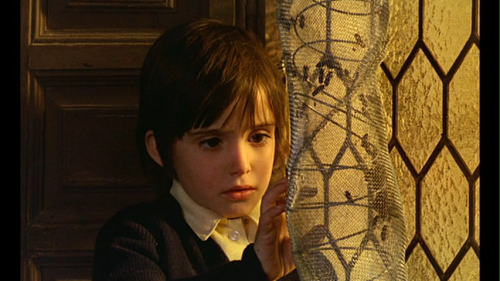
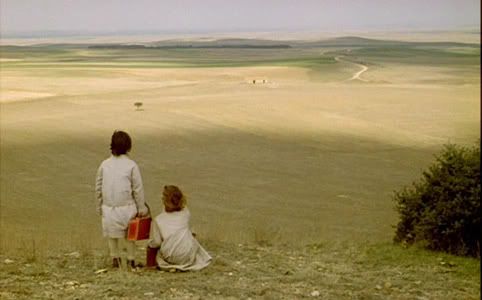
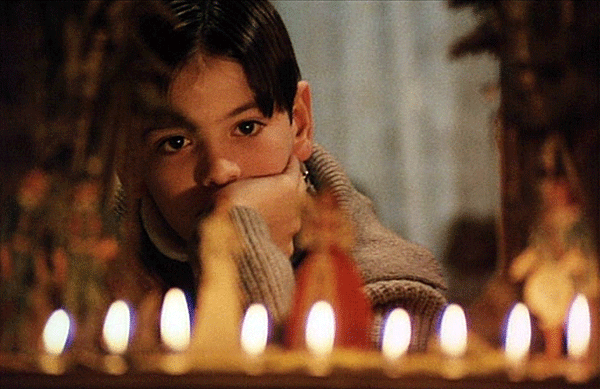
The Spirit of the Beehive

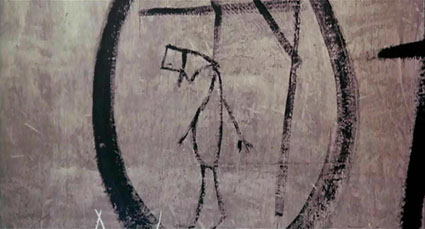
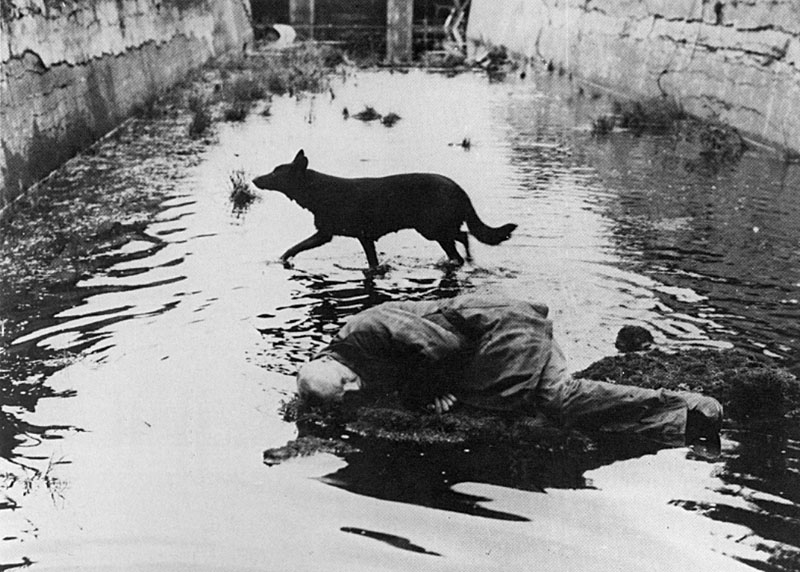
I freely admit that Spirit of the Beehive is a top-shelf film, where the pleasures aren't easy to grasp. I was made that way on purpose, because it is a Spanish film about fascism, made in the waning years of Franco's fascist government.  I would put this film next to Stalker and A Moment of Innocence as great films about the nature of oppressive governments made under those very same governments.  Subtle, insightful and genius criticism that passes under the radar of censors.

One of the great things I love about this film is the humanizing effect of films.  Frankenstein is shown, which is one of the great humanizing classics, showing the monster as a whole sympathetic character, whose humanity is displayed under anger.  But this film inspires a young girl to see a rebellious soldier as human and in need of pity and care.  But the humanitarian impulse isn't without cost.  This simple, innocent act has terrible consequences.  To enact compassion makes one more human, but that same compassion can cause horrors to occur as well.  Silence and cowardice create safety, but at the cost of our souls.


The Spirit of the Beehive is slow, but also beautiful.  It is minimalist, but if we allow ourselves to dig deeper it has important things to say about our lives, about how we respond to the person we run across who is in deep need, no matter what they've done or who they are.

Tuesday, July 29, 2014

The Three Acts of The Deer Hunter

Yes, it is long. Three hours long. But it is neatly segmented into three distinct acts, with clear divides between them, so it is not much of a burden to watch.


Act One: The Wedding
It is amazing that he spends a full hour setting up characters and setting, without much going on. It reminds me of Dazed and Confused without the nostalgia, or perhaps the first segment of Fanny and Alexander. We are watching our main characters and most of our supporting characters in their everyday life, over a single 24 hour period. The wedding is central, but it isn't the only event, and it arguably isn't the most important event. What stuns me about this segment is the detail. Every bit of every frame is used, and filled with details. This is a film that deserves to be seen on the big screen or else you couldn't possibly see it all.


Act Two: War
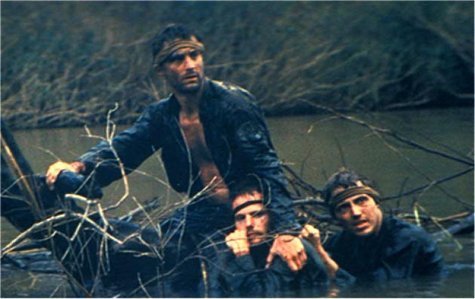
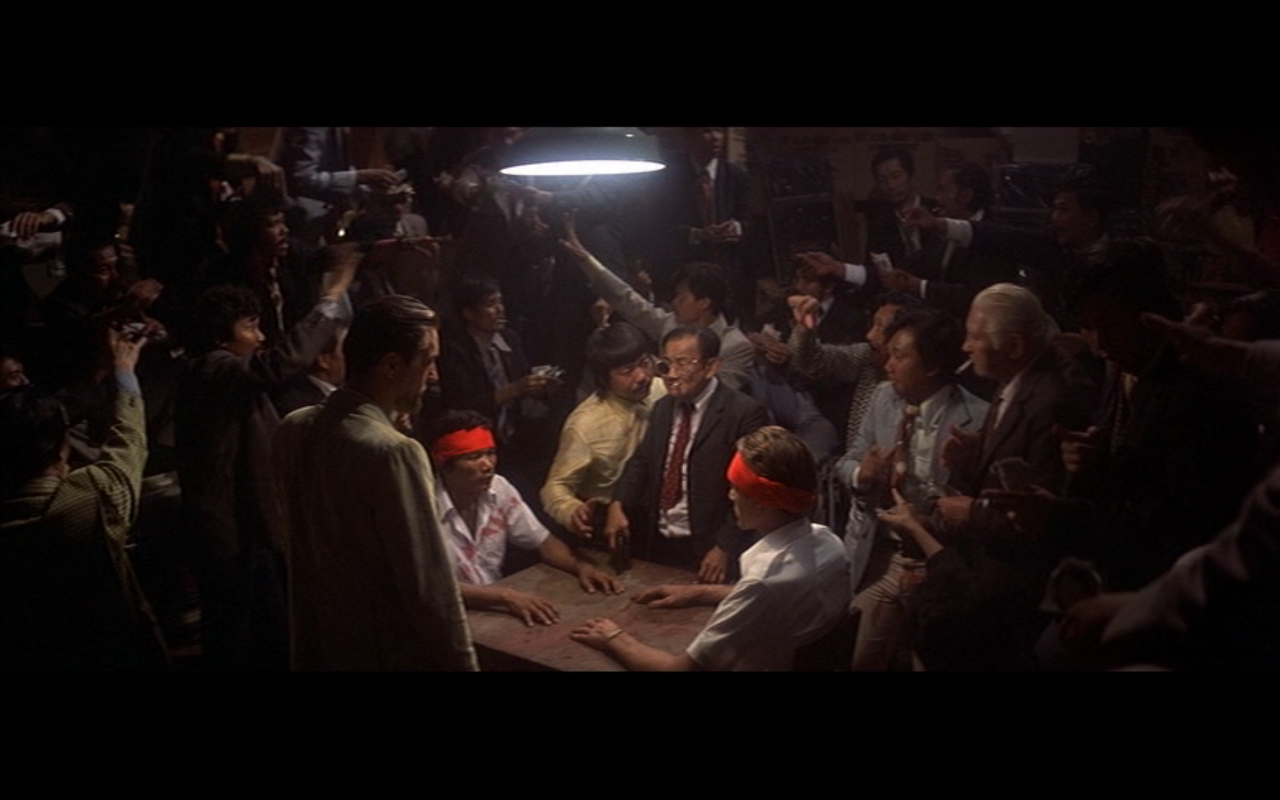
As rambling as the first act was, so this act is direct and fast paced. The minutes fly as the action keeps us attentive. It is brutal, but after so many war films we are almost used to that, but what amazes me is the repetition. The "game" is repeated countless times in this film, but the intensity is never less. I can understand how one might be addicted to the game, even perhaps playing the game. The danger, once one is used to the level of stress, draws one to it's inevitable tragedy. The various reactions to it feel very true to life. And once we think about it, we realize that war itself is just a version of the game, whether one is a revolutionary or a defender or an invader or a defender. It is an act of suicide through which one intends to harm one's enemy.


Act Three: Home  (Spoilers below)
By this time we realize that setting is everything in this film, and the points are left to the end. You can't step in the same river twice. Community changes as the goal of community are met. Life's a bitch and then you die. Tragedy changes everyone, even those who haven't experienced it. Suffering isn't always for good. And any number of other cliches. Yet watching it, we see that when people are living it out, these life lessons cannot be reduced to a cliche. By this time, these are real people and we can't just dismiss them or their experiences. All the characters are caught in a catch-22, unable to live and unable not to live.


Certainly some brilliance there, especially in the cinematography and direction. It's one of the few times I can say that I saw a movie with Meryl Streep and she wasn't the best thing about the film. It is big and sweeping and somewhat tragic and, probably unforgettable. A great achievement. Epic.

Saturday, July 26, 2014

The Madness of Sorcerer (1977)

It is one of my wife's pastimes to play Sims on the computer while I watch a film on the other side of the room with headphones in. She knows when a film is really good because I can't keep quiet. I'll moan or talk to the characters or gasp, and she sits there and smiles. When I watched Sorcerer, she had a full evening's entertainment, without ever hearing a single line of dialogue. I was especially noisy that night.

I honestly think that William Friedkin of the 70s is one of the greatest storytellers of cinema. The French Connection, The Exorcist, and Sorcerer are three of the best told stories we have. In Sorcerer, we are thrown immediately into the action in Jerusalem where a bombing occurs. Then in Paris, where an executive is threatened with jail. Then in New York where heist goes all wrong. And these disparate stories are not only captivating, but they introduce us to the world through the film's eyes-- desperate and without hope. Every time hope emerges, there is another dousing of ice cold water to bring us back to this reality. This doesn't mean the film is always dark, but we can understand the motivation behind the characters because desperation leads to extreme choices.


And the film is extreme. To a degree that a kind of madness took over even during the making of the film, where William Friedkin, looking back, regrets putting his actors in an extremely dangerous situation to film the famous bridge scene. And the insanity comes through. By the end of the film, I was desperate myself and the ending had me throwing up my hands, exclaiming. Which amused my wife to no end.

Monday, February 24, 2014

Jay of the Dackal... wait, no... Day of the Jackal... yeah, that's it

One of the most enjoyably detailed films I have had pleasure to witness. Full of the kinds of realistic but intense specifics that make up a good thriller. This is a procedural told from two sides: the point of view of the assassin attempting to kill Charles de Gaulle, the hero of France, and the many officials and marvelous detective trying to stop the assassination before it takes place.


The plot is intricate, but never contrived and is never dull. Highly recommended.

Sunday, November 10, 2013

Battle for the Soul: One Flew Over the Cuckoo's Nest

For me, books ruin movies. Not the books written after the movie, but books from which a movie is adapted. When I watched this film in my teens it was soon after reading the Ken Kesey novel, which I found magnificent. But when I watched the film, all I could think of is the many things that were changed, and how the tone of the film differed from that of the book.

Now, more than twenty years later, the book has mostly faded from memory. All three productions of this story-- book, film and play-- melded in some vague outline of a story. Yep, time to watch the film again.

What the film stands against this time is years of going into various state and private mental facilities in Oregon, including the one where this was filmed, the State Hospital in Salem, Oregon, in a pastoral role. I've had a lot of experience with the mentally ill and have seen hospital officials deal with their clients in many different situations. How does this film hold up against that experience?

Amazingly well. Mind you, the situations in 1968 were quite different from the last 15 years when I've visited institutions. At this point security is set at a much higher priority. And after the purging of hospitals in the 80's you don't find many clients able to play cards with other clients.

But much is the same. Line ups for medications, the high priority on keeping control of the clients by the hospital staff, as well as the fact that a prison sentence has an end, but a committed patient, if ordered by the state, can remain in the state hospital for the majority of one's life.

The idea of a con using the state hospital as a way out of prison is brilliant, because then we can see the clashing of these two similar but very different worlds. Both inmates are institutionalized, both are in an underground rebellion against "normal" society. Yet the approach differs. The prisoner often feels trapped, screwed by society. The mentally ill feels screwed by their own minds. Within both institutions, there are those who feel that it is best for them to be set free, to live their lives as they see fit; while others feel that freedom is a trap that forces them to be whom they never want to see again.


This story could just as well be called McMurphy's War. Because it is not just the story of how McMurphy turned the hospital upside down, but it is a battle between two approaches toward health: one, as represented by Nurse Rached is an institutional approach, offering discipline, medication and cool exteriors to assist toward normalcy. McMurphy offers plunging the clients into chaotic human experience, and pushing personal boundaries. While we might personally be drawn to a more human approach, the brutal nature of the film is that of all wars-- it is the conflict, not any single approach, that brings destruction. And when the battle is for the human soul confrontation and competition is the very worst approach, for the fragile soul must be torn in the midst of battle, as seen in divorce courts all over the world.

Friday, September 13, 2013

A Life With A Clockwork Orange

I was an older teen when I first watched A Clockwork Orange.  That isn’t a surprise, since it seems many people watch this controversial film at about that age.  The age when we are old enough to watch a movie on our own without our parent’s supervision.  A Clockwork Orange seems to be one of the first go-to films for kids of that age.  We hear rumors of the violence, the graphic nature of it, and it’s classic status.

I know that some, when they catch up with it, find it a moving experience, important.  For me, frankly, I found it disturbing and… well… I don’t know.  It is memorable, that’s for certain.  But what is it about this film that makes so many people find it significant?  I just don’t know.  I couldn’t decide about it.  And that’s where I left it for 27 years or so.

This week I decided to revisit the film.  My wife deeply questions my wisdom about that.  But I was missing something.  As I explained to her, I was so young when I saw it that I can’t really rate it fairly.  (Her response, “And that’s good enough reason to watch it?”  “Of course,” I replied.  A film buff cannot be denied a rating.) But more than that, it’s an important film experience for many people, but I can barely remember a thing.  I wanted to participate in the event with my film buff community.

So I watched it and it was as disturbing as I remembered it.  The violence, the dehumanization of women, the sociopathic activity, it was all very distressing.  It made as if to titillate with the sex and violence, but all it did was offend, which I suppose is part of the point.  I certainly did not enjoy the film in any way whatsoever.  It was clearly satiric.  Frankly, it felt like one Monty Python sketch after another, each one more over the top than the one before, but not a one was even remotely funny.  There were times I felt sick to my stomach.

And as my memories came rolling back from almost 30 years ago, I realize that I must have had some level of the same reaction back then, but to a less degree.  The one scene that I remember most clearly from my previous viewing is the scene in the bar where the plastic woman’s nipples are used as a faucet to pour the patron’s drink.  It disgusted me then and disgusts me today.  Frankly, the whole thing does.  This is similar to the film Brazil, when it communicates just how bad society has gone and seems to go too far… but at least Brazil had some laughs to break the oppression on one’s soul.  A Clockwork Orange never does.

The mocking of society is penetrating and somewhat remarkable in its insight.  Over the last 40 years since it was made, society has off and on again embraced pornography as an everyday experience, as a regular part of everyday existence.  And the result of this almost always is the objectification of women, especially young women, to just be seen as objects of lust.  Right now, pornography is as popular as ever, but it is kept private, and women are more and more regarded as equal humans. 

Another pointed jab is how we allow ourselves to be led by sociopaths.  Those who are willing to use violence or dehumanization to bully and force their way through both small groups and society at large is still a fact of life.  It is interesting that often today we see the conservatives, who demand an “eye for an eye” to be the bullies, but in this film it is the liberals, those who want to rehabilitate rather than just punish criminals, who are guilty of the greatest depth of dehumanization—by denying freedom altogether.  Not only the freedom to commit crimes, but the freedom to appreciate art as well.  In the end, our “hero” is granted an opportunity to partner with the government.  It looks like he will go far, because he is of the same type.

Our society reflects the world of A Clockwork Orange in the lack of ethical thinking.  What is essential is the outcome, not the process.  As long as all the policies are followed, and the outcome is what is accepted, then all is well, and we can enact crimes to produce that outcome.  It is fascinating to me that there are only two ethical thinkers in the film: The Chief Guard and the new roommate.  While they seem cruel at points, at least they had an ethical theory.  

One of my issues of the film is that it, like many satires, can point out the wrong in thinking, but can it determine the right?  Simple “eye for eye” punishment isn’t exactly a well-thought out ethical theory as well. 
But in the end, considering all these things, I realize that when I watched this film when I was young, the plot didn’t stick, nor did many of the scenes.  But what did stick with me was the disgust at the misogyny and the violence.  I couldn’t determine my reaction to the film because the primary emotional response was revulsion, and while I knew there was something else going on there, I couldn’t process what it was.


Now I can.  And I think that disgust and unfunny satire isn’t enough to base a great movie on, at least for me.  I nod at the bold moviemaking.  And I am glad to have had the experience of revulsion at the dehumanization of women when I was young.  But I cannot recommend this film, as noble as its intentions may seem.

Thursday, May 16, 2013

The Tale of a Man: Barry Lyndon


Stanley Kubrick is the master of the hypnotic film.  I didn't really know what to expect into his excursion across the classes of the 18th century, but like The Shining and 2001 and Eyes Wide Open, his set pieces and long takes and paced action by worn people can't be set aside easily.  They lull you into a trance, so that the whole experience just washes over you until it's done and you say, "What was that about?"

One of the great aspects of this film that is different than others is his beautiful, natural scenes capped with gorgeous architecture.  So many scenes open with a picture that is a piece of art.  That only preps us for the orderly, mannered society that we are to enter into.  Mind you, the world is terribly violent, immoral and, at times horrifying, but it is all done in a stately manner, paced, even and polite.

What is the film about?  Honestly, I think I'd have to watch it again to give a semi-complete response.  But, as the title suggests, it is about a man-- and, in a sense, all men.  We see the rash nature of a young man both at the beginning and the end, implying that this is a cycle that is repeated in many men-- perhaps all men.

We begin our manhood in youth as rash, bold creatures, not really knowing what we want or what our lives are going to be about, but we are ready to commit our lives and make any sacrifice (even others' sacrifice) for our whims.  When we fail, as we inevitably do, we seek stability, but by our own terms, no matter how unwise we are.  If we are uncomfortable, we rush to the next opportunity.  Soon, we seek ambition.  This ambition might be power or lust or wealth or notoriety, but we claw for it, and hurt others to obtain our ultimate desire.

Finally, after some ambition has been reached, we might give in to our most hidden fantasies, but then we will seek to establish the stability we sought for all along.  We might be harsh in this action, and we might whittle away what good will and resources we have in this endeavor, but the long term goals will be reached by hook or by crook.

Some men actually achieve their long term goals, the stability they have worked so hard toward.  But many men only obtain the wisdom gained through the attempt.  The wisdom that to create something long lasting in the world, the main tool we must hone first is ourselves.  Because without that disciplined, forged and sometimes tarnished tool, made to build others, not ourselves, then we will ultimately fail.

The amazing thing to me is that every step of Redman Barry's story is not just foreshadowed, but foretold, but this practice did not hamper the tale at all.  The voiceover narrative was soothing yet sobering, even as the rest of the story was.  This is master storytelling.  A tale-weaver who is so confident at his skill, that he can break one rule after another and yet still succeed.  This is easily one of Kubrick's best, if not his very best.

This film has been seen by far too few people.  I hope that will change as time goes on.

Thursday, March 21, 2013

When Leadership Reflects Societies Values (Being There 1979)

77. Being There (1979)


Chauncey Gardner is an up and coming politician.  He has got the support of movers and shakers.  He is becoming a powerful beacon of hope with his analogies of growing gardens and spring.

And he is a complete idiot.

Not in a bad way, mind you.  He is one of the nicest, most polite people you will ever meet (and the most rounded character Peter Sellers ever created).  But he doesn’t know about analogies, economics, politics, or votes.  He has a charming charisma, one that makes you want to think that he is saying more than he is.  He is frankly not suited to rule a household, let alone a country, as wonderful as it is to spend time with him. 
What he really likes to do is watch.  Watch TV.  His whole mindset is passive, allowing the world to pass over him, making no decisions except for the smallest changes that effects his garden, which is his sole responsibility.

And yet as a society it is frequent that we want a charming person to lead us, rather than the smart one.  It is amazing that Being There was release in 1979, a year before Reagan was elected president, who was the most charming affable person anyone could meet, but perhaps not the smartest person to run a country.  I have nothing wrong with the man, but his cabinet was full of people who took advantage of their positions for selfish gain, and caused one difficulty after another.  Both Bill Clinton and George W. Bush followed in this model.  Pleasant people, wonderful with a crowd, but not necessary the brilliant leaders the country needed to rule the world.   Who trusted untrustworthy people.  Whose leadership was so weak that almost nothing got done.  Who made deep mistakes and still cannot see what was wrong with them.

Obama, for all his moral problems, at least is a smart, capable politician, a trend away from Chauncey Gardener.   But the trend is set.  Soon we will have another Chauncey Gardner, an incapable leader who is capable at sound bites, broad ideas, and repeating what he’s heard.

What makes Being There so great is that it doesn't smash you over the head like I just did with a political message.  It is clearly a comedy, and while it is not subtle, it doesn't talk about political problems, it just shows them.  And it is truly funny.  It allows the context just soak in, while it puts our affable Chauncey into one outlandish situation after another.  

Being There wouldn't have been made except for Peter Sellers.  He wanted this film made, and he wanted to play the lead.  So it got done, no matter how many strings he had to pull. 


Friday, December 21, 2012

Wise Blood and Redemption


I have not read the novel on which this film was based, but I have read enough Flannery O’Connor to know that it represents her literature well.

The film is about religion.  Not about spirituality, but religion—with its contradictions, misunderstandings and rough-and-tumble viewpoint.  It is about the South.  The small town, the small city, the polite veneer, the prejudices mixed with pride. 

It is about simple people.  Not one-note characters, but people who struggle with life because they haven’t thought everything through, because they haven’t got enough control over themselves to really assist others.   You have our main character, Hazel, whose anger against God and demands that he be redeemed warp his sense of reality.  You have the blind preacher who isn’t really blind and doesn’t really believe in the tracts he hands out.  You have his daughter who knows she needs a man to survive and only knows one way to get him.  You have the landlady whose greatest desire is to help someone in need, which becomes her desperate need.  And you have the huckster, who knows a good con when he sees one, even if the one perpetuating it is desperately sincere.

And finally, there is the ugly aspects of Flannery O’Connor’s works.  In an essay I read of hers, she speaks of the Southern “necessity” of their literature being “gruesome”.   It is interesting that John Huston has the ugly plot points, but he doesn’t make them visually ugly.  He is not even leading us to imagine the ugly scenes which he has off screen.  It would be a very Christian film, if it were not the fact that the religious themes were so difficult to determine.

Hazel is a man in desperate need of redemption, and he not only rejects Christ, but also the need of redemption itself.  We need not repent, we need no blood, we need no two-thousand year old death to save us, because, Hazel preaches, we need no salvation.  We are complete, we are fit, we are sufficient in and of ourselves.   However, the entire film, ever character, every event shows the lie of this message.

Every person in this film is religious, almost all claim Christ in some way.  Even Hazel, who denies the effectiveness of Christ is haunted by him, sees him in the very fabric of life.  And even though he denies the fact of redemption, he cannot stop thinking about it, talking about it, like an atheist who cannot stop speaking about the existence of God.  It is clear that religion is doing none of these people good.  It is as much a block between them and healing as their own desperate clutching of their needs.

Spoilers below

There are two questions that stay with me at the end of this film.  The first is: given the need of redemption, did anyone find it?  Clearly Hazel goes through a remarkable character arc, in which he learns about his own need, but did his solution, his repentance really cause his redemption?  Or was his self-mutilation and self-denial just another way of taking advantage of others?  

The other question is one that Huston and the writers struggled with: Does Christ win, in the end?  The screenwriters opined that he did, but it isn’t clear that Huston agreed.  Perhaps Christ won in the sense that Hazel, and most of the rest of the characters, recognized the need for redemption by the end of the film.  But if Christ is about redeeming people, not just making them want redemption, then not a single soul was saved in this film.  All are left in as much agony as they began—some more so.

I’d say that Christ, just like everyone else in this film, lost.

However, to see this struggle, to pose questions that otherwise could not be posed, to open our eyes to the struggle of redemption that is happening all around us—for these reasons and more I’d say that this film is more than worthwhile watching.  

Wednesday, September 26, 2012

What is the Best Response To Oppression? (Spirit of the Beehive, 1973)


#93-- The Spirit of the Beehive (1973)

The Spirit of the Beehive is about a family paralyzed by an oppressive regime.   They lay, lifeless, like Ana, when she pretends to be dead, causing her sister torment.  There seems to only be two options when surrounded by an omnipotent evil: pretend to be dead, never moving, or rage against the evil, fight on every side, only to be captured and destroyed, like the naïve monster in Frankenstein.

Ana recognizes that she has this choice.  She may only be a child, but the choice is given to each individual.  She chooses to feed a rebel soldier, to keep him alive and hidden from those who rule over them.  This turns out badly for everyone.   But the lesson of Frankenstein is: of course it will turn out badly.  Fighting, even in small ways, against a great bear only leads to destruction. But must not the bear who crushes and destroys be fought, even if it means our own demise?  In the end, will it not bring freedom to everyone?

Isn’t martyrdom preferable to quiet suffering?  And can’t even a child do her small part, accept her own martyrdom, for the sake of the greater good?

Fun Fact: Spirit of the Beehive was made in the last years of Franco's fascist Spain, using Spanish actors. sites and resources to make this anti-Franco film.  It is symbolic to deceive the Spanish censors.  One of the scenes was copied in Pan's Labyrinth, which takes place during Franco's Spanish Civil War. 

How Can Corruption Be Defeated? (Chinatown, 1974)


#94-- Chinatown (1974)

Jake is a private investigator, of the old school variety.  He takes cases from suspicious dames, gets beat up on a regular basis, and speaks in staccato.  It was an everyday case to follow a husband to see if he is cheating on his wife, but it turns into something much deeper, much darker and more sinister.

Often truth is something we simply don’t want to know.  We always think we want to know the reality, the real motivations behind things, the facts of the matter, but often the only thing truth can do for us is depress us.  Jake found out not only about the corruption of innocent women, but about how Los Angeles became a power, created by evil men.

Jake would love to right this injustice, to repair the wrongs, to defeat evil.  But it is too complicated, too insidious.  Were he to defeat evil, the good would be harmed.  The corruption is too deep, too many people involved, and nothing can be done about it.  This is the state of Los Angeles, the United States, the whole world.  All anyone can do is throw up one’s hands and say, “Forget it, Jake.  It’s Chinatown.” 

This sounds like a cop-out.  Perhaps in some way it is.  But it is also a recognition of reality.  The only way to weed out the evil is to take the good with it.  Is that really justice?

Tuesday, May 15, 2012

Scenes from Scenes From a Marriage


Alexander was bored too

Scene 1: Seed of Hatred

I knew I was caught by the time Ullmann started rejecting Josephson’s  sexual advances.  The characters added another layer, right there.  Although it was suspected that they were lying to their friends, it is at this moment that we know that they are lying to themselves, deluded that they are in a happy marriage, when their real desires in a relationship are openly uncommunicated.

How different from other Bergman films I experienced.  I saw my first Ingmar Bergman film in high school with Fanny and Alexander in a theatre.  I was supposed to like it, so I said it was good, but I didn’t really get it.  It wasn’t until my second viewing of the film that I realized I didn’t have a clue what Bergman was doing or saying here. 

I looked forward to The Seventh Seal, for it was about death (I love the metaphysical) and was an “important” film.  It left me cold (like death, get it?).  It was then I realized that Bergman may not be for me.
Then Through a Glass Darkly, then Winter’s Light (half of it).  I understood what was being communicated,  it just wasn’t compelling to me.  Bergman, although he is loved by many, just wasn’t for me.

My distaste had run its course
Scene 2: Deliverance
I didn’t give up on Bergman, though.  Why?  Because my fellow film lovers insisted that I just needed to keep trying.  Honestly, I wasn’t looking forward to another dull, mystifying journey.

It wasn’t until Wild Strawberries that I finally gained a spark of interest for Bergman’s films.  Spark?  I loved this film of a man reflecting back on a life of distance and wondering what he was leaving behind.  I had been impressed with other performances (Harriet Andersson in Through a Glass Darkly especially), but Wild Strawberries was just stunning.

But was Wild Strawberries just a fluke?  Clearly Scenes From a Marriage indicates not.

Talk, talk, talk
Scene 3: Dialogue Reigns
The structure of Marriage is in six “scenes”,  each revealing (to us and themselves) a different aspect of the central couple’s relationship, and thus changing the relationship.  The method is dialogue, which has always been a favorite method of communicating ideas for me.

Dialogue has been around for as long as there has been stage plays, some three thousand years.  Some of my favorite dialogues were written by Plato and Sophocles, written in ancient Greece.  And some of my favorite filmmakers use dialogue as the central method of communicating: Linklater and Rohmer are two of my favorites and some of my favorite movie scenes are the simple but intense dialogue by Tarantino.
Scenes from a Marriage, after the first scene, are just dialogues between the central couple, Johan and Marianne, even as the films Before Sunrise and Before Sunset and the recent film Certified Copy are dialogues between one couple.   

I wonder if we realize how much of the drama of our lives—and the pleasure and the comfort—takes place in simple conversation, especially with those we love and respect?  Conversation changes us and so changes the reality we live in.  Our whole world can powerfully shift because of a sentence.  A well-placed word can cause us to spiral into depression or to dance with joy.  To converse is to be surrounded with life.

Making it up
Scene 4: Making a Marriage

To converse is to relate.  And the most intimate, the most vulnerable, the most mystifying relationship is that of a marriage.  Most people marry.  There are billions of marriages.  Yet every marriage is mostly a mystery.  Each is unique.  As humans we are clearly driven to marry—it crosses all religions and almost all cultures.  But since every human is a complex of personalities and drives and contradictory emotions, each marriage is as much a collision of two societies as it is the joining of two people. 

And so it is quite possible—even likely—that a couple, married for ten years, still are confused and bumbling about their relationship.   In this unification of souls, the souls in question shift and morph.  If the souls change, can the marriage remain the same?  Of course not.  One soul is changed by close proximity to another, and so the very relationship between the souls shift and so both souls change again.

So marriage cannot be seen as an entity as much as a shape-shifting organism, forced to be completely different or to die.  And this is not the story of a relationship that can change.  It does change, but only through internal struggle and brokenness.

Scene 5: Partner in the Dance

(Warning: This section has spoilers)
The marriage is broken upon two solid features of the soul’s personalities: Marianne’s need to please others and Johan’s need/desire for more sex than Marianne is comfortable to give.  In their marriage they only drop hints as to the need to change and when it finally is communicated, it is too late for the marriage.  The marriage unravels, dissolves, almost in a single night. 

And the film insists that it must be so, for while they were in that marriage they could not change or become the different people they need to be to make the marriage work.  Only when they are out of the marriage, married to others, have they grown enough to be the people that they needed and deserves.

And by this time are they addicted to adultery?  Do they see each other, their former partnership, as a release from their current bonds, or do they see each other as the match they should have had from the start?  The violence and expression of hatred in the penultimate scene seemed insignificant compared to their need of each other in the final scene.   How can anyone love after such a scene?  Is it love for each other that blinds them to that night, or simple, driving need?  Or is it that they are the true couple, the eternal couple that will not ever completely be apart because they were joined by a purpose that cannot be gainsaid by human will?

These questions are not answered in the film, and it is in the questions that the film remains so true.  Because every enduring erotic relationship truly is a mystery.  I would love to have every new couple watch this film.  Not to tell them that their relationship is pointless, surely to end in agony.  Actually, my wife and I have been married for 23 years and we are content with each other.  If there is one secret to our marriage, it is because we chose to make every life change together.  The changes always came, but we are committed to face change by each of us changing, so changing our relationship.

No, I would want newlyweds to see this film to tell them that they need to communicate.  That they need to navigate the waters together as a school of fish, each swimming individually in unison.  That they need to see their spouse not as the answer to their needs, nor as the canvas for their imagination, but as a partner in the freestyle dance we call life.  That the partnership only ends when one or both decides that it does.  And even then, like many dances, the partnership is never truly dissolved.  The intimate touch of another’s soul never goes away.

Wednesday, February 22, 2012

Frankenstein, Pokemon and Franco


There is more to Frankenstein than meets the eye.   

Originally written as a philosophical horror novel by Mary Shelley—a stunt to impress her friends—it has become a fable, a warning.  The novel spoke of what it takes to be human, and how a thing created by humanity could or could not be counted as human.  The James Whale/Boris Karloff film stated their theme right at the beginning of the film: There are some pursuits that man should never explore, for they remain only in the hand of God.   In a sense, these represent the two most popular themes in which the fiction enters into culture: The recognition of sentience, even if made by human hands; and, the limitations of science.  This has clearly entered into our current discussions on cloning, but also on artificial intelligence, genetics and potential contact with extraterrestrial life.  The ethics of these discussions can be linked to the ethical discussions of either the novel or the film Frankenstein.

This influence is not strictly limited to the English speaking lands, either.  Mocked though it is in some circles, Pokemon: The First Movie owes much to the novel Frankenstein.  MewTwo is a cloning experiment gone array,  with great powers, but out of the control of his creator.   MewTwo determines to use his powers to attack all humanity for their indifference and abuse of his species, Pokemon.   In the end (this is a spoiler, in case you were dying to see this film), he realizes that humanity does have compassion and love for Pokemon and calls off his attack.  Like the monster in the novel, Frankenstein, MewTwo is allowed long, rambling soliloquies.  It is frankly a better and more ethical film than most people give it a chance to be.

The Spanish film, The Spirit of the Beehive, directed by Victor  Erice, wears its influence on its sleeve.   The movie opens with a scene showing the town where the action takes place watching the Whale film Frankenstein.   Erice himself said that the whole film is encapsulated in one scene from that original film, where the monster is throwing flowers in the lake with a little girl.  We can see this influence throughout the film, as different characters are seen to be like the monster or similar to the doctor of the Whale film.  The monster from the Whale film even makes an appearance near the end of Spirit.

But what Spirit of the Beehive is actually about is difficult to determine.  Clearly it is rich with symbolism.  Symbols of death abound.  Characters wander or pace without much purpose.  There is a rich background, but no explanation given as to the import of the background.  The movie focuses on the little girl, Ana—played marvelously by Ana Torrent—but is the film about her, about her family or about the town?  Or is it about all of us?

A little bit of study (and watching a documentary on the film supplied by Criterion Collection on their DVD package—thanks again, Criterion!), gives us a better understanding of the film.  I won’t give away any spoilers, here, but I think there is some information that is helpful to understand.  The Spirit of the Beehive was made in 1973, near the end of Franco’s regime in Spain.  The film takes place in 1940, when Franco’s takeover just occurred.  Ana’s family was involved with the leftists, who opposed Franco.  Ana assists a rebel against Franco’s regime.   The listlessness of the parents are due to the fact that they have nothing to work for, as they have no place in the new regime. 

Thus, The Spirit of the Beehive is one of the great pieces of art to come from protest of Franco’s actions.  This list includes Hemingway novels, Dali paintings, and, in this millennium, films by Del Toro.  Erice remains symbolic and indirect because he is making this film under Franco’s rule, in Spain.  Like the Russian filmmaker, Andrei Tarkovsky , the censorship he must work under causes him to create works of art that are brilliant and intellectually statisfying the more one watches them.  However, unlike Tarkovsky ,  Erice has created a work of such deep humanity and joy alongside the hidden meanings and despair, that it is a pleasure to watch.  While Tarkovsky is often a towering intellect, The Spirit of the Beehive is not only intellectually satisfying, but is also wonderful film about childhood and the joys and confusion that we all have when children.  It communicates the isolation we can often feel from those we should be closest to.   It connects to all of us.

Finally, what does the Spanish Civil War have to do with Frankenstein?  How could Erice and Angel Santos—the writers of the film—have conceived such a connection?  It is found in the answer to Ana’s question after watching the film Frankenstein: “Why did the monster kill the girl?  Why did they kill him?”  The answer is given in the film: When you are separated from your humanity, then the most inhuman acts are accepted.  The Spirit of the Beehive is filled with people who see themselves as separated from humanity as the monster was in the film.  And there have been many regimes that have caused such destruction of people’s souls, thus resulting in the destruction of many bodies.  This film is a protest, not just against Franco, but against any government that limits the humanity of its own citizens.

An Open Letter to Andrei Tarkovsky


I am not here to bury Tarkovsky but to praise The Criterion Collection.  Not only do they pick some of the best movies ever made to preserve and distribute—many of them forgotten, but they give us the tools we need to understand some of the more obscure, dense films.  In other words, the films that most of us wouldn’t see because they make no friggin’ sense.

Yes, Tarkovsky, I’m talking about you.

Okay, yes, I understand.  You wanted to communicate themes that the Soviet regime you lived under wouldn’t allow you to discuss, like an exploration of religion (in Stalker) and accepting those society calls inhuman (Solaris),  but you don’t make it easy for anyone.  First of all, your stories are so complex with detail that it is difficult to tell what is significant and insignificant to the main story.   Perhaps you wanted people to watch the films more than once.   Well, yeah,  I was forced to watch Solaris more than once.  Not because I enjoyed it, but because I needed to understand what the basic plot of the film was about.  I didn’t feel like I could dismiss it without understanding this much.

And I wouldn’t mind watching it more than once if there was any character I could appreciate or identify with.  But almost every single character acts in strange ways or a confusing manner.  Every time I think I know why they are acting this way, they do another action that I just don’t get.  I admit, you do throw us a bone with minor female characters.  In Solaris, it is Hari, our protagonist’s wife, or so it seems.   In Stalker it is also the protagonist’s wife, who is not given a name and only speaks briefly at the beginning of the film and more extendedly at the end.   These are great characters and I understand their motivations and struggles—but the men with which you populate your films are ethically ugly and mysterious.  Why should I want to watch these films again?

And then there is the confusing filmmaking.  Why do you switch from color to black and white to color again?  I thought I understood it, and then I realized that it’s just random.  Did you run out of color film?  And the long sections where nothing happens.  We are looking through the windshield of a car for five minutes.  Why?  What does that add to the film?  What is in that scene that couldn’t have been communicated in a dozen better ways?  In Stalker the whole middle section of the film is wandering over a bleak landscape, following an invisible path.  How dull and unnecessarily long!

Okay, I get it.  You’re a genius, and you want everyone to know how much of a genius you are by making obscure, dense films that no one understands the first time out.  Or the second.  You make the kind of films that critics love to analyze and understand.  I know.  I’m that kind of critic myself.  But, honestly, I prefer my intellectual puzzles to be infused with beauty and humanity. 

To be honest, I don’t like the term “pretentious” when applied to art.  That seems to be the go-to word when a critic doesn’t understand what a filmmaker is doing.  I am tempted to use the word for your films.  I think I get what you are doing.  Stalker is about the complexities and sacrifices of religion, even to the cost of family.  Solaris is about how science can isolate us from ourselves and dehumanize those closest to us.  Great messages.  But if it weren’t for Criterion, I wouldn’t have cared enough to find them out.

And so I want to give a big thank you to Criterion Collection.  They give commentaries and documentaries, and background information about the films and directors.  They give critical essays.  All of which helps us poor film buffs understand a film better and to get a handle on what a film is trying to say.  Tarkovsky, I know you are saying something.  But I need someone else to come along and help me understand your mode of communication. 
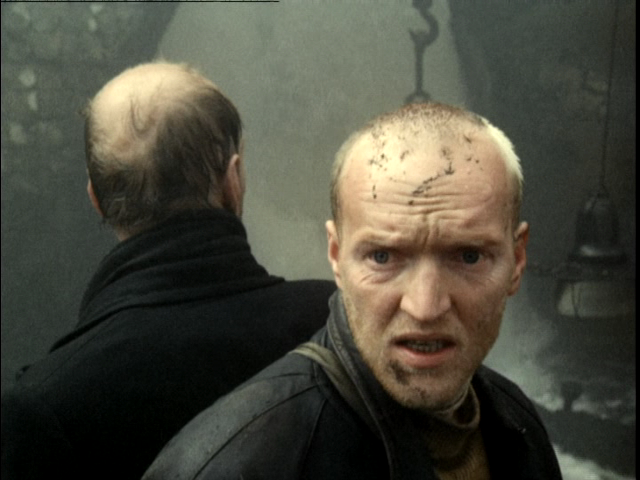
And so it is my hope and dream that the Criterion Collection gives us Stalker as well.  I know there is much more I could understand about that film and I think they will bring me the experts to help us.  Perhaps an audio commentary?  That would be awesome.  And to put more of yhour films back on Netflix Instant?  I'd appreciate it.