I haven’t watched a lot of films by Lars Von Trier. I still haven’t seen his possibly most popular
work with Bjork, Dancer in the Dark. But
in the few films I have seen by him, I know this: Von Trier isn’t about subtlety. He aims his 2 x 4 straight across the jaw,
just to make sure you get it. Yet this
film, as opposed to many of his others, had many subtle touches and was a truly
human film, filled with human touches.
The two main characters don’t represent Woman, but are characters we can
recognize and appreciate, as extreme as some of their actions may seem.
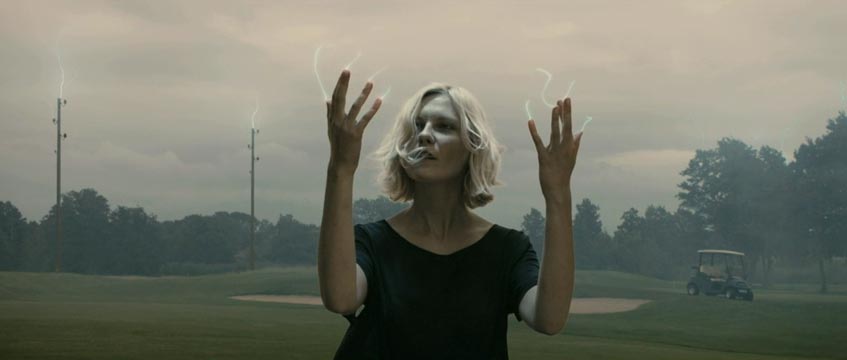
This is also possibly Von Trier’s most beautiful film. The first five minutes of surrealistic shots,
almost stills, took my breath away. And though the film then moves quickly into
narrative, it is still filled with the most gorgeous shots. The lighting of the reception moving outside
to the grass, the shot of Kirsten Dunst bathing in the light of the coming
planet… all gorgeous. And Wagner’s score from Tristan und Isolde over it all just inhances the beauty. Honestly, if you want me to love a film, make
it surrealistic, with an amazing score and throw in beautiful images—yeah,
it’ll be one of my favorites.
One of the most surprising things about this film is that
though it is all about depression—we get that from the title—yet it is not
depressing. It is filled with humor,
beauty, and even hope and joy. Sure,
it’s about the end of the world, but that doesn’t mean it has to be sad. More about depression in the film in the
analysis.
A much more straightforward film than Antichrist, but covers
some of the same themes, about depression and nihilism. I think this film might be the key to really
“getting” Antichrist, which I will watch again to get the idea of it. If I finally “get it” then I’ll write my
findings in a new post.
Overall, Melancholia was a marvelous experience, excellently
acted and brilliantly conceived. I
cannot recommend it to everyone. If you
have had no experience with depression or have never struggled with being
overwhelmed by life, perhaps you wouldn’t appreciate it. But for me, it was an amazing experience, and
one I want to have again. 5/5
Below is my analysis of the film, including spoilers. If you haven’t seen the film, I recommend not
reading it until after you’ve seen the film.
As I was leaving the theatre after seeing Melancholia, I
heard one woman say to her companion, “That was so stupid.” And I could understand why. After all, the film ends with Earth being
destroyed and flames engulfing the audience, and finally, complete
silence. This isn’t subtle, nor is it an
ending where you have to decide whether it is happy or unhappy. Frankly, the film makes it clear: it just
is. This is reality. For many people, this is simply silly. They have never experienced the end of their
world, nor dealt with the depression in which such an end is inevitable. To end the film in this way is a slap in the
face to their sensibilities, a pointless exercise in nihilism.
But part of what the film communicates is that melancholia
is a state of mind, an “illness” that cannot be gainsaid. Either you have had this state as an
experience or you haven’t. If you
haven’t, then such thinking is “stupid”, overdramatic and a rejection of
reality. But if melancholia is a part of
you, then it is just how reality looks.
The end is truly nigh, and our body just is preparing for the inevitable.

What is exactly meant by melancholia? In the ancient world, a melancholic
personality is one who has too much of a certain “humor” (or fluid) in the
blood. The melancholic personality is
introverted and creative, and when one develops too much of the humor that
creates such a personality, then such a person becomes isolated, lack energy
and depressed. This is an early form of
what today we call clinical depression.
Technically, clinical depression is usually caused by a lack of
serotonin in the brain, which causes one to no longer feel pleasure in everyday
experience. This causes lethargy and a
lack of energy. Such a lack of serotonin
can also cause one to be anxious, inflating little fears to inaction. Depression is sometimes a way of the body
indicating that it has had enough stimulation, and that it needs rest. In chronic depression, the body never catches
up on the “rest” it needs, and the victim can spend his or her time sleeping,
staying away from people and hiding from anything that might cause stress or
stimulation.
Von Trier adds one more layer to melancholia that isn’t
usually found in ancient medicine or modern psychology: a philosophical
side. Attached to lack of energy,
introversion, and creativity is a nihilism—a confidence that there is, in
reality, no hope for life. All life will
end and there is no life or spiritual force that will replace that life when it
is gone. It is true that such hopelessness often
accompanies depression, but it isn’t a necessary component of it. However, what does accompany such depression
is a satisfaction that life will end, because once life is over, then so is the
stress and one can finally rest.

Obviously, Justine is the melancholic, the focus of the
film—and the representative of Von Trier himself. She has all the indicators of all the layers
of melancholia, and Part I lays out exactly what such a condition is. Justine, is in the midst of the “happiest day
of her life” and it is clear that everyone expects her to—nay, demands that
she— be happy. But happiness is not in
her nature, and frankly, such a social event with so much planning and detail
is a clear trigger for a depressive event, demanding more energy than a
melancholic has. Everyone is
disappointed with her, but she has no reserves to meet everyone’s demands.
Finally, she escapes the stress by undermining her entire
life. She publicly has sex with a
visitor to the wedding, thus ending her short marriage. She deeply and publicly insults her boss,
thus ending the promotion he just gave her.
The only relationships she retains are those that give her comfort: her father (who runs from her) and her
sister. In this way, she ends her own
world, allowing the thoughts of the inevitability of such an end have their
self-fulfillment. Now she can rest. There are no more demands. Disaster is not something to fear, but it is
to be embraced. It is the end which is
best met quickly and on one’s own terms.
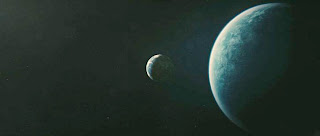
In Part II, the focus changes. Now it is about the impending disaster of the
planet Melancholia coming to destroy the Earth.
For the characters, there is some ambiguity as to whether the planet
will hit, but for us, who has already been given a preview of the event at the
beginning of the film, there is no question, and the horses agree with us—the
end is inevitable.
There are four responses to this impending doom. The first is Justine’s. She is not surprised by the end of all life,
she not only expected it, but is content with such an end. “The Earth is evil” she says, and so it is
worthy that all life be destroyed, to be replaced with nothingness. The funny thing is, that while pressures were
being put upon Justine in the first part of the film that she couldn’t deal
with, the only truly evil actions in the film are hers (except, perhaps, for
John’s selfish end). “Evil” then, must
be a personal definition, not a moral one.
The Earth is evil to her because she can’t deal with it.
Because of this attitude and approach to crisis, Justine is
supremely able to deal with the ultimate crisis. Her whole life has been in preparation for
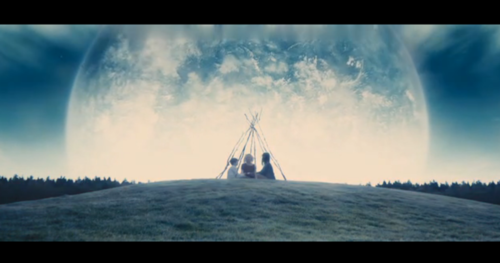
this very moment, in being able to deal with the ultimate disaster. She creates the idea of a “magic cave” which
will protect them from the coming disaster.
Of course she knows that such a protection doesn’t exist. But she creates it to ease the anxiety of
those around her. The cave is much like
the isolation that she participated in to shield herself from the end of her
life.
I think that this is how Von Trier sees existentialism and
probably religion. They are necessary
fictions to help the normal human deal with the inevitable, impending
disaster. This is not unlike Jean-Paul
Sarte’s view of reality: Nihilism is fact, but we cannot live as if there is no
hope or meaning to life. Thus we have to
create fictions, commitments to life, that we surrender ourselves to completely. It doesn’t delay the inevitable, but it makes
life easier to bear in the meantime.

The second response, which is the opposite of Justine’s, is
John’s. He is completely optimistic, he
is absolutely confident that life will continue on as normal. This crisis is simply a bump in life, one of
the normal intrusions to the humdrum world that makes life interesting. He rejoices in the planet, and takes as much
pleasure as he can out of it.
Eventually, he expresses his real doubts and finally seeks out the truth
of the matter. When he discovers that
Earth will actually be destroyed by the planet, he finds himself completely
unprepared to deal with it, and commits suicide. It is interesting that it is the sanguine
John who commits suicide and not the depressive Justine, although in real life
it is the depressive that often commits suicide. The point is that when the world ends, it is
the optimistic who can’t deal with reality, not the melancholic.
Another response is the horses. (Not Leo.
He just follows his father’s response and then Justine’s). They know that disaster is inevitable, and
their first response is panic. All they
want to do is escape it, run away.
Augustine won’t cross the bridge because he knows what is coming
there. But after a time, they calm
down. There is no point to continue
panic. What will happen will happen. In a sense, the horses reaction is the most
logical.
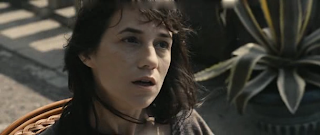
Finally, we have Claire.
In normal life, Claire is the most practical, the one that holds
everything together, the one that smoothes out the rough edges, who maintain
relationships, who keeps her head in all of life’s little crises. She is the kind of person who keeps life
going. So the possibility of life abruptly
ending is the worst possible outcome, and the one thing she just can’t
handle. Her response to this,
appropriately, is fear. Her husband
tells her that she is just anxious, fearing for nothing. However, we find out later, that he simply
just couldn’t deal with her fear in light of his need for hope, so he just
denied her the logical response.
When it is clear that the end of life is inevitable,
Claire’s first response is to perpetuate life.
Just to stand on the terrace with her sister and son, to drink wine and
make small talk. Justine refuses this,
recognizing that when life is ending, such a response is inadequate, and only
perpetuates denial, leading possibly to a worse breakdown. Claire finally accepts Justine’s solution of
participating in the “magic cave”, but in the end, the false protection means
nothing to her and she remains anxious to the end, recognizing that her worst
fears have been realized.
The final question I had about the film is the allegory of
the planet Melancholia itself. Certainly
it represents the end of life. Possibly
the end of one’s social life, as what Justine experienced in the first part of
the film. Or perhaps it represents a
personal end to life—the inevitability of death for us all.
But Melancholia represents more than the object which
precipitates an impending disaster. As
its name indicates, it is also a representative of depression itself. Certainly it represented the mental state of
impending doom for Justine. She refused
to undress for her husband on her wedding night, nor did she even undress for
the young tool she used to end her marriage with. But for the planet of Melancholia, she
completely disrobed and opened herself completely to it. Depression itself was the joy in her life,
that which she could completely surrender herself to.
But is the planet a representation of depression to
everyone? Is the greatest disaster of
everyone’s life in the film not the “end of life as we know it”, but Depression
itself? Is John actually denying depression
in response to crisis as an option, and when depression comes he commits
suicide? Is Claire fearful of her lack
of response to life? Is she ultimately
fearful of losing control, of no longer having the energy or drive to love, to
hope, to smooth things out?
I don’t know that Von Trier intended such a deep metaphor,
but it is interesting to think about.