Tuesday, September 18, 2012

How Do You Respond When A Spirit Asks You If You Are a God? (Ghostbusters, 1984)


      #97--Ghostbusters (1984)      

Dealing with spirits is tricky business.  There are the low-level ghosts, who can be… slimy.  Then there high level gods, who can decimate large populations.   Tricky, very tricky. 

Especially tricky for scientists.  Even pseudo-scientists.  When you are trained to be skeptical, to doubt, to question everything, it may seem that you might never actually get around to dealing with real, live (so to speak) spirits.   When you finally do connect to spirits, proper etiquette might be lacking.  Not because you don’t want to be polite, but because you just haven’t had the experience.

So when Ray is approached by a spirit and asked, “Are you a god?” He answered simply and honestly, to the best of his knowledge, in the negative.  How was he to know that it was the wrong response?  That such honesty might actually get him and his companions killed?  Or at least mortally wounded.  Peter corrected Ray’s error: “Ray, when someone asks you if you are a god, you say YES!”  

Obviously, such an answer must come from studying the classics.  Alexander said “yes”.  Augustus said “yes”.  Titus said “yes.”  Perhaps we should all learn from their example.  Peter thinks so.

Of course, there’s that niggling little aspect of blasphemy.  When Herod Antipas said “yes” to such a seemingly basic question, he was eaten from the inside out by worms.  Perhaps this should be given more consideration.

Screen Shot Jokes Quiz-- Level Easy

Below are a number of screen shots.  What movies are they from?  And (without peeking) what years are they from? (For any questions, we'll stick with the IMDB years).  Post your answers as a comment.

1. 

2.

3.

4.

5. 

6.

7. 


8.

9.

10.


Monday, September 17, 2012

How Far Can the Mystical Powers of Kung Fu be Stretched? (Kung Fu Hustle, 2004)

#98-- Kung Fu Hustle (2004)

Stephen Chow has been making martial arts comedies for many years.  They all have the same style, take a hokey, but typical, Hong Kong plot and add various physical and verbal jokes, giving us the right to openly laugh at the films we have wanted to for so long.  Chow has not only improved as a director, but also as an actor, making films like Forbidden City Cop that has some good dramatic scenes as well as some decent comedy.

Kung Fu Hustle is Chow’s masterpiece.

A gang of criminals come to attack an apartment building and Stephen Chow is first an ineffective criminal and then a master defender.  But the plot can be tossed aside.  The brilliance is in the style.  This film could just as well be called Flying Coyote, Hidden Road Runner.   It has all the fun and majesty of the flying martial arts movies, with a Looney Tunes sensibility and the finesse of Roger Rabbit with a sledgehammer.

This is physical comedy at its best, where every master is a citizen of Toontown and any non-master had better clear out of the way.  It is so over the top, so ridiculous that if you are going to watch you have to just go along for the ride and enjoy every silly moment.

Can Anyone Be a Part of Family? (Lilo & Stitch, 2002)


      #99--  Lilo & Stitch (2002)     

Lilo is, to say the least, a difficult child.  When she first speaks in the film, we find out that she is late to her class because she had to feed Pudge, a fish in the ocean, peanut butter sandwiches and she had to find peanut butter because all they had was tuna and you COULDN’T feed Pudge tuna because that would be cannibalism.  Her logic is impeccable.  It just isn’t shared by anyone else in existence.  Yeah, that’s difficult.

But her difficulty is nothing compared to Stitch, a genetically manipulated creature, formed to destroy whole civilizations by a mad scientist… excuse me… an evil genius.  Stich can escape from any prison, create mayhem and destroy whole cities, but he is stuck on Hawaii because the one thing he can’t abide is water. 

Stitch's part in The Lion King
was left on the cutting room floor.
The question of the movie is can these two social outcast become a part of a family?  The oft-repeated line of the film is “Oahu means family.  In family no one gets left behind or forgotten.”  That’s fine, but can these two be a part of any family?  They think so differently.  They don’t fit any societal norms, and in fact, they rebel against many of them.  Heck, Stitch eats societal norms for breakfast, and downs a city for a midmorning snack!

The wonderful answer of this film is that they cannot be a part of an average family.  But they can be family together.  The outcasts CAN be a part of a family—a family of outcasts.  The final act of the film is the creation of a family of the most awkward band of misfits ever imagined in a single unit. 

I love the basic truth of this film: you cannot take misfits and change them completely to be a part of a standard family.  Instead, you must change the image of family to include misfits.  If you can have a functional family which includes severe dysfunction, then you can have a family of the homeless, a family of the mentally ill, a family of the traumatized, a family of the social awkward, a family of those in rehab.  Because the conformity of the family matters little.  What really matters is that no one gets left behind.  Or forgotten.

What Can a Simple Worker Do To Serve His Country? (The General, 1927)


#100--The General (1927) 

Buster Keaton’s manly honor and his ability to have a chance at his love is dependent on his becoming a soldier in the Confederate army.  Yes, this is the South of 1961, but surprisingly, they are not the bad guys, nor is there any question of the pure patriotism for the Confederacy here.  It doesn’t matter who Keaton was loyal to for us to connect with him—what we associate to is the faithfulness to his nation.  So he stands in line to sign up with the army, but he is rebuffed again and again.

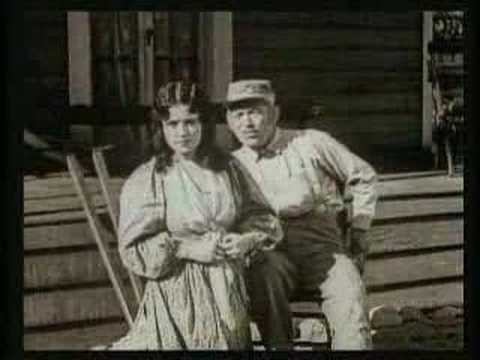
The whole film was shot in Cottage Grove, Oregon
It is interesting that he is rejected as a soldier not because he is weak in some way, but because he is too important.  He is a railway engineer, and they can’t waste such important workers on being simple foot soldiers.  But that doesn’t matter to Keaton’s honor.  Societal respect is found in participation in the army, nothing else, and Keaton is left out. 

The rest of the movie shows Keaton’s heroism and athleticism in serving his country and being much more than any single soldier could be.  I would stand this movie next to any modern action flick and say that the excitement and  intensity matches, at least.   This is an amazing film and deserves all the allocates over the years.   And Keaton is truly one of the few great actors of the silent era.

Sunday, September 16, 2012

Some Thoughts About This Year's Top 100

Madman is my name.  Obsession my game.
Every year for the Filmspotting Forum, I make a top 100.  Last year's list was only half of a full effort.  I'm much more satisfied with this year's list.

I began to post the movies I watched on two different internet sites this year.  I have my most complete list on ICheckMovies.com .  That site is simple: you watch a movie and then you check off that you watched it.  They will automatically tell you which of their many official lists that movie is on, and keep you up to date on how well you are doing on those lists.  I have awards in 49 of the lists right now.  That's not a boast.  If anything, it shows how obsessed I am with movies, which may not be a good thing.  The other great thing about ICheckMovies.com is that you can "favorite" or "dislike" a movie, and you can have a list of each of those, if you like.

The second site I'm keeping my movies on is Criticker.com.  That site allows you to not only keep track of the movies you watch, but you can rate them on a scale from 1-100 (100 being best).  Also, you can keep a review on as many movies as you like.

This year, in preparation for my list, I took my list of 650 favorite movies on ICheckMovies.com and ranked and reviewed them on Criticker.com.  This allowed Criticker to rank these movies in a general order and gave me the opportunity to review all of these movies in my mind.  It was a lot of work, but I accomplished it in about a month.

Then I took the movies I rated from 100-90 and ranked the top 100 or so. This took a couple nights, but it was painful.

Nevertheless, my top 100 was revealed.

My bud, Richard.
THEN I took my top 100 and offered questions for each movie, that each movie compels me to ask.

If this isn't the work of an obsessed madman that deserves to be in Close Encounters of the Third Kind, then I don't know what is.

Why do I do this?  Because I want to be fair to the community I hang out with, the Filmspotting community.  I want to have a solid top 100, as solid as I could.  And this is my best top 100 yet, one perhaps I can build on.

I hope I won't ever have to do this much work on it again.  But we'll see about next year.

So on my blog here I will be posting answers to the movie questions I posed.  So if you see a question as a title, just remember, this is a film I consider to be one of the greatest ever made.  I'll tag it Top 100 Movies 2012.

Because nothing is real until it is blogged.

Tuesday, September 4, 2012

Review and Meditation on Dancer in the Dark


Acting is a brutal art.  To accomplish a real act of drama, not just a light and frothy musical scene, but deep sorrow and regret, requires something from one’s soul that must be torn out.   Bjork, the star of the 2000 film, Dancer in the Dark, said that the role of acting in this film was so emotionally wrenching that she would never act again.  She also may have given a hint that the director of extreme film, Lars Von Trier, could be the cause of this.  She had nothing good to say about him after the filming, calling him “sexist.”  Is it because he was demanding sacrifice more than she could give for the film?  Certainly he is more demanding of his female characters than his male ones. 

Sacrifice is never pretty.  Some demand our sacrifice, some compel us to sacrifice ourselves for them.  Most people don’t want anyone else to sacrifice for themselves.  They can take care of themselves, take care of their own.  Certainly Selma, the focus of the film, wanted no help.  Yes, she had a genetic disease, a sight disorder that had just about made her blind.  Her son has the same disorder.  But she has a plan.  She will work hard and save the money necessary in order to get her son an operation so he can see, and end the curse on her family.   It turns out that the cost was going to be much higher than she expected.

Selma loves musicals.  Although her life is focused on her son, her one real joy is music and dance.   Her friend, Jeff, wonders why she would love musicals so much.  “I don’t suddenly break into song and dance.”  “No,” Selma replies, “no, you wouldn’t.”   

But Selma does, in her mind.  She can hear the rhythms of everyday life, the beats of the factory, the pounding of a train, the sketching of an artist and turns them into songs.  She is the star of her own musical.  But like the film, the songs aren’t rushed, nor do they have a tight melody.  They linger in emotion, momentarily hesitating and then rushing past the natural beats.   They dance around, perhaps even fight against the very rhythm that is their source and pulse.  

So this film, with its documentary cinematography, musical sensibility but ultimately brutal nature is almost unnatural, fighting against the limits of our mind and demanding that we, too, sacrifice ourselves.  It is no-holds-barred cinema.  Not for the squeamish or overwrought.  But it’s hyper-drama may be what some need to retain hope.  Yes, hope.

*  *  *
Spoilers below

Like the train, though, the songs move forward, as does the film, pushing along.  As Selma’s eyesight fades, so the film becomes emotionally dark and Selma’s path toward her goal becomes more difficult, even brutal.   Despite the darkness that she can no longer ignore or hide, she is determined to reach her goal, no matter what it costs, no matter what she must sacrifice.

In the end, Selma is the scapegoat, the sacrificial lamb, the one whose life must be laid down for the sins of others.  She is the innocent one, the pure unblemished offering.  Through her is healing, through her is mercy, through her the guilt is washed away.

Watch her.  See how she is kindly brutalized, but she responds to all with gracious kindness and acts of mercy.  See how she is there to bring life and to heal life, to give precious gifts through her own veins.  Look at the glorious victim, one moment unable to stand, and the next joyfully accepting her fate!  Glory to the precious redeemer, tied to the beams and hung for our errors, the innocent for the guilty.  All we like sheep have gone astray, we have turned everyone to his own way, but the Lord hath laid on her the iniquity of us all. 

This is the greatest, truest passion of them all.

But this is not the last song.  Death is not the finale.  They do not know, but the last song is still to be sung.  For this is not the end.  Because she willingly poured herself out to death, and she was numbered with the transgressors,  she will be allotted with the great, she will prosper and will be highly exalted.

This is the state of the poor.  Selma works and does all she can, but nothing comes of it.  Because of her kind nature, and due to her human weakness, more is demanded of her than she can give.  She gives all, but it is not enough, there is always someone… more than someone… who demands more than she can give.  It is the way of the world.  Those who are kind and have little, more is demanded of them.  More than they can give.  Eventually, broken and bruised, brutalized and beaten, they surrender all for the sake of those they love.

But this is not the end of the story.  There is still hope, there is still a future.  While the poor do not see justice in their lives, it exists in the future.  They will be praised for their sacrifice.  The slaves, the falsely accused, the abused, the oppressed, the outcast—they will have their day.   This is not the last song.  We can just hear glimpses of the melody.  We know the last song is coming.  We just need to wait.

This last song is not for the pillars of society, the powerful, the respected, the comfortable.  They have had their chance, their song.  Those who see the penultimate song and call it the finale.  If they partake in the last song at all, it will be in a supporting role, for finally the weak who supported these pillars on their backs will have their due.

“It will be a day like this one when the sky falls down and the hungry and poor and the wounded are found.” -Switchfoot