Saturday, August 30, 2014

John Donne Meets the Tortures of Cancer: Wit (2001)

Christian theology screws a lot of people up. At this point, this is a truism, but it is partly true because people do not understand the basic, everyday terms of the original idea. Take "salvation" for instance. The original idea of "salvation" isn't spiritual or other-worldly at all, but it means moving from a state of need to a state of the satisfaction of need, from starvation to being filled, from neglect to honor, from sickness to a state of wellness. When we spiritualize the simple, then we complicate that which is very basic, and turn what we understood at our mother's knee into a state of confusion and anxiety.

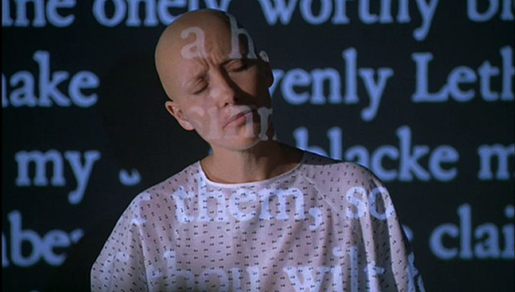
Poor John Donne. When observing the sufferings of Professor Vivian Bearing, the "treatment" which is no such thing, we observe the flayings of Donne upon his soul who wishes to be forgotten by God, because he cannot bear under the sight of a God whose vision is so cruel as to judge that which cannot change.

If lecherous goats, if serpents envious
Cannot be damn'd, alas, why should I be?

This is not unlike the sufferings of Vivian, but while Donne spiritualized his sufferings, imagining the loving Mother who seeks him no matter how much he might hide as a horrible abusive monster, even so Vivian doubts that compassion and touch and a simple act of kindness could be a greater balm than the deepest understanding of the medical profession. How we complicate that which is quite simple, really, and then find ourselves of need to walk through a morass of maze-like corridors to come back to that which we learned at our mother's knee.


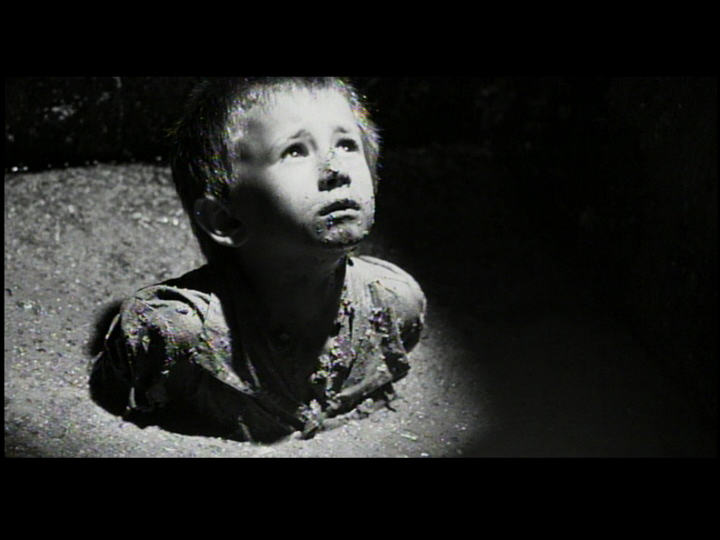
But that doesn't speak to Emma Thompson at all. Suffice it to say, I could listen to her speak all day. The fact that she is reading some of the greatest lines ever written, just causes me to close my eyes and bask in the delightful lyrics. But only briefly, because she is like Dryer's Joan of Arc (The Passion of Joan of Arc), beautifully deformed by her anguish.


Tuesday, August 5, 2014

Chatting with my Bud, Darren Aronofsky about Noah

I called up my bud Darren Aronofsky last year and said, "So you're going to release a biblical epic this year, huh?  Which one?"

"Noah"

"Okay, I can see this working.  Will this be an imaginative interpretation of it?"

"Oh yeah. Lots of innovation."

"Well, that's good because every culture has had a reinterpretation of the flood story. We need a new one."

"Well, it's new-ish."

"What do you mean?"

"Well, it's pretty strongly based on the Bible story.  Highly interpreted, but still from the Bible."

"Well, there's some great themes there.  And you're interpreting it for modern audiences?"

"Absolutely.  With a strong environmental message.  The animals are innocent so they get saved, but humanity is judged because they kill animals."

"So... it's a vegetarian message?"

"Environmental."

"So you say.  We'll see.  Still sounds interesting.  What about the racial slant, you're getting rid of that, right?"

"Racial?  What do you mean?"

"You know, the part where one race is good and another race is bad and we have to get rid of the bad race?"

"Oh, uh, well, I kept that bit."

"Really?"

"Well, it kinda drives the plot."

"At least you made Noah a pacifist, right?"

"What do you mean, pacifist?"

"Well, in the text the world was wicked because they were murdering each other without consideration.  Noah, in context, was righteous because he didn't kill anyone.  He refused to judge."

"Huh.  I didn't read that."

"So, you didn't make him a pacifist?"

"Not exactly..."

"You had Noah kill?"

"A little bit.  I mean, what do you expect?  It's Russell Crowe!  It's in the contract-- someone has to be killed! By Russell!"

*shakes head*

"Hey, but I got giant rock monsters in there!  That's good, right? And Jennifer Connelly really knocks it out of the park.  Every one of the dozen lines she and Emma Watson speak are perfect."

"I'll watch it on DVD."

Tuesday, July 29, 2014

The Three Acts of The Deer Hunter

Yes, it is long. Three hours long. But it is neatly segmented into three distinct acts, with clear divides between them, so it is not much of a burden to watch.


Act One: The Wedding
It is amazing that he spends a full hour setting up characters and setting, without much going on. It reminds me of Dazed and Confused without the nostalgia, or perhaps the first segment of Fanny and Alexander. We are watching our main characters and most of our supporting characters in their everyday life, over a single 24 hour period. The wedding is central, but it isn't the only event, and it arguably isn't the most important event. What stuns me about this segment is the detail. Every bit of every frame is used, and filled with details. This is a film that deserves to be seen on the big screen or else you couldn't possibly see it all.


Act Two: War
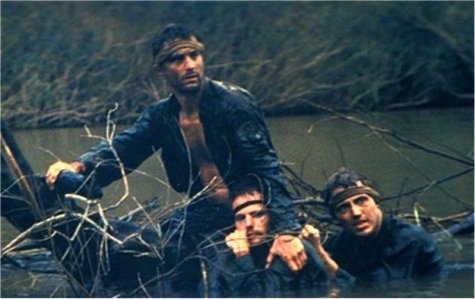
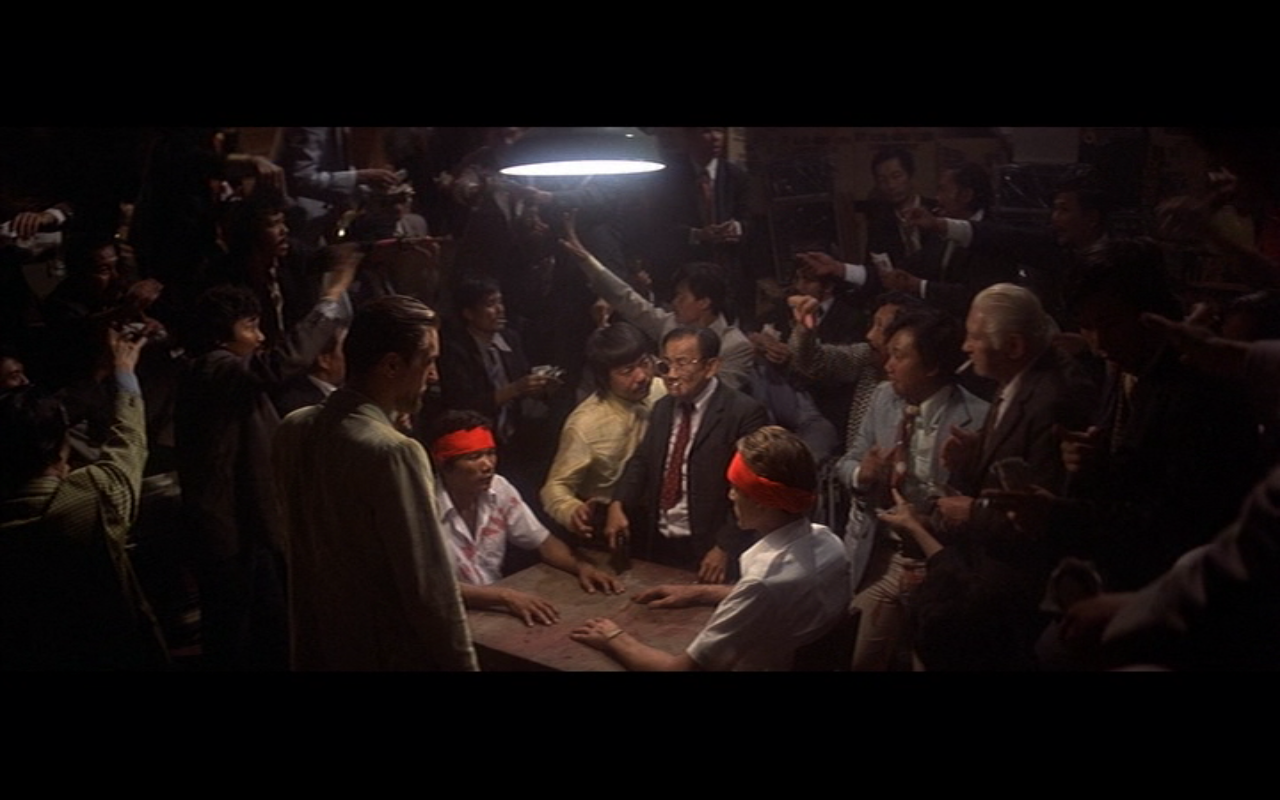
As rambling as the first act was, so this act is direct and fast paced. The minutes fly as the action keeps us attentive. It is brutal, but after so many war films we are almost used to that, but what amazes me is the repetition. The "game" is repeated countless times in this film, but the intensity is never less. I can understand how one might be addicted to the game, even perhaps playing the game. The danger, once one is used to the level of stress, draws one to it's inevitable tragedy. The various reactions to it feel very true to life. And once we think about it, we realize that war itself is just a version of the game, whether one is a revolutionary or a defender or an invader or a defender. It is an act of suicide through which one intends to harm one's enemy.


Act Three: Home  (Spoilers below)
By this time we realize that setting is everything in this film, and the points are left to the end. You can't step in the same river twice. Community changes as the goal of community are met. Life's a bitch and then you die. Tragedy changes everyone, even those who haven't experienced it. Suffering isn't always for good. And any number of other cliches. Yet watching it, we see that when people are living it out, these life lessons cannot be reduced to a cliche. By this time, these are real people and we can't just dismiss them or their experiences. All the characters are caught in a catch-22, unable to live and unable not to live.


Certainly some brilliance there, especially in the cinematography and direction. It's one of the few times I can say that I saw a movie with Meryl Streep and she wasn't the best thing about the film. It is big and sweeping and somewhat tragic and, probably unforgettable. A great achievement. Epic.

Saturday, July 26, 2014

The Madness of Sorcerer (1977)

It is one of my wife's pastimes to play Sims on the computer while I watch a film on the other side of the room with headphones in. She knows when a film is really good because I can't keep quiet. I'll moan or talk to the characters or gasp, and she sits there and smiles. When I watched Sorcerer, she had a full evening's entertainment, without ever hearing a single line of dialogue. I was especially noisy that night.

I honestly think that William Friedkin of the 70s is one of the greatest storytellers of cinema. The French Connection, The Exorcist, and Sorcerer are three of the best told stories we have. In Sorcerer, we are thrown immediately into the action in Jerusalem where a bombing occurs. Then in Paris, where an executive is threatened with jail. Then in New York where heist goes all wrong. And these disparate stories are not only captivating, but they introduce us to the world through the film's eyes-- desperate and without hope. Every time hope emerges, there is another dousing of ice cold water to bring us back to this reality. This doesn't mean the film is always dark, but we can understand the motivation behind the characters because desperation leads to extreme choices.


And the film is extreme. To a degree that a kind of madness took over even during the making of the film, where William Friedkin, looking back, regrets putting his actors in an extremely dangerous situation to film the famous bridge scene. And the insanity comes through. By the end of the film, I was desperate myself and the ending had me throwing up my hands, exclaiming. Which amused my wife to no end.

Thursday, July 17, 2014

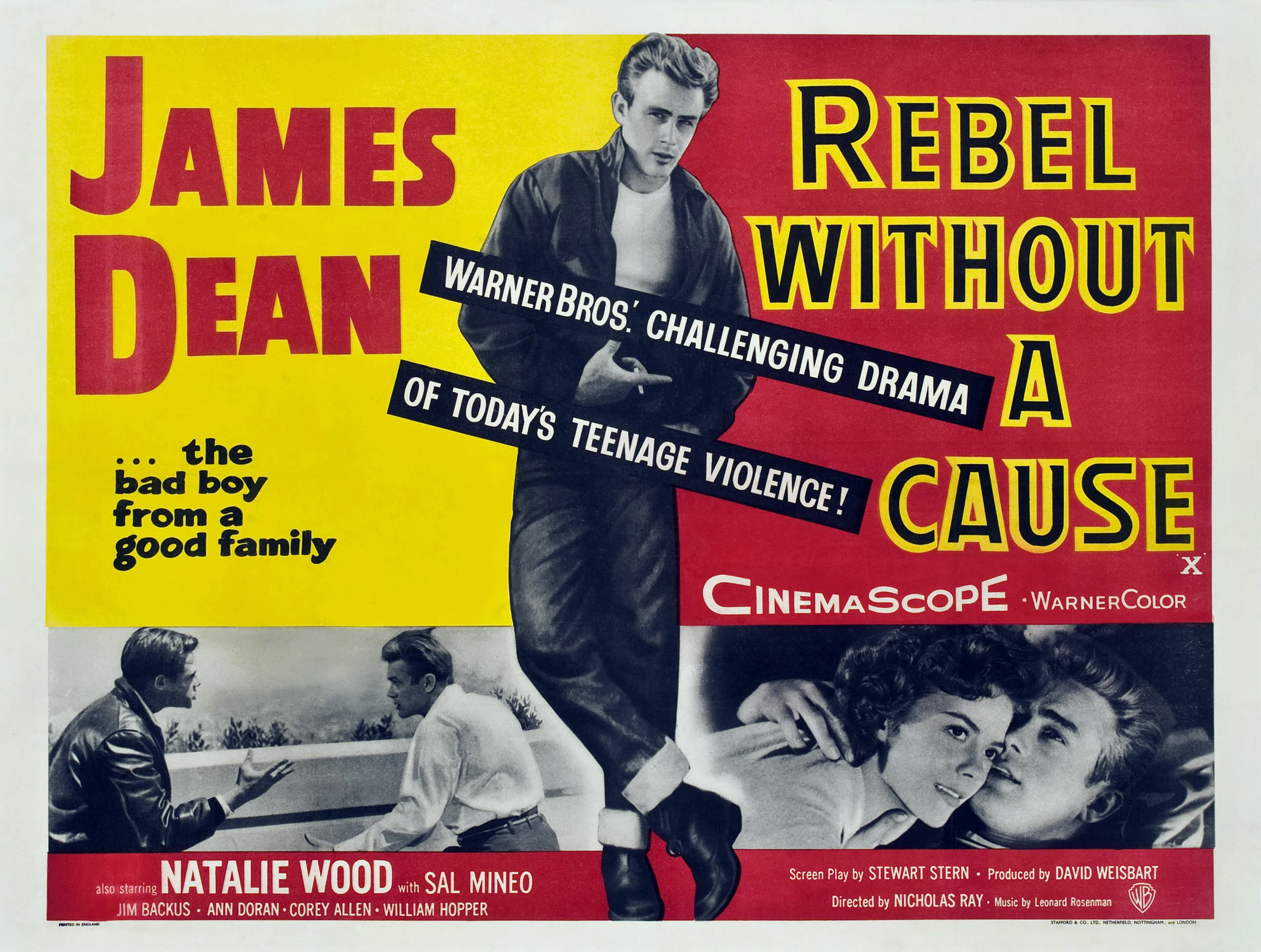
The Everyday Rebel Without a Cause

Mic Eddy is a homeless, with red hair and pale skin and an outgoing disposition. He's in his twenties, and has obtained and lost some jobs, but he doesn't care about that. What tears him apart is the lack of respect that he experiences daily, because, frankly, everybody dislikes him. He acts like a child, gets in people's faces, destroys property without thinking. He does this because he must have attention and if he can't get positive attention, he'll get whatever attention he can. He drinks so that the negativity that surrounds him doesn't bother him. Honestly, he's a friendly, gregarious, fun-loving person. But he is caught in a cycle of doing all the can to obtain respect, but losing it with every outgoing step he makes.

I thought about Mic throughout this whole film. The film is focused on the relationship between disheartened teens and their broken parents, but deeper it has to do with honor and what one would do to obtain honor. And what one lives with when honor isn't available, or at least the kind of honor that really matters.

There are a number of weaknesses to the film, not the least of which that I recognize a couple actors from later television sitcoms (although I recognize that isn't their fault-- actors gotta work. But every time I see James Dean's father I see Hurston Howell III, and wonder if Dean's character isn't called Jim Howell...). Occasionally the actors are playing out a silly set of lines, or a shot looks too obvious or purposely pretentious. The fact that all the movement and emotional changes happen within a 36 hour period is a bit too fast.


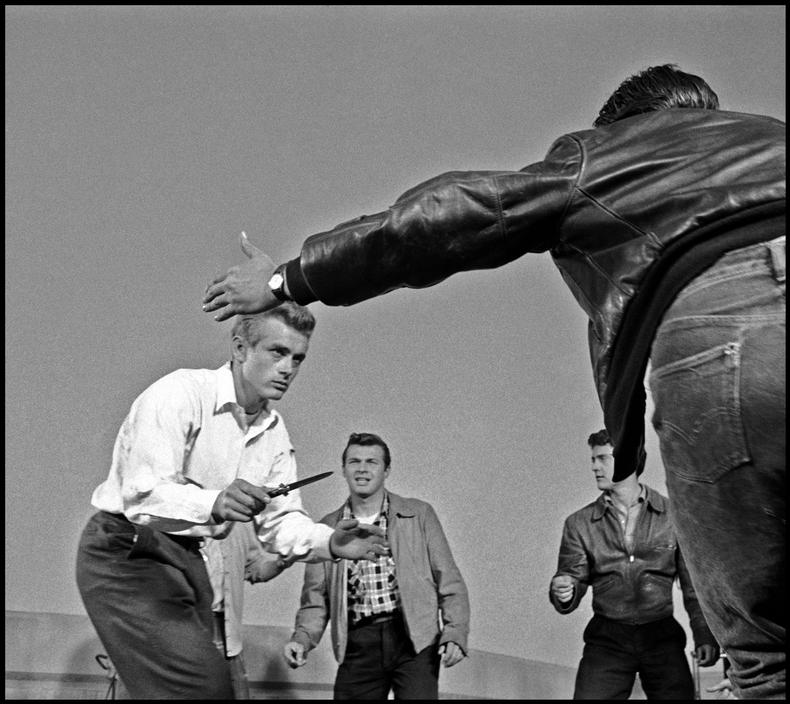
But when this movie works, it is tremendous. The game of "chicken" is bursting with cinematic power. James Dean is perfect, innovative, hard to take my eyes off of him. The movie captures my attention and doesn't let go. Despite its shortcomings, I can see why this is counted among one of the greats of cinema history and deserves its lofty reputation.

Friday, July 11, 2014

How to Train Your Dragon for Peace

How to Train Your Dragon
This is perhaps the third or fourth viewing of this film, in preparation of watching the sequel.  And it is as fresh and funny as when I first saw it.

As silly and fanciful as the world is, the characters of Hiccup, his father, and Astrid are excellent characters, better than the majority of characters in any comedy, let alone a children's film.  While it deals with the common themes of a child/parent relationship and a late bloomer, these are not the focused themes of the film.  It is about choosing peace with one's enemies instead of warfare and how it works far better than persisting enmity.

Many of us live in a nation that thrives on enmity, and all parts of the nation must persist in fearmongering and pinpointing who we should hate next in order to have unity.  When an enemy outside the nation isn't clear, then we must target enemies inside the country to be our target.  If we did not have hatred, it would seem, we would have nothing.  In the end, How to Train Your Dragon isn't a film pointed at children at all, but it is a message about welcoming diversity and working together with one's enemies against one's hatred.  It demonstrates that as powerful as the weapons and strategies of war seem to work, the most effective tools for peace are the tools of peace. 

It is easy for parents to dismiss this message because of the context of the film-- it is a highly entertaining comedy (I am chucking right now at the perfectly delivered line, "Thanks for nothing you useless reptile"), and it is a children's film.  But someday I hope that this film along with others will be pointed at as indicating a turning point that is to come, when we realize that creating peace has to do with understanding instead of greater firepower.

How to Train Your Dragon 2
This is one of those rare sequels that plunges into new territory, rather than simply rehashing what made the original film wonderful and popular.  Not only do we go to new lands and explore new storylines, but even the characters of the first film reflect the growth of five years.  There is a shadow of the familiar characters, but they aren’t the same, as if we were meeting our old friends at a high school reunion.

That is the glory of this follow up.  We have no idea where this film will go because it is so new.  Hiccup is different, as is Astrid.  The town, of course, must be different, but we spend very little time there, even as Hiccup himself is determined to explore the broader world with Toothless, his best companion.  This film has fewer laughs, but we hardly notice as it has more action and higher stakes.  And it has it’s first bad guy—Drago, who is both evil and vulnerable.  Everything is so fresh, so powerful, so quick that we don’t even have much time to feel.

This film also continues the theme about enemies and violence.  We see the source of Hiccup’s ability to be a peacemaker, and that impulse is affirmed.  In this film, as opposed to the first, the peacemaking tendency is balanced with the need to protect and, ultimately, with the need to vanquish an enemy who won’t recognize and actually threatens the peace. 

As a storyline, there’s not much to complain about.  As a philosophy, I am disappointed.  All the ideals of the first film—seeing the enemy as more than enmity, meeting the fear with provision of need—is undermined by the second film.  Drago is presented as a man who pursues violence because of fear... those fears could have been met.  But instead Drago was too much of a threat and had to be eliminated. These two points of view could be seen as a balance—a time for peace, a time for war—but in a week in which a victimized nation turns around and victimizes another nation because they “have to protect your own”, it seems clear that the two philosophies can’t work.


Enemies are truly vanquished through love and sacrificed, not war and destruction.  I am so glad to see Toothless and Hiccup come into their own in this second film.  But if I were to make another sequel, it would show how the demand of protection destroys other islands around them, simply because they didn’t belong. 

Sunday, July 6, 2014

Perfection In Depicting the Evil in All of Us: Schindler's List

I have a short list of films, including Rear Window, Citizen Kane and The Godfather which I consider "perfect." There is not a frame out of place, not a sour note, not a dull moment. In these films, the great directors were at the top of their powers and they created their master pieces, that which we could all point to, which declare their greatness.

I will have to include Schindler's List in that short canon of films.

I feel, at times, that I am Schindler. The man whose motivation is questionable, but whose compassion and humanity grows through time and relationship and crisis. He who had to be led by the hand to mercy, but in the end weeps because he has not done enough.


There are Schindlers in every age, every era, stumbling upon a small way out of the horrors of prejudice and dehumanization. This film is not just about a moment in history, but about every moment. A call to sacrifice for those who die around us.

* * *

At this point I need to apologize to Liam Neeson for my "Rule of Liam Neeson", which goes, "An excellent actor, in order to obtain the maximum praise, must choose films in which he is the best aspect of the film."  Clearly, Schindler's List does not fit that restriction, despite the fact that The Phantom Menace, Taken, Les Miserables (1998), Clash of the Titans, Non-Stop, and many other films he starred in do qualify.  

- It is interesting to note that a film about the real life Schindler has been talked about since 1951 when Poldek Pfefferberg spoke to Fritz Lang about the possibility.  Poldek finally enouraged Thomas Keneally to write the novel on which this film was based.


-Spielberg didn't take a fee for this filming, feeling that if he did it would be "blood money".

-Auschwitz scenes were only filmed outside the gates, not inside, out of respect for the dead.