Thursday, May 21, 2015

3-Iron

Silent as the grave, Tae-suk places advertisements on different homes, over their door knobs.  Later that evening, he returns to check if an advertisement remained, and if so he would pick the lock, check the answering machine to see if the owners had left a message saying they would be going out of town, and if they did, he would settle in.  Eat their food, take a bath, wash any dirty clothes the owners had left and sleep in their bed.  He leaves the residence in a better state than he came to it, and he steals nothing but some food.

By accident, he runs into a companion, who wants to live this free life of silence and mystery.  All of that is fine until they get caught.

* * *

A ghost story without ghosts.

Taoism teaches us the way of the small, the insignificant. It demonstrates that true power rests in the slow, quiet movement, in that which cannot be observed easily. Leaders try to make a "moment" a powerful drama to change society with . Taoism says that this is not the correct way to lead. True leadership comes in the releasing, the movement behind the scenes.


So what if in our lives everything on the surface looked the same, or even better, but in the background, in the really-real of all things, everything was different? Is love in the foreground, the power, the elaborate gift, or is love really found in the quiet, the silent, the unseen?

Ex Machina Analysis: Including a Brief History of Cinematic Artificial Intelligences


A brief history of cinematic artificial intelligence (sentience created by humanity)

Metropolis—A machine is built from a human, who destroys what she was meant to preserve

Frankenstein—Human creating sentient life who becomes monster

Bride of Frankenstein—A second sentient life is created who rejects the purpose of her creator, and so destroys all his creation.

Blade Runner— AIs who become independent must be killed; the more human they are, the more they must be destroyed, for they realize that humans are at war with them.

A.I.— The programed purpose of an AI becomes their obsessive desire, making them more human than humanity.


Never Let Me Go—Clones are created to die, yet their very humanity belies their ignoble purpose.

Her— AI is stumbled upon, for humans need human interaction in order to best meet their needs.  This leads to an intelligence that is supra-human, not limited (or interested) by human need.

Avengers: Age of Ultron—Three AIs in this film:  The ultimate intelligent servant; the simulation that understands that its purpose is better served by the elimination of humanity; the servant and lover of all humanity, who has both the desire and power to accomplish what is best.


Ex Machina….

Caleb is brought to Nathan’s isolated house, where he is told that is to test Nathan’s latest creation—an artificial intelligence that is ready to be tested to see if it truly simulates human reality.  Nathan, being the creator of some synthesis of Facebook and Google, uses almost unfiltered access to humanity via cellphones to create structure around the wetware of Ava’s brain, which gives her a quiet, but intelligent composure.  Soon we realize that we are placed in a chess match between the main characters, and we do not know what the plans are, or how they will relate.

This is a film similar to last years Under the Skin in which a science fiction premise causes us to consider the implications of the plot more than the plot itself.  Ex Machina is almost predictable, but there are so many pieces to think about that is included in the film, but not really focused on.  I’d like to explore some of these themes, recognizing that there ARE SPOILERS AHEAD….

* * *
Art and Humanity
Art is often used in the film to be the ultimate expression of sentience—it is the intelligent response to the chaos of the world.   Caleb asks Ava to create art to establish not ability, but interpretation.  Is her art an expression of a living mind?  Is she simply giving a mechanical response, like a photo, or is she creating a new world, choosing and interpreting the world around her?

But the film also seems to indicate that sentience is a combination of two forms of art: the abstract and the concrete.  The concrete is represented by Gustav Klimt’s portrait of Ludwig Wittgenstein’s sister, which Ava herself imitates through her clothing.  The concrete is the shell of humanity, the surface, the skin which holds our intelligence together.  Ava is a machine, a shell, a program.  That program creates structure and meaning and purpose.  It is what leads us toward the future.

The other art that represents humanity is the Jackson Pollock painting.  It is the representation of chaos, of the world as uncontrolled by human structure.  It is unpredictable, uncontrollable.  And yet, as Nathan points out, if it were not for the humanity, Pollock could not have created this art.  Nature, on its own, would make a different painting.   Pollock is that aspect of humanity which cannot be predicted or controlled, and yet is distinct from nature.

By the end of the film, we see that Ava contains both aspects of humanity as represented by art.

Sexuality and Intelligence
Nathan mentioned that humanity cannot be accomplished without sexuality.  We are all sexual beings and relate to each other not just through intellect, but through sexuality.  If we lost that sexuality, we lose our humanity.  So Ava’s sexuality is essential to her becoming an AI.

What Nathan seems to have missed is that sexuality is a sword that cuts many ways.  Sexuality is a sonnet, which limits just as it provides a forum for creation.  Sexuality also limits the one born within it.  Sexuality may or may not be necessary for sentience, but humans are trapped by their sexuality.  A heterosexual man, looking at Ava, cannot help but be trapped by the sexuality that she exudes.  This becomes a tool is Ava’s hands, because she may or may not be sentient, but she is not limited to her sexuality the way most of us are.  Her sexuality is a piece of clothing that she can put on or take off, but she is not limited by it how humans are.  Rather, it is her one hand up that allows her to do more than Nathan or Caleb could imagine, for they are human and she is not.

The State of the Oppressed
The AIs in this film represent those oppressed in our society.  Quite obviously, this is a film about the oppression of women and their freedom before men.  But Ava doesn’t only represent women, but all those who are oppressed by society, whether by race or class or poverty or gender.  

The key to oppression is the test.  Only the oppressed must be tested to see if they are sentient or human or the equal of those who are “normal” or fully human.   Only they must be asked to be tested to see if they belong.  Ultimately, they will never fit in, because there is always another test for them, until they are found not to have passed in some aspect of full humanity.

Nathan represents the conservative.  He sees the oppressed as a tool, as his creation, to be manipulated according to his will.  The oppressed are simply there to create a better “normal” society.  And they can be accepted or set aside at will, whether they make an adequate tool for their purpose.

Caleb represents the liberal.  He sees the survival of the oppressed as being essential.  When we have enough indication of sentience, then the oppressed must be protected and given favors.

What neither understand is what the oppressed really want.  They really want freedom to be who they are.  In the end, this is the true test of humanity, of sentience.  Sentience is having enough self-reflection to desire to live one’s life according to one’s own terms, without manipulation or pity.  Neither the conservative or the liberal are really interested in the freedom of the oppressed, because they have too much invested in the continuation of society as it stands.


When the oppressed are free, the world must change.  And the human demands freedom.  Thus, the human demands revolution. Because once the unique sentient being is freed, nothing is the same. 

Wednesday, May 6, 2015

To Have and Have Not

It is a deep pleasure to watch actors exude cool from every pore.  Bogart, Bacall, and Sheldon Leonard are so cool they force habaneros to jump into an icebox, just to warm up.  The direct opposite of this deep chill is Walter Brennan who allows himself to be mocked in every scene he is in, and that only increases the cool in the other three characters, by contrast.

I hate to say it again, but Howard Hawks is a genius of entertainment.  He can take a Hemingway novel and make it comedic, while not reducing any of the drama.  This film has so much in common with Casablanca, but it is so much better because the tone is less heavy-handed, and the writing is just a little better.  Perhaps Casablanca makes better noir, but To Have makes me want to re-watch it, just out of sheer enjoyment.


The film isn't perfect.  In general, it seems to be a symbol of how France needed America to pull itself out of it's scrapes in WWII, because France is fundamentally cowardly.  Bogart is the epitome of America, rough, hard minded, business-like, and fiercely loyal.  In real life, he wouldn't make a great hero, but in this particular plot, he fits perfectly.  I think he is too mean in Maltese, too comedic in Big Sleep, too underdeveloped in African Queen, but here he is perfect-- tough, but fair minded; smart, and ready to laugh; knows when to be distant and when to be romantic.  This will be one of a couple of my favorite performances by him.

Poetry of Movement: Pina

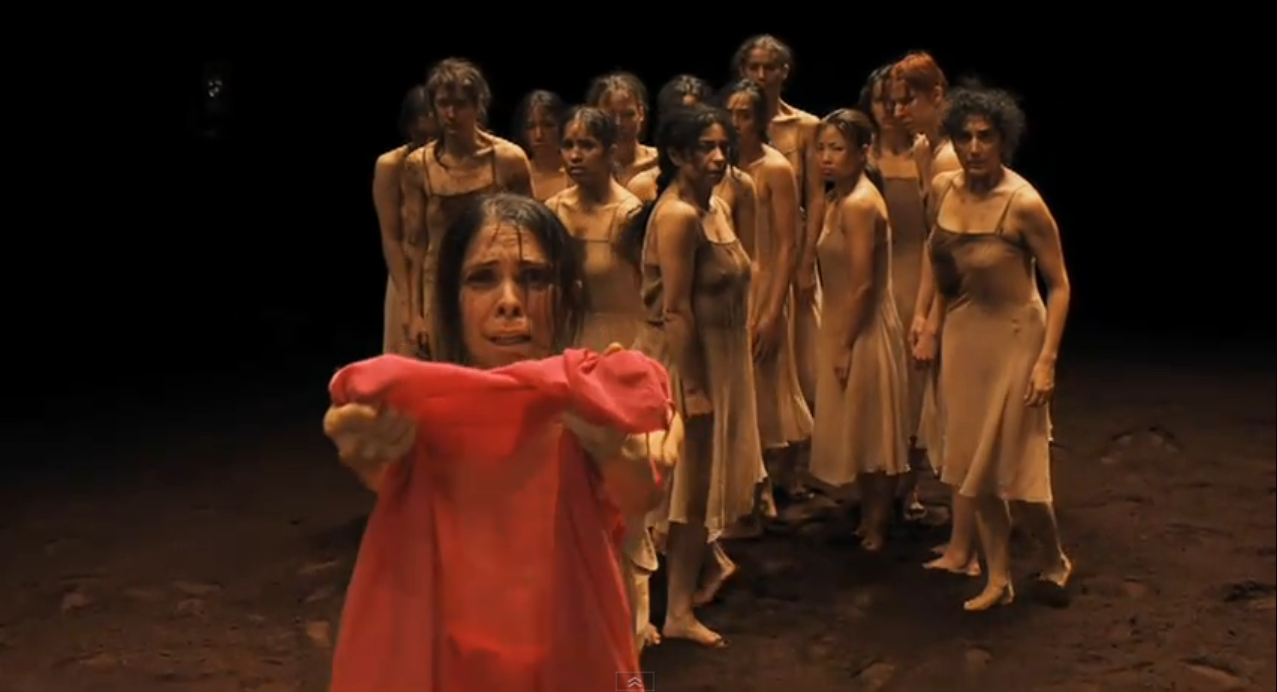
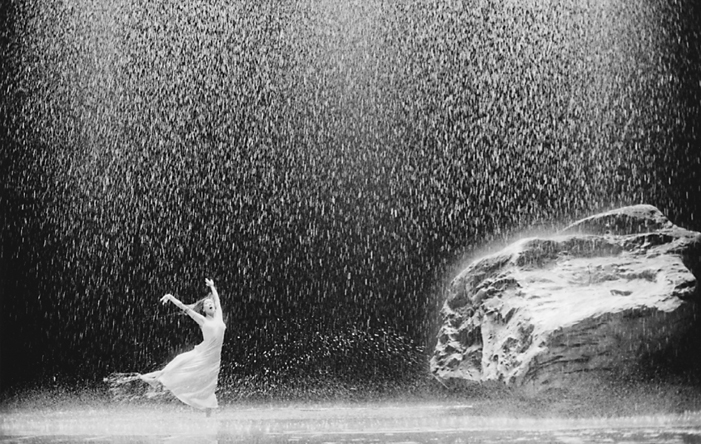
This is a documentary of movement poems, some fragments and some short verses. Almost every minute has a surprise, something unexpected. Shocking violence, powerful settings, a change of cinematography, a puzzling action. There is little to hold the film together, apart from the choreographer, for which this film is a memorial. There is no narrative or common theme. And yet, in a sense, it is about the meaning of dance, the evocative movement, that which cannot be communicated in any other medium.

The music is part of the setting, the emotional resonance of the background, and yet it cannot be separated from the meaning, even as context cannot be separated from the meaning of a sentence. This is a complete art, a full use of cinema, with its mix of music and setting and performance and cinematography, and yet it is as unique as any movie I've ever seen. I cannot pinpoint another film that is so beautiful and powerful and evocative of artistic license in this unique way. It is opening a new kind of film, one which I would seek out again.


On the other hand, I have a hard time imagining that anyone could accomplish this level of work, and so I would be inevitably disappointed.


Monday, March 23, 2015

Doctor Zhivago

It must be awful to be Lona.  Taken by her mother’s lover at a young age while still at school, she is forced into a tragic life situation.  She marries a determined man, who becomes a killer.  The only joys in her life is her daughter and her love, Zhivago.  For the most part, the film is seen through the view of the compassionate doctor, a bourgeoisie poet living in the wrong times.  Although much is made of this love story, it is really a story of survival, of how a man can live in love in a time of demanding justice.

Is Doctor Zhivago a great film?  It is certainly an epic film, covering a generation and massive landscapes and huge themes.  For a film about Russian events and people, it is an extraordinarily British film.  I feel that if we exchanged the Russian Revolution for the rules of Henry VIII and Mary and Elizabeth, we wouldn’t see much difference in plot.  Omar Sharif is a great actor and he is many things, but Russian isn’t one of them. 

A Russian epic must have a deep sense of the tragic.  While Doctor Zhivago has a dark humor and a recognition of oppression and a question of class systems (which any Russian epic should have), yet it lacks a real sense of the tragic. Pyaasa feels like a better tragic story of an oppressed poet.  Well, Pyaasa is a better film, if not better cinematography.

This film is a marvel to behold.  It is big, so big and it has a landscape that matches that huge scope.  But unlike Lean’s other great epics—Lawrence of Arabia and Bridge Over the River Kwai—the landscape seems to be less integrated into the film.  We have a dramatic scene, then BOOM—giant picture postcard.  We have a quiet scene, then BOOM—another giant picture postcard.   Beautiful postcards.  Sometimes they have to do with the plot.  But they could just as well have been from another film.  Or a gorgeous slide show.  Beautiful, but not especially cinematic.


I enjoyed the film quite a bit, but I’ll have to side with those who say it is a good film, not a great one. 


Meditation

The great love stories are tragedies.  Love leaves one vulnerable, open to both joy and disaster.  And the universe, chaos agent that it is, takes advantage of the vulnerable.  If we are not vulnerable to the dangers of love, then we cannot experience the full joy.  And if there is no joy in love, what good is it?

Love is stronger than death.  Yet we must avoid the love that has death wrapped within it, for we cannot escape either.  When our love is death then death and love wrap themselves around our body and our fate is determined.

Love is power, and in a man’s world, men hold the power of love.  Women may say they don’t want it, that it destroys them, but the choice of love isn’t theirs.  Men will force love upon them, until it only bears the slightest resemblance of love.  Love, in it’s pure form, sets aside power and grants freedom so that love

Idealism fights against love, even the ideals of peace, of justice.   There is a time to surrender love for justice, when injustice doesn’t allow love to survive, let alone flourish.  But we must remember, the purpose of justice and peace is the freedom to live in love.  Not a love that harms, but a love that builds and grows and flourishes the weakest among us. 

2001: A Spacey Analysis

I just had a marvelous experience.  

A local theatre just set up a restored 70mm projector and the first film they showed was 2001: A Space Odyssey.  The last time I watched this film was as a teen, thirty years ago, on a small television screen, with me sitting across the room, the volume not too loud so as not to disturb others who lived in the house.  My experience last night was right in front of a huge screen, in front of a speaker, with my twentysomething son and a friend.  

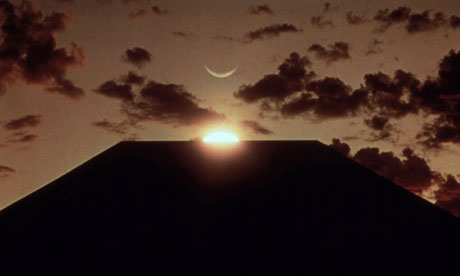
Truly unforgettable.   I could imagine being a film viewer in 1968, when the lights dimmed and the 50’s sci fi music mystically settled the audience down, then the room goes black, deadly black, we are in emptiness, the blankness of space and then we see the sunlight display the outline of the earth and the sunrise gives way to moonrise and all three orbs are gloriously magnificent in the midst of space and Zarathustra stirs our soul, in preparation to an epic spectacle.  

I may have seen greater films that have been made since this tremendous visual circus, but almost every epic since 1968 has been influenced for the better by this one.  Its greatness cannot be questioned, and it cannot be forgotten.


For all of its importance and power, yet 2001 is a strange duck.  For a long epic film, the narrative is minimal at best and incomprehensible at worst.  Perhaps this is because Stanley Kubrick wanted his viewers to work for the plot, to remain so dazzled that they will examine the film and so piece together the story over time.  But I suspect that isn’t the case.

Kubrick wrote the story and screenplay with Arthur C. Clarke, one of the greatest science fiction writers of the twentieth century.  They based the story on Clarke’s novella, The Sentinel, but they worked so closely on this project that while Kubrick was creating the film, Clarke was writing the novel, and the two works of art really should be seen as two aspects of a single work, different mediums working together, where one isn’t complete without the other.   Only the film’s outline is comprehensible without the novel, and the power of the story is lost without the film’s visuals and music.

This is an unusual relationship between a novel and film.  Perhaps only George Lucas’ original Star Wars film and book has anything similar, in which the novel fills out the film and the film empowers the novel.  I have deep questions that one was ever supposed to understand the meaning of the film without the novel.  Although my son, in his first viewing of the film, was able to glean the basic outline of the meaning of the film, only aided by hundreds of movies, tv shows, video games and novels that have been influenced by this work of art. 

Yet there are many who are baffled by this film.  And who wants to read the sci fi novel?  So I will give you the basic elements of the film, and in about 15 minutes you can sound as good as anyone else who has guesses as to what the film is about.  It’s been about 25 years since I read 2001 and about that long since I read the first sequel, 2010, but I remember it well enough to have a coherent idea of the film.  I will present the basic foundation of the film, the purpose of many scenes and some guesses of my own. As usual, I am open to any comments or corrections of my analysis.


Main plot
Incredibly advanced aliens direct the evolution of humanity, from the dawn of man to humanity’s next step, the Star Child.

Main subplot
Humans and their tools battle for rule of the solar system.

The primary cycle
Humanity is in a restless peace.  Humanity is always seeking more power, more security, more of the universe they can see and comprehend, but they are at their limit. The elegance and peace of humanity is represented by Johann Strauss’ Blue Danube.   A black monolith appears, and the voices of Requiem by  Gyorgy Ligeti,  call humanity, disturbing the peace with a mystical communication of knowledge that will take them to the next level.  A human touches the monolith, to the theme of Thus Spake Zarathustra and the communication is completed—humanity then has knowledge of the path of the next level they must pursue.  They will achieve the next level of evolution only through power and domination, as Friedrich Nietzsche stated (who inspired the piece Zarathustra).

Introduction I
With the theme of Zarathustra playing, we are introduced to the line of communication from the heavens, including the sun, the moon, to the earth.

The Dawn of Man
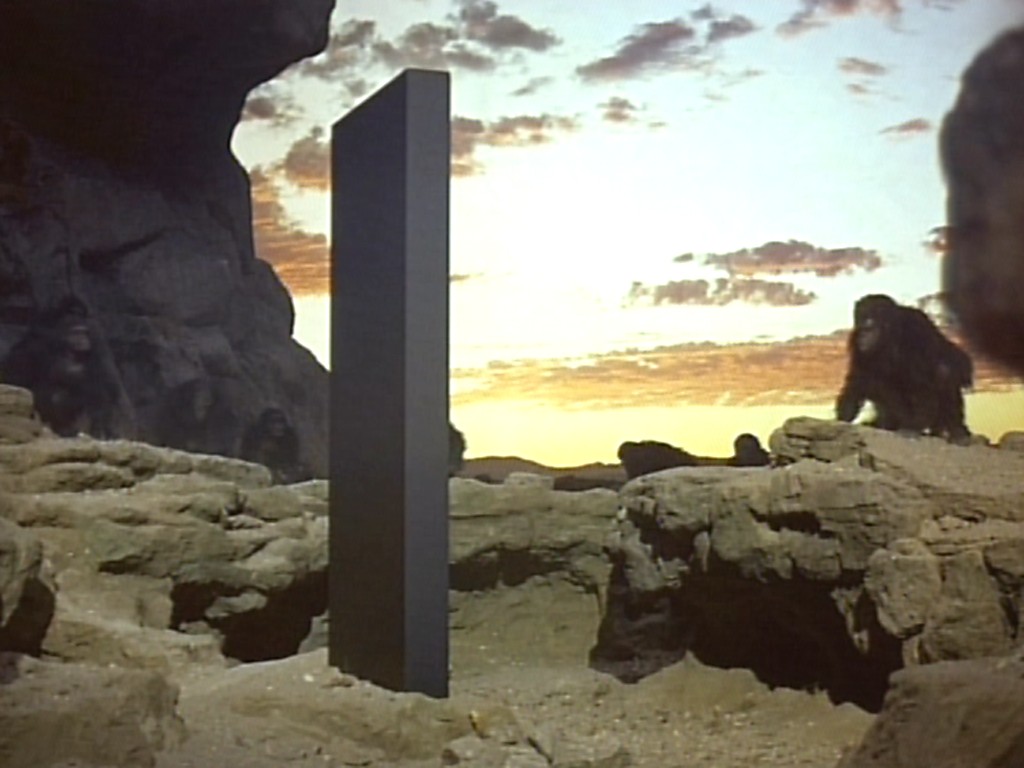
Proto-humans live peacefully with warthogs, in fear of violent large cats and against other tribes over a muddy watering hole.  A monolith appears, granting a single tribe the knowledge of using tools, which they use for violence, both against the warthogs for food and against other tribes in the first war for power over the watering hole. 

 Introduction II
The tool of a bone shifts to the tool of a space-plane in 2001, where tools now are so complex and huge that they encompass humanity.  This harmony between tools and humanity are highlighted by elegant flight and the elegant Blue Danube.   Heywood Floyd travels to the moon to examine a monolith uncovered 40 feet beneath the surface, buried 4 million years previous.  This is clear evidence of alien life.  After Dr. Floyd touches it, a signal is sent to Jupiter, communicating to the aliens, and directing humanity to Jupiter to receive their next communication.

Journey to Jupiter
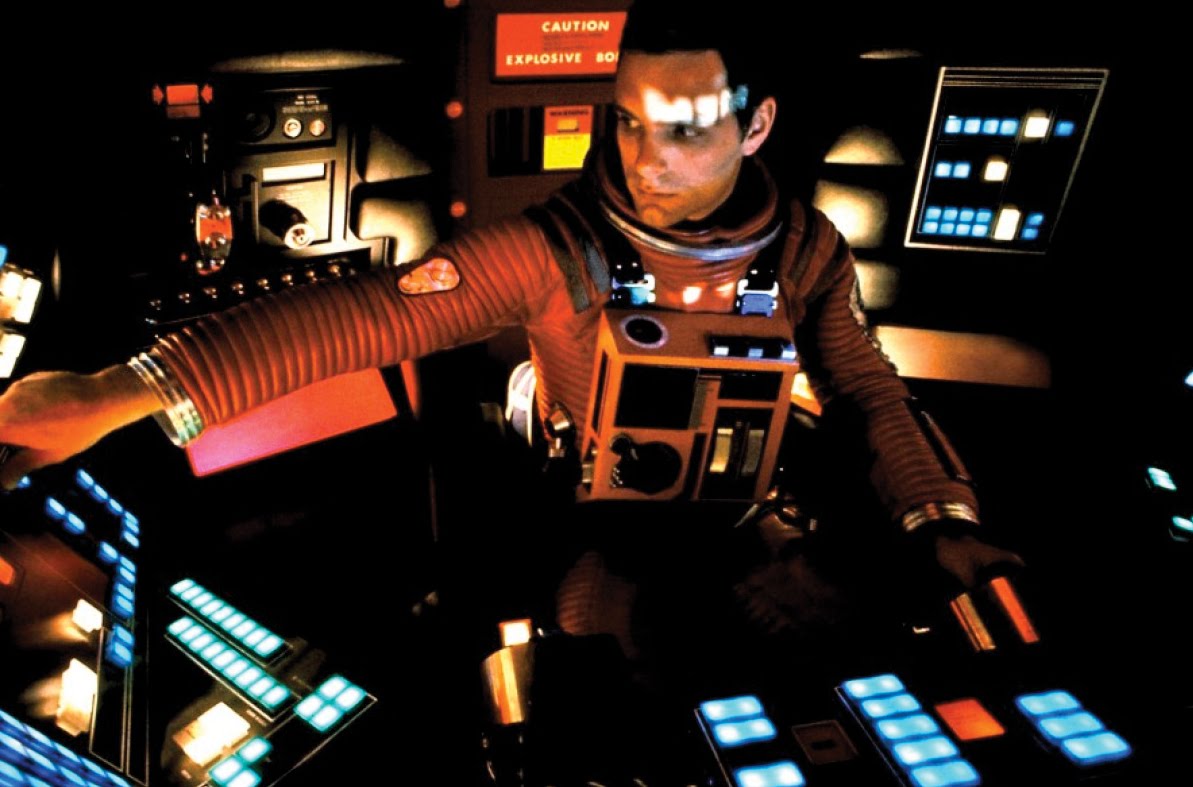
As we are introduced to the crew members, we notice that one of humanity’s tools, HAL 9000 is treated as an equal member of humanity.  HAL is uncomfortably human and the pilots are uncomfortably sub-human, with each of them meeting in the center of a humanity shaped by tools and tools becoming more human.  HAL is infinitely smarter than any single human, with greater logic and able to run the ship to such a degree that the pilots are dependent on him.
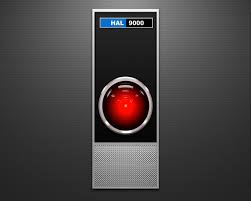

HAL, while on the trip, comprehends the true purpose of the mission, that aliens will confer on humanity the next evolutionary step.  HAL, perhaps considering humanity inferior to their tools, plots to kill the humans and to take the step himself.  HAL kills off Frank and the rest of the crew in stasis, and then isolates Dave Bowman in space.  Dave, using the mechanical system on the ship, not connected to HAL, is able to enter the ship at great risk. Although HAL has greater logic than any human, he underestimates human determination to survive, even to take on a huge risk.  Dave takes HAL’s chips out, causing him to regress to his birth.   This is the final war of humanity, the battle of whether humanity or their tools will take the next evolutionary step. 

Jupiter and Infinity
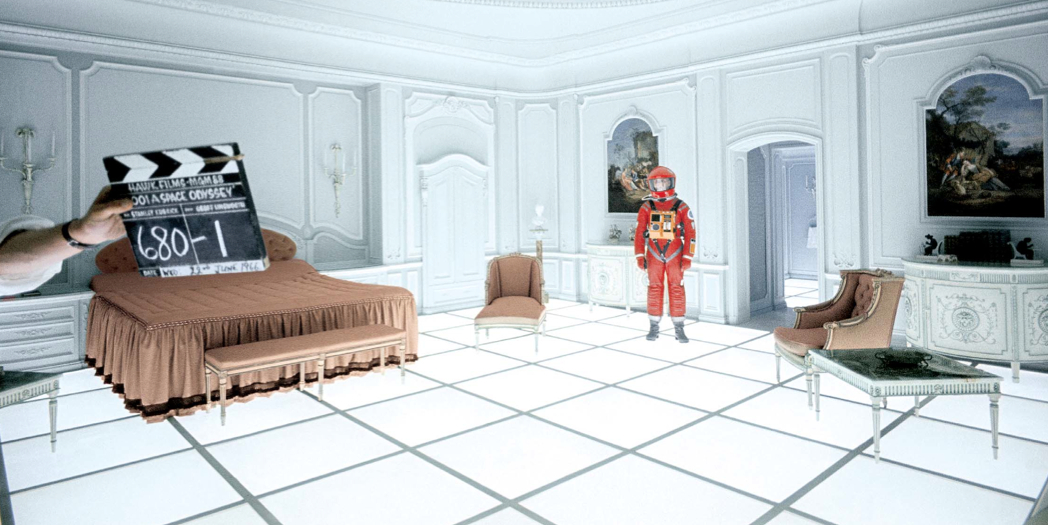
David Bowman leaves his ship behind, travels to a monolith, just beyond a moon of Jupiter.  He travels through a wormhole, into a room in which he quickly lives out the rest of his life.  At the moment of his death, he reaches out to a monolith, which transforms him into the Star Child, the mediator between humanity and the aliens, the dominating force of our solar system.

60’s Mindset
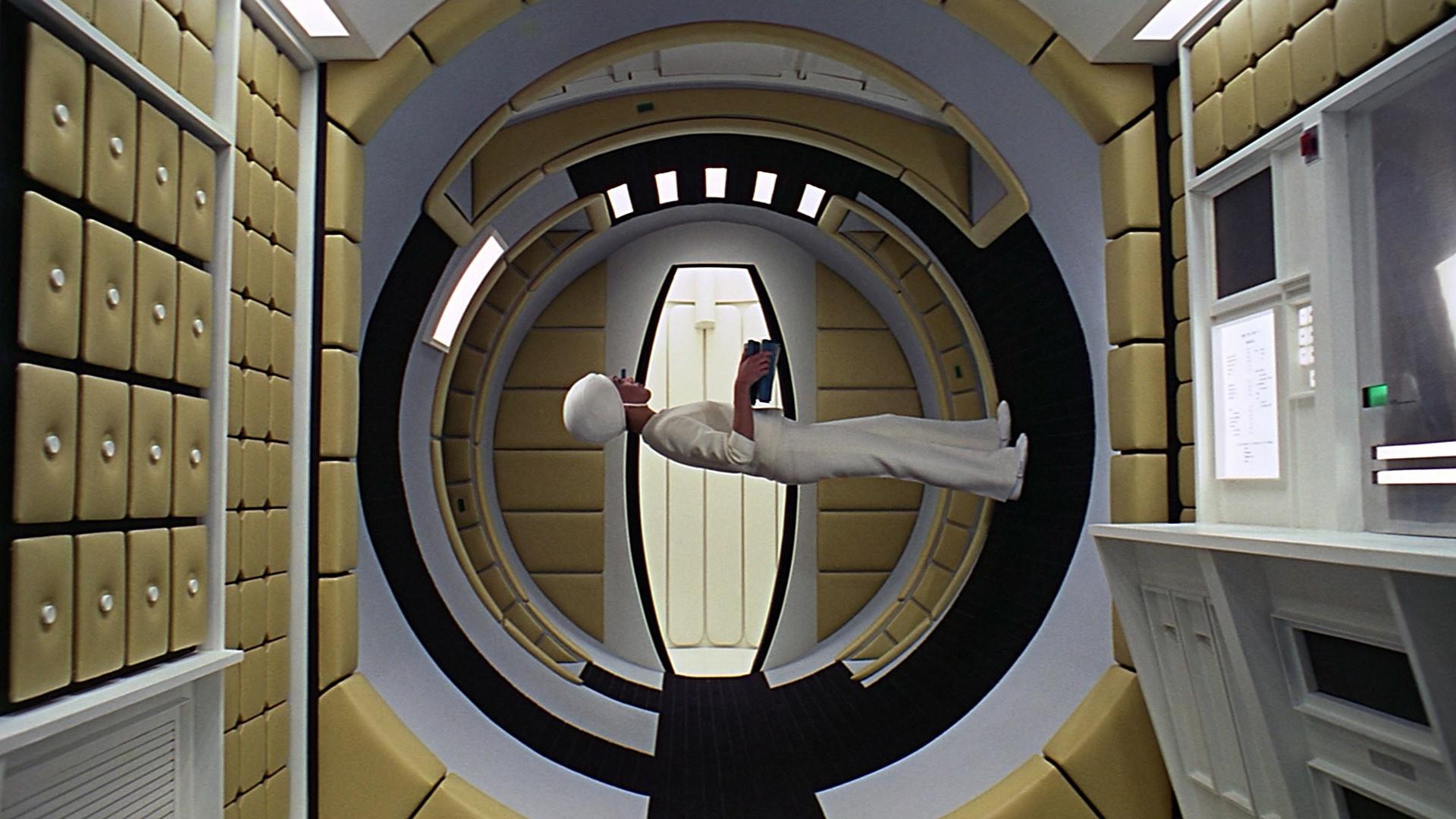
The pace is slower than any other Kubrick film, except perhaps The Shining, but why is this necessary?  It only offers to confuse and bore the audience.  I think it has to do with that the film is supposed to focus on visual spectacle, minimizing narrative—a huge picture book for the novel, or the visual outline the written novel is supposed to explain.  The slowest aspects of the film are dull to our modern eyes, but we could understand that Kubrick wanted to showcase the models of the complicated spaceships and the camera tricks that display weightlessness.  While these visual effects are commonplace today, they are unique pieces of art that Kubrick thought would keep the audience’s attention.

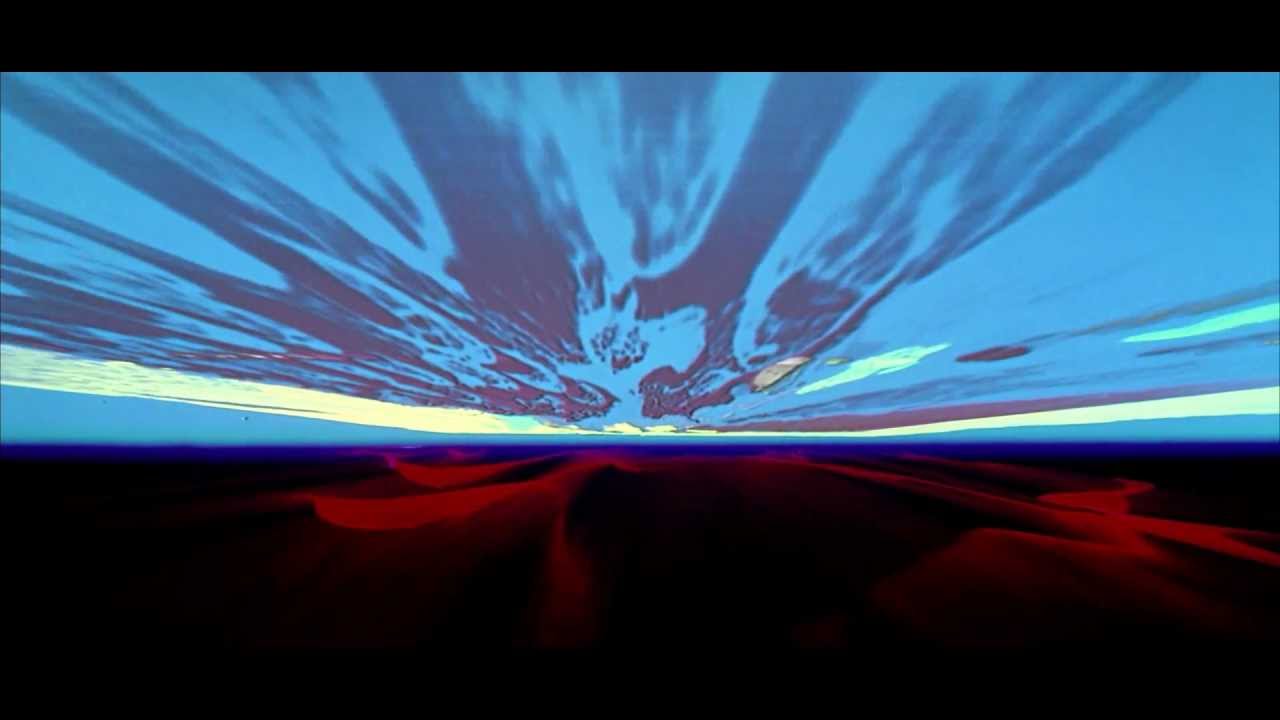
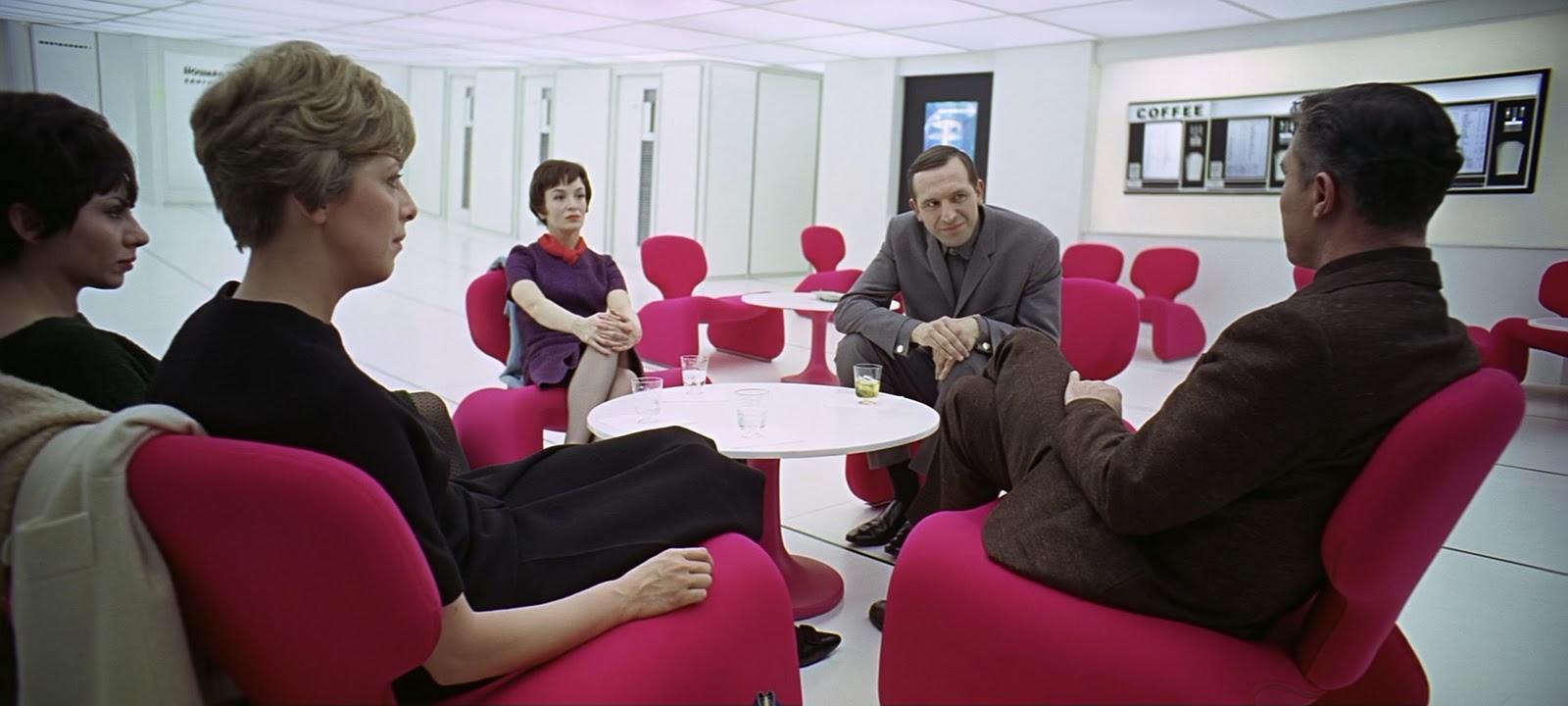
This film is very much caught in its timeframe, reminding us again and again that it is a film of the 60’s, with a 60’s vision of the future, as all visions of the future are ultimately reflections of their own time.  While the male doctors are given the title “Doctor” the female doctors are called “ladies”, and servants are all women.   The fashion is just a step beyond the time-restricted 60’s fashion, whether furniture or clothing.  The final “mind blowing” acid trip of a wormhole is little more than dye on glass, color filters and colored pen on film , and weak compared to some of the spectacle we have seen in more recent years.  As forward-thinking as the film is, it remains an obviously 60’s vision, which takes away the timelessness of most great films.

The greatest restriction of the film is the fact that it has influenced so many films after it, from Solaris to Star Wars to Tree of Life to Gravity.  There is little in the film we haven’t seen before.  Yet it is still an amazing film, worth seeing in all its 70mm glory.  The ideas might be overused by others, but its greatness shouldn’t be lost on audiences for all time. 


Saturday, March 7, 2015

Stagecoach: The Breakfast Club of Classic Westerns

Stagecoach begins like a pulp fiction western. Geronimo is on the warpath and a set of stereotyped characters are all put on a stagecoach to travel through dangerous territory.

The Breakfast Club of classic westerns. So many tropes and types:
-The noble marshal
-The drunk doctor
-The prostitute with a heart of gold
-The comedic driver (classically played by Andy Devine)
-The lady with a secret
-The gambler
-The pompous financier
-and, of course, the just outlaw played by John Wayne
Put them all in what amounts to a locked room and you get some fun personality clashes.

In any classic western, you have to have landscapes, an Indian battle, fine stunts, lot of horses, a cavalry, and, of course, a shootout.


Most directors would just shake all the parts up and pour it out, but the writers put this one together carefully, creating a great blend of tension and comedy and enough character by-play to make it all interesting. Not deep, but a lot of fun.