Wednesday, February 22, 2012

Frankenstein, Pokemon and Franco


There is more to Frankenstein than meets the eye.   

Originally written as a philosophical horror novel by Mary Shelley—a stunt to impress her friends—it has become a fable, a warning.  The novel spoke of what it takes to be human, and how a thing created by humanity could or could not be counted as human.  The James Whale/Boris Karloff film stated their theme right at the beginning of the film: There are some pursuits that man should never explore, for they remain only in the hand of God.   In a sense, these represent the two most popular themes in which the fiction enters into culture: The recognition of sentience, even if made by human hands; and, the limitations of science.  This has clearly entered into our current discussions on cloning, but also on artificial intelligence, genetics and potential contact with extraterrestrial life.  The ethics of these discussions can be linked to the ethical discussions of either the novel or the film Frankenstein.

This influence is not strictly limited to the English speaking lands, either.  Mocked though it is in some circles, Pokemon: The First Movie owes much to the novel Frankenstein.  MewTwo is a cloning experiment gone array,  with great powers, but out of the control of his creator.   MewTwo determines to use his powers to attack all humanity for their indifference and abuse of his species, Pokemon.   In the end (this is a spoiler, in case you were dying to see this film), he realizes that humanity does have compassion and love for Pokemon and calls off his attack.  Like the monster in the novel, Frankenstein, MewTwo is allowed long, rambling soliloquies.  It is frankly a better and more ethical film than most people give it a chance to be.

The Spanish film, The Spirit of the Beehive, directed by Victor  Erice, wears its influence on its sleeve.   The movie opens with a scene showing the town where the action takes place watching the Whale film Frankenstein.   Erice himself said that the whole film is encapsulated in one scene from that original film, where the monster is throwing flowers in the lake with a little girl.  We can see this influence throughout the film, as different characters are seen to be like the monster or similar to the doctor of the Whale film.  The monster from the Whale film even makes an appearance near the end of Spirit.

But what Spirit of the Beehive is actually about is difficult to determine.  Clearly it is rich with symbolism.  Symbols of death abound.  Characters wander or pace without much purpose.  There is a rich background, but no explanation given as to the import of the background.  The movie focuses on the little girl, Ana—played marvelously by Ana Torrent—but is the film about her, about her family or about the town?  Or is it about all of us?

A little bit of study (and watching a documentary on the film supplied by Criterion Collection on their DVD package—thanks again, Criterion!), gives us a better understanding of the film.  I won’t give away any spoilers, here, but I think there is some information that is helpful to understand.  The Spirit of the Beehive was made in 1973, near the end of Franco’s regime in Spain.  The film takes place in 1940, when Franco’s takeover just occurred.  Ana’s family was involved with the leftists, who opposed Franco.  Ana assists a rebel against Franco’s regime.   The listlessness of the parents are due to the fact that they have nothing to work for, as they have no place in the new regime. 

Thus, The Spirit of the Beehive is one of the great pieces of art to come from protest of Franco’s actions.  This list includes Hemingway novels, Dali paintings, and, in this millennium, films by Del Toro.  Erice remains symbolic and indirect because he is making this film under Franco’s rule, in Spain.  Like the Russian filmmaker, Andrei Tarkovsky , the censorship he must work under causes him to create works of art that are brilliant and intellectually statisfying the more one watches them.  However, unlike Tarkovsky ,  Erice has created a work of such deep humanity and joy alongside the hidden meanings and despair, that it is a pleasure to watch.  While Tarkovsky is often a towering intellect, The Spirit of the Beehive is not only intellectually satisfying, but is also wonderful film about childhood and the joys and confusion that we all have when children.  It communicates the isolation we can often feel from those we should be closest to.   It connects to all of us.

Finally, what does the Spanish Civil War have to do with Frankenstein?  How could Erice and Angel Santos—the writers of the film—have conceived such a connection?  It is found in the answer to Ana’s question after watching the film Frankenstein: “Why did the monster kill the girl?  Why did they kill him?”  The answer is given in the film: When you are separated from your humanity, then the most inhuman acts are accepted.  The Spirit of the Beehive is filled with people who see themselves as separated from humanity as the monster was in the film.  And there have been many regimes that have caused such destruction of people’s souls, thus resulting in the destruction of many bodies.  This film is a protest, not just against Franco, but against any government that limits the humanity of its own citizens.

An Open Letter to Andrei Tarkovsky


I am not here to bury Tarkovsky but to praise The Criterion Collection.  Not only do they pick some of the best movies ever made to preserve and distribute—many of them forgotten, but they give us the tools we need to understand some of the more obscure, dense films.  In other words, the films that most of us wouldn’t see because they make no friggin’ sense.

Yes, Tarkovsky, I’m talking about you.

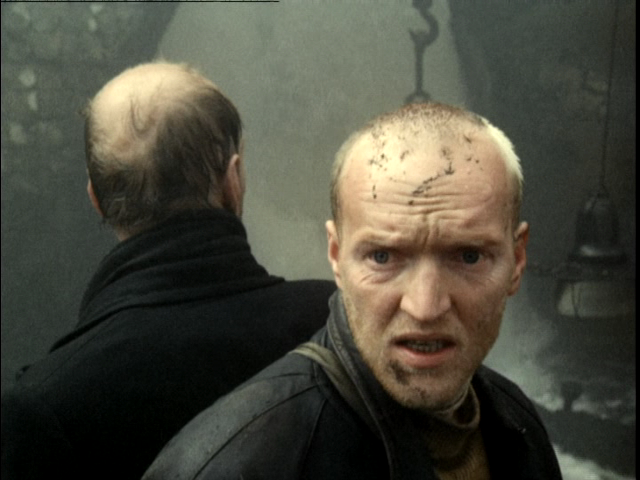
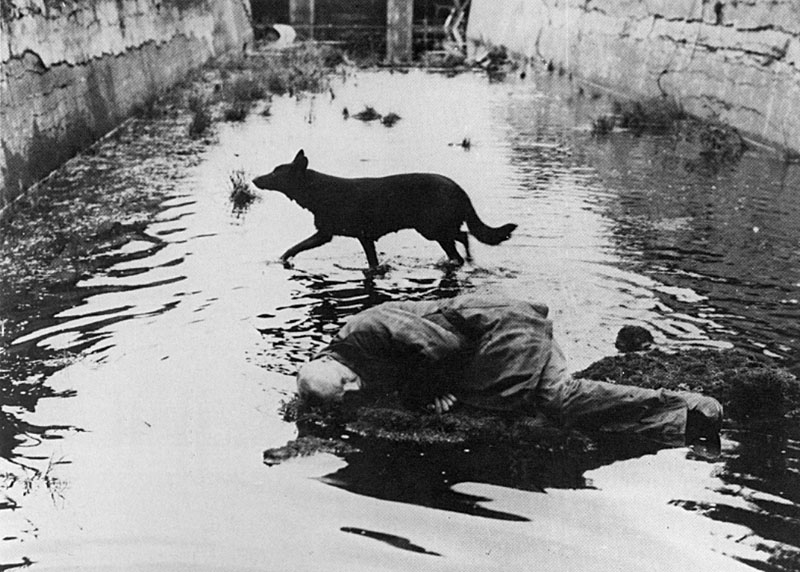
Okay, yes, I understand.  You wanted to communicate themes that the Soviet regime you lived under wouldn’t allow you to discuss, like an exploration of religion (in Stalker) and accepting those society calls inhuman (Solaris),  but you don’t make it easy for anyone.  First of all, your stories are so complex with detail that it is difficult to tell what is significant and insignificant to the main story.   Perhaps you wanted people to watch the films more than once.   Well, yeah,  I was forced to watch Solaris more than once.  Not because I enjoyed it, but because I needed to understand what the basic plot of the film was about.  I didn’t feel like I could dismiss it without understanding this much.

And I wouldn’t mind watching it more than once if there was any character I could appreciate or identify with.  But almost every single character acts in strange ways or a confusing manner.  Every time I think I know why they are acting this way, they do another action that I just don’t get.  I admit, you do throw us a bone with minor female characters.  In Solaris, it is Hari, our protagonist’s wife, or so it seems.   In Stalker it is also the protagonist’s wife, who is not given a name and only speaks briefly at the beginning of the film and more extendedly at the end.   These are great characters and I understand their motivations and struggles—but the men with which you populate your films are ethically ugly and mysterious.  Why should I want to watch these films again?

And then there is the confusing filmmaking.  Why do you switch from color to black and white to color again?  I thought I understood it, and then I realized that it’s just random.  Did you run out of color film?  And the long sections where nothing happens.  We are looking through the windshield of a car for five minutes.  Why?  What does that add to the film?  What is in that scene that couldn’t have been communicated in a dozen better ways?  In Stalker the whole middle section of the film is wandering over a bleak landscape, following an invisible path.  How dull and unnecessarily long!

Okay, I get it.  You’re a genius, and you want everyone to know how much of a genius you are by making obscure, dense films that no one understands the first time out.  Or the second.  You make the kind of films that critics love to analyze and understand.  I know.  I’m that kind of critic myself.  But, honestly, I prefer my intellectual puzzles to be infused with beauty and humanity. 

To be honest, I don’t like the term “pretentious” when applied to art.  That seems to be the go-to word when a critic doesn’t understand what a filmmaker is doing.  I am tempted to use the word for your films.  I think I get what you are doing.  Stalker is about the complexities and sacrifices of religion, even to the cost of family.  Solaris is about how science can isolate us from ourselves and dehumanize those closest to us.  Great messages.  But if it weren’t for Criterion, I wouldn’t have cared enough to find them out.

And so I want to give a big thank you to Criterion Collection.  They give commentaries and documentaries, and background information about the films and directors.  They give critical essays.  All of which helps us poor film buffs understand a film better and to get a handle on what a film is trying to say.  Tarkovsky, I know you are saying something.  But I need someone else to come along and help me understand your mode of communication. 

And so it is my hope and dream that the Criterion Collection gives us Stalker as well.  I know there is much more I could understand about that film and I think they will bring me the experts to help us.  Perhaps an audio commentary?  That would be awesome.  And to put more of yhour films back on Netflix Instant?  I'd appreciate it. 

Thursday, February 16, 2012

A Word From Our Sponsor: The Interrupters


I knew this was not going to be a normal filmviewing experience. 

 It’s difficult when you watch a film that relates to your own expertise or your own occupation.  At best, this leads to discomfort.  Movies are made by moviemakers, so the only details they get precisely right is when the subject is movies.  Any other occupation or subject, they can do the research and get it partly right, but not exactly.  Soldiers generally are uncomfortable with the most accurate war movies, movies about airline disasters get many details wrong and films about a historic period will often cause historians to cringe.  That’s all well and good, we know that movies can’t be perfect, unless it’s YOUR area of expertise.   Then the film is someone on the range from okay to horrible.

The Interrupters is a documentary about a bold group of lay people, called Ceasefire,  stepping in to stop the huge number of deaths among young people in Chicago.  It is a difficult task, and they get paid very little, if anything for their important, dangerous work.   They intervene in violent situations, connect with families of victims, assist the violent to be in more stable situations, and create forums to discuss issues of violence and peace.  It was directed by Steve James, who also directed the acclaimed documentary, Hoop Dreams.

You may ask how the subject of this film relates to any expertise on my part. For the last 17 years I have been involved in learning an outcast, often violent group (the homeless in Portland), being a changing presence with them and creating community.    Some call it missionary work, some call it peacemaking, some call it community work, some call it mission work.   While I am working on a religious basis, and working amidst a group that isn’t as deadly as the one Ceasefire works with,  the work is fundamentally the same.  Creating peace in the midst of violence.  Working toward changed hearts, because that is the basis of changed action.  Intervening in crisis situations.   I have called the emergency line a number of times because of bodies I have discovered.  I have stood in the middle of knife fights.  I have had the police scream at my face because I was on “the wrong” side.  I have built a network of community centers for those who have no where to go.

Enough about me.  That’s enough to give you my sense of surprise when I watched this film:  It was perfect, absolutely, spot on, perfect.

Creating peace is a different animal than keeping the peace.  It is the police’s job to keep the peace, to catch criminals and take them out of the peaceful situation.  But what if the entire community is broken?  What if there is a violent, chaotic foundation at the heart of a community?   Then peace keeping isn’t enough.  As many “bad guys” as you haul away, there will be many more to replace them.  What the Interrupters show is how a community can re-create their space into a community of peace.

The basic principles are right there in the film:
-Find those who are committed to peace in the community, for whatever reasons
-Train them in non-violent intervention and in the reasoning of peace, focusing only on violence, not other criminal activitiy
-Have them make relationships within the community, especially those at high risk of violence (youth, families of victims)
-Speak words of reason to people when they are likely to be violent, and before then
-Discuss peacemaking principles with those who are young enough to instill them in their lives

But the movie is not about the philosophy of peacemaking.  It is about the people who are involved in the everyday reality of doing it.  It is about their pasts, which caused them to see what violence can do to themselves and their community.  It is about their work on the street, both in the excitement and in the necessary hum-drum of “babysitting” a potential violent person.  It is about the successes and the failures. It is about the varied personalities that make up a successful team combating violence.

All combined with a single purpose: to stop kids getting killed. 

I was at various stages of weeping throughout the film.  Sometimes I wept for joy, sometimes for sorrow, sometimes just because I agreed so much with what they were doing.   This is the true work of God—the work of conversion, the work of creating a community of peace from a community of violence.   If you want to see some of the most important work being done in the world, I cannot more highly recommend this film.


Wednesday, February 15, 2012

The Beauty of Alamar

Alamar ("To the Sea") is a Mexican film of 2009.  It is not a story, but a song:


This is being a father, the best of it.

It is waking together, and eating, and working, and wrestling, and swimming and laughing and sleeping and then doing it together all over again.

It is building a home for the generations.

It is teaching your child your way of life.

It is the fresh smell of the sea, and oil and fish.

It is allowing him to get in your way, making your task harder and feeling the joy of the interruption.

It is seeing your child confidently do what you have done for so many years.

It is the way it’s been done since the old days.

It is letting them experience your life.

It is re-experiencing the wonder of life through a child’s eyes.

It is, in the end, not knowing who taught who.

The Reach, by Dan Fogelberg, which captures the soul, if not the place, of this film:


Thanks to pixote for introducing me to this gift of cinema. 

Sunday, February 5, 2012

The Fly: A Spoilerific Analysis


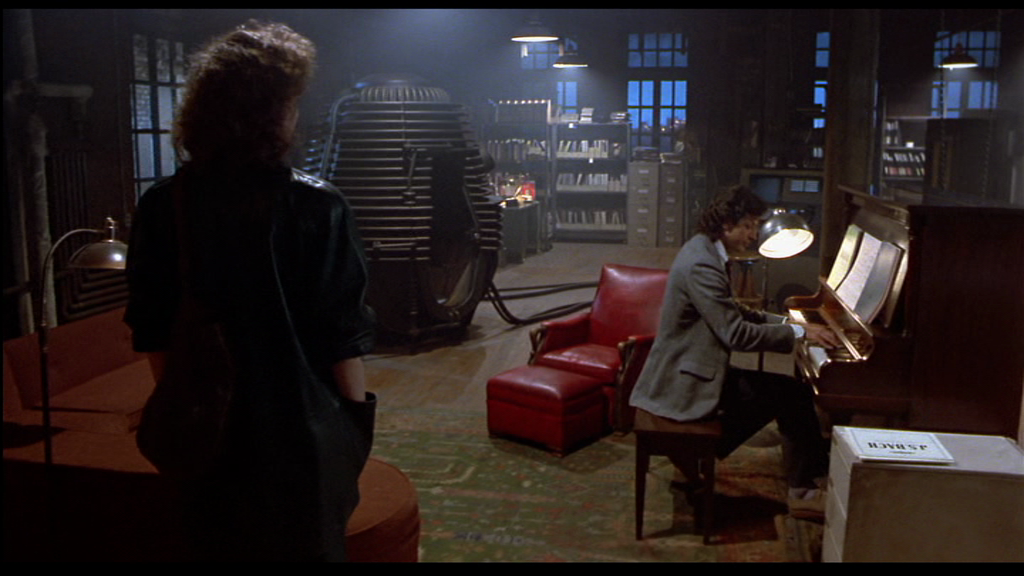
This whole review is pretty much one big spoiler.  If your stomach isn't weak, go, watch The Fly (1986), and then come back and read this.  

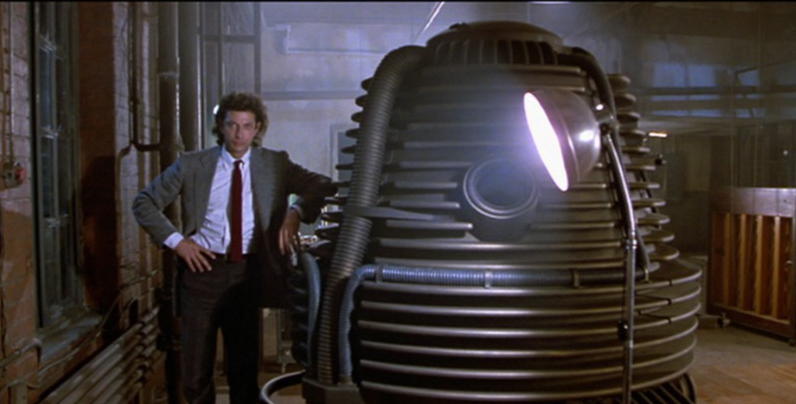
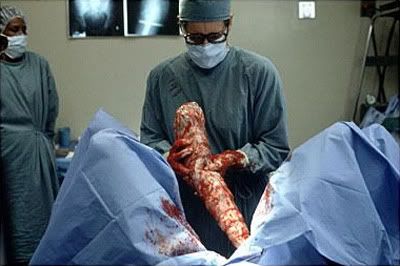
On the surface, The Fly is a pretty common 80’s horror flick.  The acting is pretty spotty (but Jeff   Goldbloom is great), the makeup is pretty awful (by the artist of the campy Gremlins), there are some supremely unbelievable actions by some characters (you go to the monster’s lair and THEN you put the gun together?), and an overuse of dry ice fog.  Still, it is a remarkably intense film, which I’m glad I had not seen in the theatre, because some of the scenes make me sick to my stomach as it was. 


In the end, though, I was left with the thought:  What is this film really about, anyway?  Okay, it’s about a scientist who isn’t careful with his experiment and ends up transforming himself into a fly, much the same as the classic 50’s horror flick of the same name (with the wonderful Vincent Prince).   But all the talk of “flesh” and “insect politics”… is that really the product of the typical genre film?  Of course not.  David Cronenburg is famous for his films about flesh, and there is clearly a deeper message intended.  It is interesting that Cronenburg received the original script from Charles Edward Pogue, which had many  of the same elements of the finished film, but Cronenburg asked permission to re-write the script, and he did so, imposing his own philosophy and intent upon the film, making more than simply horror.  I have never seen a Cronenburg film before, so this is my first exploration of his ideas.  But I’d like to explore this, and then I can expand on Cronenburg’s philosophy as I see more of his films.

It seems that The Fly is approaching metaphor similarly to Kafka’s The Metamorphosis.   In the famous novella, Gregor Samsa awakes one morning to find that he had transformed into an enormous cockroach.  But this was not simply a fanciful romp on Kafka’s part, but a metaphor of a man who no longer is going to live according to other people’s expectations.   Even so, the transformation of Brundle isn’t simply a literal gene-splicing, but is a moral transformation of a man.

The transformation can be seen right from the very first scene.  Brundle approaches Veronica, talking about how he will change the world.  It is clear that Brundle is using this as a line, a come-on, and Veronica certainly takes it that way, planning on brushing him off.  Then he makes it clear that he is serious, that he has some serious science going on.  So Veronica pursues the story.  Arriving at his home, he indicates his real intentions by attempting to entertain Veronica, to woo her.  When it is clear she is only interested in his science, he uses that to convince her to spend more time with him.

It is later revealed that Brundle is a serious scientist, not just a hack, and that he’d been working on the project for years.  And given the progress of the experiments, it is clear that he’d been working hard, pretty much focused only on that work, for years.   I think it is clear that in the first scene, Brundle is a man who is ready to make a transformation already.  He had given himself to the intellect, to “changing the world” to make life better for everyone.  That night, the first scene, Brundle had decided that he was going to live for himself, to give himself some pleasure as a reward for his hard work.  Or maybe he was just tired of his lonely life.  But it is clear that he had given himself over to the “flesh” as opposed to the intellect.

Instead of creating a balanced life between the flesh and other pursuits, he gives himself fully to one mode of life.  Yes, he continues to pursue his experiments, but thought of transforming the world is behind him--  nor does he show any real interest in Veronica except for what he can get out of her.  He has given himself over to his body before the physical transformation began.  The physical transformation into an insect is simply a representation of what he is becoming before the fateful fusion with a fly.

Brundle is a man of the intellect who became a man of the flesh.  He is completely focused on his bodily needs.  When he becomes more and more fly-like, he is not disgusted, but fascinated.  He is the center of his own universe and he sees his changing focuses and body as a change of humanity, instead of his own separation from humanity.   In the end, he is willing to sacrifice Veronica and his own child in order to increase his bodily transformation, to make them both a part of himself.

In the end, Brundlefly is only willing to sacrifice himself when he is no longer purely flesh, but is part machine.  He is only disgusted with himself when he is no longer all need, all body.  When he becomes a cyborg, that is when he sees himself as a true monster.  Before that moment, there is no hint that he is ashamed of what he has become.

So what is Cronenberg’s message?   It isn’t the common trope of the scientist looking into what should never be revealed.  Rather, it is about the dangers of giving into the flesh, of going too far into one’s own bodily needs and changes.  To focus only on our flesh is to see ourselves as the epitome of existence,  and ultimately to sacrifice those around us.  We cannot experience love or compassion, but everything and everyone around us is seen as an extension of ourselves, a tool we use to increase our own flesh.  Our needs become the center of the world, and all around us is consumed to be a part of our world.

There are parts of the film that are tough to get through.  And there are many moments in which I was pulled out of the film due to poor directorial decisions.  There were too many moments that just seemed unrealistic.  But intellectually, this is a very satisfying film, and the tension was very real.   I can’t give this film a single rating, so I won’t bother, but I can say that I recommend it.  Unless you have a weak stomach. 

Sunday, January 29, 2012

Just Another Review of Moneyball


I don't like sports films.  At all.  I mean really. Some quick unpopular opinions: Hoosiers was boring. Field of Dreams had some good moments, but overall was dull.  I did really love The Natural, but that's because it's a fairy tale, not about sports at all.  I like Grimm, I don't like sports.  I don't watch them, I think they are a waste of billions of hard-earned dollars.  There, I feel better having gotten that out of my system.

If Moneyball had been about baseball, I wouldn't have liked it.  Instead, it's about courage and ambition and how family effects business decisions and geeks v. tradition and lots of other human stuff.  Really, it seems that Sorkin is giving baseball the same treatment he gave Facebook-- it's about people, not about sport.  Well, it's not just about people, it's about risky business decisions and how it pans out.  But "panning out" has as much to do with relationships and a personal perspective that includes one's past.  In a sense, Moneyball is this years' Social Network, but not quite as good.  That still leaves a lot of room for good.

The one other thing I loved about Moneyball besides the script was the two main performances.  Pitt didn't look or sound like Pitt at all before 2011.  And this can only be a good thing.  This was a very human performance and his pacing was so different.  Not once did he give us his trademark grin.  And Jonah Hill was simply fantastic as the shy, geeky kid just coming into his own.  This is the kind of performance Hill should do more of, because he can actually act.  The couple comic lines he did here is more funny than many whole films he was in.  

I highly recommend this film, especially to people who don't like sports films.  That's what Jessica of The Velvet Cafe did for me, and I'm passing it on to anyone else who thinks a movie about baseball statistics must be the dullest thing ever.  Baseball statistics ARE the dullest thing ever.  This movie is wonderful.  


(originally posted on the Filmspotting Forum)

Sunday, January 22, 2012

The Ultimate War Movie


War movies are spotty.  It seems to be their nature.  There is only one war movie I can say that I enjoyed pretty much all of it (Apocalypse Now), but most of the rest of them have aspects which are wonderful, but the film as a whole doesn’t quite work.  And war movies should work.  There is heightened drama, high stakes, danger at every turn, and lots of opportunity for powerful performances.  It seems that perhaps most war films assume that the audience is involved in the heightened drama as well, or that an excellent beginning will woo the audience into buying the rest of the film.  But it never worked that way for me.  I can be wooed by beauty, by a great performance, even by a score that is emotionally resonant, but the drama of war doesn’t do it for me itself.  It needs something else.

I’ve gone so far as to make a list of scenes that I could put together to make the greatest war movie in the world.  If we could just put them together, it’d be magnificent.  Well, maybe not, but that’s my dream. 

Here’s my ultimate war movie:

The opening dialogue from Inglourious Basterds 


Boot camp from Full Metal Jacket


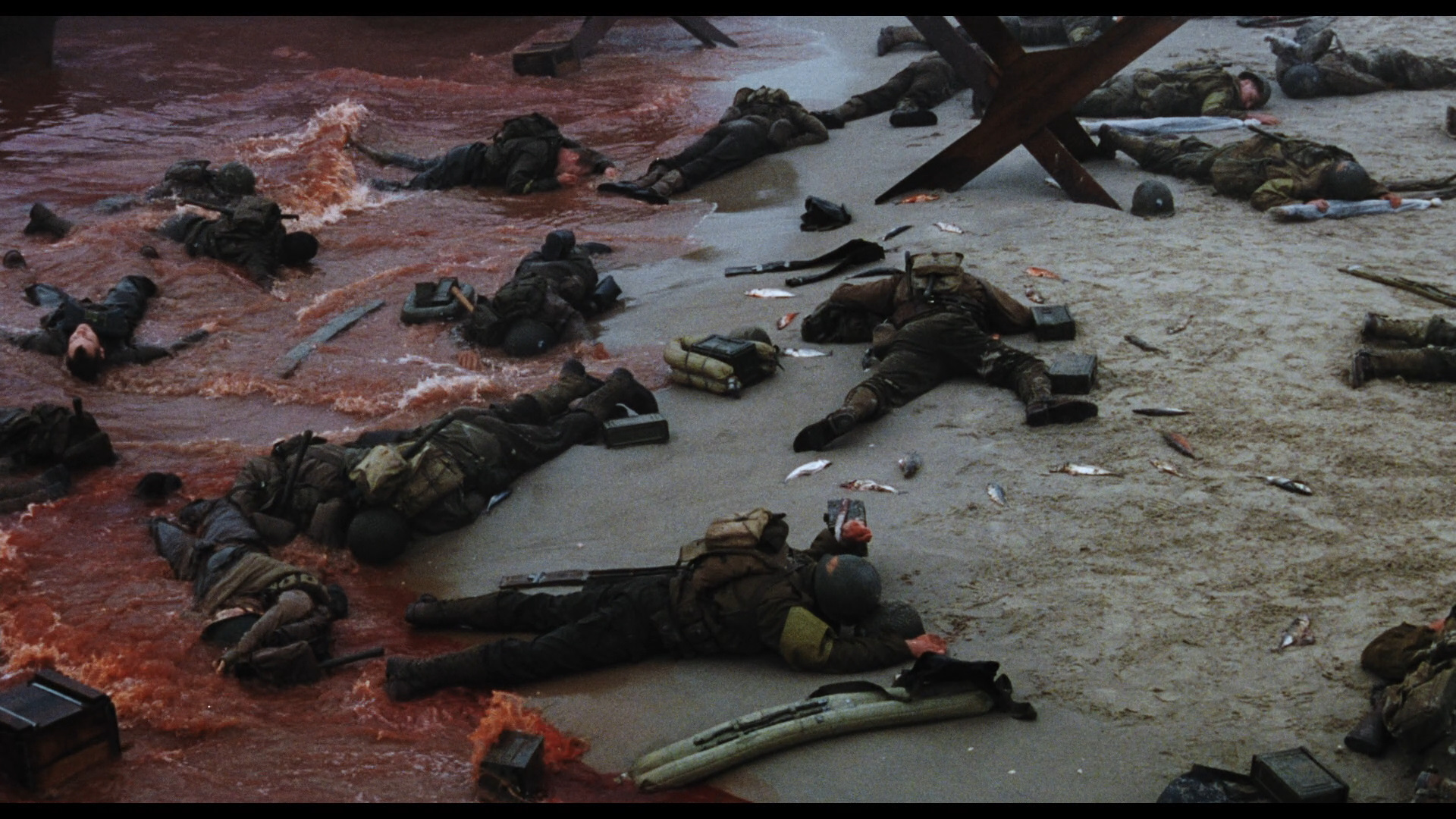
D-Day from Saving Private Ryan 


Surfing from Apocalypse Now  (can you imagine this right after the sequence of SPR?  Talk about an increase of tension)


Riding across the desert from Lawrence of Arabia (How the Arabian Desert became adjacent to Vietnam is an interesting subplot)


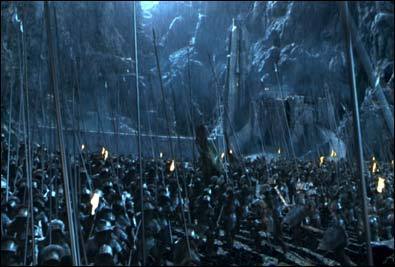
The President and his staff consider dropping the bomb: Combination of 13 Days and Dr. Strangelove (don’t ask me how to work that out, I’m not a screenwriter)


Capture and torture of David Bowie from Merry Christmas Mr. Lawrence (significant aspect of any war movie)


Peace and a concert between enemies from Joyeux Noel 


And finally: Ending it all with dropping the bomb from Dr. Strangelove and blowing up the world from Escape From Planet of the Apes (because I want my film to be the final word in war movies).


(In the comments, I invite you to post your favorite war scene that you’d like to see in the greatest war movie ever)

Ah, that’s a great war film.  It covers a variety of aspects of war, sees how it all works together, brings great flimmaking, deep emotional drama,  intense action, comedic elements and a bit of a dig at war all in one film.  But who could make a film like that?  Who could make it interesting?  And who would be able to keep all these different elements from contradicting one another to make a coherent film out of a mess of themes?


Of course, Stephen Spielberg.   Or at least Spielberg back in the day.  The Spielberg who made Close Encounters or Raiders of the Lost Ark, he could do it.  Saving Private Ryan had a great opening sequence, but it didn’t carry that intensity throughout the rest of the film.  But if Spielberg was at the top of his game, he could do it.

Honestly, I had thought that the best Spielberg moves were behind us.  I will always appreciate his early masterpieces, but even A.I.: Artificial Intelligence, which I love, was admittedly mixed in tone and theme.  Schindler’s List was the final great Spielberg film, and although it takes place at war time, it isn’t really a war film, but a Holocaust film, which I consider to be a different animal.  But War Horse proved all my assumptions wrong.


War Horse is that perfect war movie. It can carry different emotions and different themes because instead of telling the story of one soldier, or one troop,  or the story behind a war, it uses a horse as a means to carry us from one aspect of World War I to another.  Although I might be overly praising Spielberg in this review, at least equal credit should be given to the screenwriters, Richard Curtis and Lee Hall, who took a book and magnificently brought a complex story to the screen, so that the group of children I saw the film with were in turns enraptured and shocked, both silenced and unable to stop talking about what was happening on the screen.

Wait, did I say children?  At a war movie?  Yes, children.  There are some intense sequences in the film, and a young child wouldn’t understand what was going on, but a ten year old and up would be entranced by this marvelous film.  I brought my eleven year old daughter to it, and while she was disappointed by the absence of blood, she loved the cinematography and the story almost brought her to tears.  Almost.

I had no such option as being simply “dusty eyed”.  No, the tears rolled freely down my face as the final set of sequences occurred.  In fact, I would say that the final half hour of this film is probably the most moving cinematic experience I’ve had with a 2011 film.  No, War Horse isn’t going to be my favorite film of the year.  But if it were a less magnificent year in film, it certainly would be. 


Did I cry because it was manipulative?  Oh, yeah, it manipulated me.  In the same magical way Close Encounters does or Schindler’s List.  It wasn’t cheap sentiment.  It earned it.  It gave me time to feel for the characters, even a couple horses, and the final sequences gave me a couple surprises I didn’t expect.  My daughter said, “I knew it would end like that” and I gave her a list of the things we couldn’t expect, and she agreed.   Yes, sentiment wins the day, but why not? 

It is a rare animal (so to speak) to have a war film that determines to show the good in every man instead of the evil.  And isn’t it true that in war the altruistic and  compassion could be seen as well as the evil monster that lurks in the human breast?  I wish that we would have more films about saints and not just monsters.  Why can’t we have heroes that sacrifice themselves dramatically as well as those who blow other people up?  War Horse shows us that it is possible to have an immensely entertaining and satisfying film about persistence and charity and generosity and even friendship between enemies.  Because of the short story nature of the film, it could give more opportunity to this side of humanity than otherwise could be done.  We have a scene in no man’s land that reflects the true story behind the film Joyeux Noel, another that borrows some of the intensity of Saving Private Ryan,  camradarie between officers that reminded me strongly of another great war film, The Life and Death of Colonel Blimp.  But we also have an amazingly emotional scene having little to do with war for the first half hour of the film that is a story or rural England and daily struggle between the classes. 


What more can I say about the film? So much more.  I find, for myself, that it is the great movies I can’t stop talking about, and the poor films I have difficulty to say anything at all about.  And I could write pages about War Horse.  But it wouldn’t be fair to do an analysis of this film.  It is all there, and any child could appreciate this film.  I could write an essay on class struggle in the film, on the unique perspective of the “enemy” troops,  on the moral message.  But I couldn’t write it near as well as it is simply presented in the film.

Just go watch it.  In the theatre.  Bring your kids ten and up.  And bring a hanky.