Thursday, March 15, 2012

Why Jessica Should Give Certified Copy Another Chance


My friend Jessica, aka “Lobby” of The Velvet Café and the Filmspotting Forum is a wonderful film blogger.  One of the best, actually (you can see a link to her site on the sidebar).   She has wonderful opinions of film and she expresses them in such a personal, interesting way.  However, sometimes—only occasionally, mind you—she is terribly wrong.

For instance, I would claim that 2011 has produced three masterpieces of film.  Perhaps more, after all I haven’t watched A Separation yet or This Is Not a Film.  But there are three that will be discussed and watched happily for decades to come: Tree of Life, Melancholia and Certified Copy.  Jessica didn’t really care for two of them, and hasn’t watched the third and probably is now nervous about watching the third, because I have lumped them all together.

Although I might want to defend Tree of Life, I am here to talk about Certified Copy.  Jessica said that she wasn’t really interested in a very long art discussion.  And it’s true, I wouldn’t either.  And that’s what the film begins with—a discussion about whether a piece of art is to be valued equally as it’s certified copy.  It’s an interesting notion, but one that has been discussed to death in other good films like F is for Fake, My Kid Could Paint That and Exit Through the Gift Shop. The subject has been exhausted, and I would be exhausted to watch another film about it.

But Certified Copy is not about art.  It’s about relationships.

It is using the example of a single relationship, which at times is a courtship and at times is a couple fifteen years married,  to talk about the nature of relationships in general—all of our relationships, but especially our most intimate, long-standing ones. 


There are many questions the film brings up about our relationships:

Do we change over time or are we just perceived differently by others?

Is our value intrinsically our own, or do we only have the value others give us?

Must our relationships have a goal, or is it enough that we just enjoy the experience?

Is the goal of life to produce, or to be happy?

Is it acceptable to avoid the difficult things in relationships, or should we work at “fixing” them?

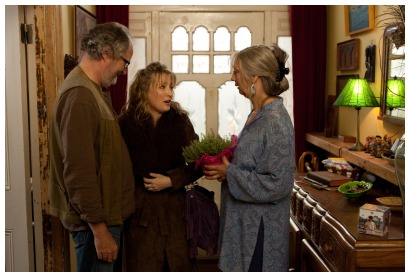
I admit that the film is a difficult one to watch.  The two principles, brilliantly portrayed by Juliette Binoche and William Shimell, spend most of the film arguing, bickering.  The fact that we don’t know whether the couple are complete strangers or deeply intimate is a distraction. 

Actually, let’s talk about that—see how much of a distraction it is?  But it goes into the  theme of the film.  At the beginning of the film, it seems obvious that William and Juliette don’t know each other, that she’s attracted to him, but also extremely upset at some of his opinions.  About halfway through the film, they speak as if they have had a rocky marriage, one in which he separated himself from her and their son for most of the marriage.  They also have connection with another couple who are getting married in the same place they got married 15 years ago.  And most of the way through the film, they pass an older couple, leaning on each other in order to walk. 

I believe that all four of these portraits are of their marriage, or that they all speak to different parts of the same marriage, or all marriages.  There is the courtship, where we are getting to know each other.  Then the wedding, in which the relationship is most idealistic.  Then a number of years later when the ideals are cast aside and a choice is made to continue to live together or to separate.  And, finally, old age where the decision to remain together leads to interdependence.  

What I believe the film is saying is that all four of these stages are the same marriage.  They aren’t different relationships, but the same one.  The individuals haven’t really changed.  But each stage gives them a new opportunity to perceive each other and how we value each other differently.

And this is why I love this film: I have never watched a film that more helps me understand the nature of long term relationships.  Mind you, I haven’t seen Scenes From a Marriage yet (although I will soon), but this film is deeper and more thoughtful about relationships than any film I have ever seen.

So, Jessica, if you are reading, I hope that give Certified Copy a chance.  Another chance.  I think there’s a lot there, more than anyone can catch in one viewing.  Really, it’s the up and coming thing.  Like indoor plumbing ;)

Cool Hand Luke Superstar

This review is dedicated to ses who dictated the film to me

What is there to say about Cool Hand Luke that hasn’t already been said a hundred times before?  A high point of 60’s cinema, which already has a number of high points.  A brilliant script.  Magnificent performances, headed up by one of Paul Newman’s greatest roles.  There wasn’t a dull moment, or a misstep in the entire film.  It is almost a perfect film.

The only thing left to talk about is the theme, although that has been covered ad nauseum.  The general consensus is that Luke is a Christ figure, a reanimation of Jesus in celluloid, transported to a Southern work farm prison.  Although I had never seen the film, I had heard this idea, and it was difficult to watch the film without looking for hints of messianic complex. 

Except that I found very little that was messianic, or Christ-like.  And being a Jesus-student, I should know.  (Spoilers ahead)  Sure, Luke dies at the end.  He becomes a sign of deliverance.  He is unfairly treated and unfairly sentenced to death.  So those are elements.

But Luke isn’t a man seeking to save anyone.  He doesn’t even think he can save himself.  From the very beginning of the film, he felt he was destined to go nowhere.  Not because he needed to be anyone’s sacrifice.  I would say that Luke would claim that no one needed a sacrifice to be who they are.  Luke’s mother wasn’t particularly holy or heavenly-minded.  Rather, she is one of the most down to earth folks you’d ever meet.  And she isn’t there to hold her son after his death.  It is her death that sparks the events that flame into Luke’s demise.

Yet… and yet there is something.  Something about Luke’s story that gives a sense of religiosity to it.  If there is anything, I’d say it was this: Luke’s story is a gospel.  Not a gospel about a Messiah.  But a gospel about freedom.  A gospel particularly suited for those in prison. 
The original idea behind the old English term, “go-spel” is “good news” which is a direct translation of the Greek word “eu-angel-eo” which means “good message”.  The Greek word in the Roman era was a message of a victory or a message to a slave or prisoner about their freedom.  And Luke is one who lived out his message, who proclaimed his gospel to every prisoner that could see it, without words:

Every prisoner is already free.

Throughout this tale, Luke refused to be commanded, restricted or beaten into submission.  When he was locked in the box, he was free.  When he was bullied, he already had a plan to bring the bully down.  When he was beaten, he would choose to accept the beating, again and again, because no one could limit his freedom.  If he was in a place, he assumed he chose to be there.  He wouldn’t let anyone—not the warden, not the guards, not even God—tell him what to do.  He went when he wanted to go.  He stayed because it pleased him to do so.  And he never lost his freedom because, ultimately he had no fear, not even of death.   Because the one who does not fear death is slave to no one.

This is not a religious message, exactly.  But it is a gospel.  It is a proclamation of good news, of freedom for all.  Luke is a kind of a Messiah, but only in that he showed the way, much like Buddha did.  And his disciples told his story and proclaimed his message of freedom for those who needed to hear it.

This is not the message of Jesus.  Nor is it the life of Jesus.  Any similarities to other religions are just signs at how seriously the author and filmmakers wanted us to take this story.  

Thursday, March 1, 2012

Just Another Review of The Great Dictator


Not comedies I like
I’m pretty particular about the comedies I enjoy.  Apatow is okay, I guess, but not my cup of tea.  The Farlley Brothers are the worst, for my taste.  Jim Carrey is occasionally good, but usually he just looks like he’s trying too hard.  And I don’t find impressions funny at all.

I do love the Marx Brothers and especially their film Duck Soup.   Yes, it is over the top silly, but the lines hit my funny bone and Harpo is always brilliant.  I especially like the none-too-subtle digs at the war mindset, especially at the beginning of WWI.

If someone had said, “What would you think about Charlie Chaplin making a remake of Duck Soup, as a talkie, not a silent, setting it at the beginning of WWII, playing an imitation of Hitler, and throwing in a healthy dose of holocaust?  Think that would be funny?”  Honestly, it sounds like the worst film ever.
And yet… somehow… after watching this very film, I have to put it alongside the greatest of Chaplin’s films.  Rarely have I laughed so often at a film.  And even though we don’t have The Little Tramp (perhaps only a semblance of that character), it is still that combination of poignient, funny and sweet that works so well in Chaplin’s other films.

 What Chaplin does with Hitler is not imitate him so much as re-imagine him as an easily misguided dictator, who only speaks German-speak when angry or in public speaking.  Chaplin, in his dual-role, is at his most brilliant, and shines in every scene.   And please, if you haven’t seen the film but heard it as some kind of prince-and-pauper story, the film is nothing like that.  The two characters don’t converge until the very end of the film.

Chaplin uses audio to the full extent.  This being his first talkie, he uses it like a novelty, something to take advantage of rather than an assumed aspect of film.  There are moments in which the scene continues all in audio, without any visual movement.  And he clearly worked hard at his vocals, and uses his voice to full effect.   What a comedic genius.  Whatever he focused his mind on, he could turn into brilliant humor.

Why should you watch this film, made before the United States entered into WWII?   Because it is comedic gold, but also because the final speech, which is going viral on YouTube and Facebook, is all the better for seeing the context in which it was originally placed.
4.5/5

Review and Analysis of Martha Marcy May Marlene

For brevity's sake, from here on out the film, the story of a woman who escaped from a cult to live with her sister and husband in a beautiful lake house, will be called MMMM.


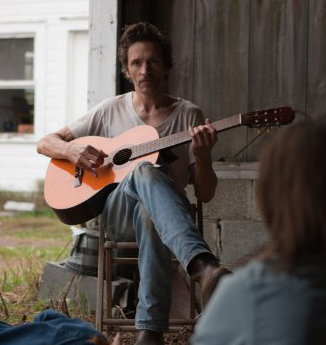
There are pieces of the film that I felt were brilliant.  I know that many people found the editing distracting, but I thought it was fantastic.  Frankly, how else could the story be told?  If it was told in a chronological fashion, it would give away too much, too soon.   The acting was fantastic, especially Elizabeth Olson, who plays the title role, and John Hawkes, who plays Patrick, the charismatic cult leader .  The fact that they make the commune a personality cult rather than a religious one, makes sense and was a smart move, because it is too easy to make a religious cult leader smarmy or crazy.  This cult was perfect as it displayed both the ideals and the weaknesses.  The sociological critique was also subtle and thoughtful.

For all the wonderful aspects of the film, it still left me a bit empty.  What is the film about, really?  Is it about the family relationships?  If so, it’s pretty depressing, because neither family really accepted MMMM for who she was.  Is it, ultimately, a thriller? If so, it may be the longest start of any thriller, and it isn’t very thrilling for most of the film.  Is the central point a subtle comparison/contrast between “normal” life and life in a radical cult?   This is the most interesting aspect of the film to me, but it seems to be undermined by the end, when the “thriller” aspect of the film takes over.   The interplay between two very different cultures displays the weaknesses of both cultures, but the end undermines the equality and gives all the serious negativity to one side alone—“Well, MMMM’s family may not be great, but at least they aren’t as bad as this.”

Personally, I think I’ll stick with the film as a critique of both society and alternative communities, and forget I ever saw the ending.


Below is the analysis of the film which definitely contains spoilers. 


Exactly what kind of critique is being offered by MMMM?  There are two worlds being presented in the film.  First is the world of the commune, an alternative community which exists on very little cash (they sell crafts in town), and have a peculiar pecking order for authority and sexual relationships.  It is an idealist society based on principles of peace and love and community.  The second world is the “normal” world of jobs and consumerism, privacy and genetic connections.   The world where you keep in touch with family,  a single family for a single home and you don’t say what you really think unless you’re really upset.

Apart from the more sinister aspects of the cult, the film offers a number of critiques of community life.  First of all, the economics of the community simply don’t work.  They are forced to steal to maintain their community of love.  The biggest critique has to be the authoritarianism that seems inherent in such community life.  Someone not only has to have a vision, but the community as a whole seems to be revolved around the Patrick's needs and quirks.  Every woman is brought into the community via a baptism of “date rape”.  The other men in the community seem to have the opportunities for sexual action after the Patrick is done with the most recent woman.   There is a highlighting of the sexual inequality, as the women only eat after the men are finished.  And there is a highly sexualized tone of the community in general, where each woman sees the Patrick as her boyfriend/husband, while the other men can be mocked or disregarded completely. 

But the film also pokes at society at large.  The demands of family seem unreasonable, and they clearly have no idea how to assist someone dealing with PTSD and depression, apart from veiled threats.  The outside world seems very uptight and narrow minded about many aspects of human life, including nudity and what is appropriate to communicate.  And the economics of capitalism, compared with community life, seems wasteful and self-centered.

But all of this critique can be taken with a grain of salt because it is made by a woman who has been clearly traumatized by her brush with community life.  As a person who lives in community, and is a leader of two different styles of alternative living (albeit distinctly Christian ones) I am disappointed that the movie seems to pull punches toward society at large.  The basic idea seems to be: “Sure, our society has weaknesses, but the alternative is worse.”   I would have preferred a stronger statement on the broader culture.

I am also a little uncomfortable at the critique of community living.  I don't think that Patrick's community is, in the film, necessarily representative of all alternative communities.  However, I think that there is a dig at all alternative communities-- while they all may not steal, they are not economically viable.  And they are too idealistic for their own good might be a critique of all communities.  Again, living in community and having visited many different kinds of communities, these critiques might sometimes be correct, but are often not. Certainly an implication of authoritarian leadership in   

One last thing I want to say, which is about the ending.  I don’t know if everyone who watched the film got this, but it seemed like a very subtle way to say that Martha ended up back in the community.  Perhaps a couple people would say, “How do you know this? The ending was pretty vague.”  Yes, visually we are left with the community approaching to attack the car carrying Martha, her sister and her brother in law.  But we are given two more pieces of information.  First of all, the final name in the title is Marlene—a name never mentioned in the film.  It implies that our protagonist is given four names, while only three were mentioned in the film.  And as the credits roll, we are given a song, sung by the cult leader, about Marlene, which means that the cult captured her, gave her another new name and then accepted her as this new person.  This leads to speculation about her family—what happened to the couple?  I can only come up with one conclusion.
Perhaps the ending was obvious to all of you who saw the film.  But while I dislike what it says about the message of the film, it was really well done and gave the final period to the statement:

 Creepiest. Cult. Ever.

In Praise of Mike Leigh: Vera Drake


I believe that Mike Leigh is the greatest chronicler of modern humanity.   His films are snapshots of a community, with a fly-on-the-wall sensibility that are more real, and gives more personality and reality than almost any documentary I’ve seen.  Even though a film might surround a single character or two, it is never “the story” of that character.  Rather, we see not only that person, but those who surround that character and the community they live in, and every character is fully developed.  With every person we see the central character interact with, not only do we have a richer idea of that person, but we have a better grasp of the community.  In the end, the community has its own life, which has a central person but it isn’t all about that one person.

Vera Drake could easily have been an issue film.  Vera Drake is a grandmother-type who, out of the kindness of her heart, provides abortions for women who otherwise could not obtain abortions.   But she isn’t made either a saint or a demon, as one side or another of the abortion debate might make her.  Rather, she is a simple, kind woman who we see fade as the film goes on.  We see a series of events, which were inevitable, if either we or Vera had given a bit of thought about it.  But we hadn’t, so the film feels a bit tragic.

But wisely, Leigh doesn’t focus on the issue.  Rather, he focuses on the people.  Her family, her friends, all of whom depend on her kindness, but are also their own persons.  Leigh’s films are quiet, but brilliant.  Never have I felt so completely introduced to a group of people I could meet around the corner from my house.  Every character is perfectly placed around Vera.  Her husband and her seem perfect together, and it makes sense that she would have the children she has.   This perfectly created community can easily be extended to a couple of his other films: Another Year and Happy Go Lucky. 

You may appreciate Leigh’s films or not.  But he has a genius for the human condition that I have never seen before or since.  I can’t wait to see the next one.  

Wednesday, February 22, 2012

Frankenstein, Pokemon and Franco


There is more to Frankenstein than meets the eye.   

Originally written as a philosophical horror novel by Mary Shelley—a stunt to impress her friends—it has become a fable, a warning.  The novel spoke of what it takes to be human, and how a thing created by humanity could or could not be counted as human.  The James Whale/Boris Karloff film stated their theme right at the beginning of the film: There are some pursuits that man should never explore, for they remain only in the hand of God.   In a sense, these represent the two most popular themes in which the fiction enters into culture: The recognition of sentience, even if made by human hands; and, the limitations of science.  This has clearly entered into our current discussions on cloning, but also on artificial intelligence, genetics and potential contact with extraterrestrial life.  The ethics of these discussions can be linked to the ethical discussions of either the novel or the film Frankenstein.

This influence is not strictly limited to the English speaking lands, either.  Mocked though it is in some circles, Pokemon: The First Movie owes much to the novel Frankenstein.  MewTwo is a cloning experiment gone array,  with great powers, but out of the control of his creator.   MewTwo determines to use his powers to attack all humanity for their indifference and abuse of his species, Pokemon.   In the end (this is a spoiler, in case you were dying to see this film), he realizes that humanity does have compassion and love for Pokemon and calls off his attack.  Like the monster in the novel, Frankenstein, MewTwo is allowed long, rambling soliloquies.  It is frankly a better and more ethical film than most people give it a chance to be.

The Spanish film, The Spirit of the Beehive, directed by Victor  Erice, wears its influence on its sleeve.   The movie opens with a scene showing the town where the action takes place watching the Whale film Frankenstein.   Erice himself said that the whole film is encapsulated in one scene from that original film, where the monster is throwing flowers in the lake with a little girl.  We can see this influence throughout the film, as different characters are seen to be like the monster or similar to the doctor of the Whale film.  The monster from the Whale film even makes an appearance near the end of Spirit.

But what Spirit of the Beehive is actually about is difficult to determine.  Clearly it is rich with symbolism.  Symbols of death abound.  Characters wander or pace without much purpose.  There is a rich background, but no explanation given as to the import of the background.  The movie focuses on the little girl, Ana—played marvelously by Ana Torrent—but is the film about her, about her family or about the town?  Or is it about all of us?

A little bit of study (and watching a documentary on the film supplied by Criterion Collection on their DVD package—thanks again, Criterion!), gives us a better understanding of the film.  I won’t give away any spoilers, here, but I think there is some information that is helpful to understand.  The Spirit of the Beehive was made in 1973, near the end of Franco’s regime in Spain.  The film takes place in 1940, when Franco’s takeover just occurred.  Ana’s family was involved with the leftists, who opposed Franco.  Ana assists a rebel against Franco’s regime.   The listlessness of the parents are due to the fact that they have nothing to work for, as they have no place in the new regime. 

Thus, The Spirit of the Beehive is one of the great pieces of art to come from protest of Franco’s actions.  This list includes Hemingway novels, Dali paintings, and, in this millennium, films by Del Toro.  Erice remains symbolic and indirect because he is making this film under Franco’s rule, in Spain.  Like the Russian filmmaker, Andrei Tarkovsky , the censorship he must work under causes him to create works of art that are brilliant and intellectually statisfying the more one watches them.  However, unlike Tarkovsky ,  Erice has created a work of such deep humanity and joy alongside the hidden meanings and despair, that it is a pleasure to watch.  While Tarkovsky is often a towering intellect, The Spirit of the Beehive is not only intellectually satisfying, but is also wonderful film about childhood and the joys and confusion that we all have when children.  It communicates the isolation we can often feel from those we should be closest to.   It connects to all of us.

Finally, what does the Spanish Civil War have to do with Frankenstein?  How could Erice and Angel Santos—the writers of the film—have conceived such a connection?  It is found in the answer to Ana’s question after watching the film Frankenstein: “Why did the monster kill the girl?  Why did they kill him?”  The answer is given in the film: When you are separated from your humanity, then the most inhuman acts are accepted.  The Spirit of the Beehive is filled with people who see themselves as separated from humanity as the monster was in the film.  And there have been many regimes that have caused such destruction of people’s souls, thus resulting in the destruction of many bodies.  This film is a protest, not just against Franco, but against any government that limits the humanity of its own citizens.

An Open Letter to Andrei Tarkovsky


I am not here to bury Tarkovsky but to praise The Criterion Collection.  Not only do they pick some of the best movies ever made to preserve and distribute—many of them forgotten, but they give us the tools we need to understand some of the more obscure, dense films.  In other words, the films that most of us wouldn’t see because they make no friggin’ sense.

Yes, Tarkovsky, I’m talking about you.

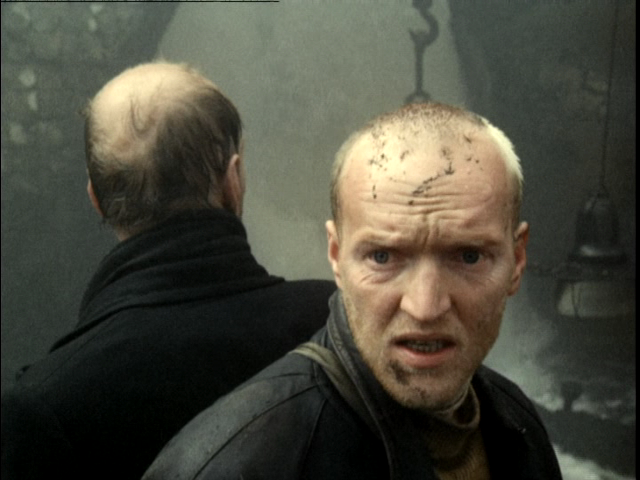
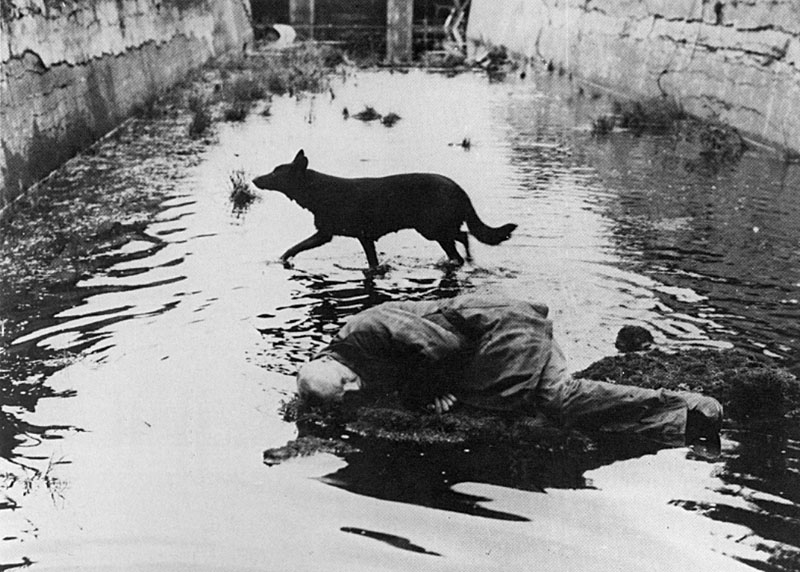
Okay, yes, I understand.  You wanted to communicate themes that the Soviet regime you lived under wouldn’t allow you to discuss, like an exploration of religion (in Stalker) and accepting those society calls inhuman (Solaris),  but you don’t make it easy for anyone.  First of all, your stories are so complex with detail that it is difficult to tell what is significant and insignificant to the main story.   Perhaps you wanted people to watch the films more than once.   Well, yeah,  I was forced to watch Solaris more than once.  Not because I enjoyed it, but because I needed to understand what the basic plot of the film was about.  I didn’t feel like I could dismiss it without understanding this much.

And I wouldn’t mind watching it more than once if there was any character I could appreciate or identify with.  But almost every single character acts in strange ways or a confusing manner.  Every time I think I know why they are acting this way, they do another action that I just don’t get.  I admit, you do throw us a bone with minor female characters.  In Solaris, it is Hari, our protagonist’s wife, or so it seems.   In Stalker it is also the protagonist’s wife, who is not given a name and only speaks briefly at the beginning of the film and more extendedly at the end.   These are great characters and I understand their motivations and struggles—but the men with which you populate your films are ethically ugly and mysterious.  Why should I want to watch these films again?

And then there is the confusing filmmaking.  Why do you switch from color to black and white to color again?  I thought I understood it, and then I realized that it’s just random.  Did you run out of color film?  And the long sections where nothing happens.  We are looking through the windshield of a car for five minutes.  Why?  What does that add to the film?  What is in that scene that couldn’t have been communicated in a dozen better ways?  In Stalker the whole middle section of the film is wandering over a bleak landscape, following an invisible path.  How dull and unnecessarily long!

Okay, I get it.  You’re a genius, and you want everyone to know how much of a genius you are by making obscure, dense films that no one understands the first time out.  Or the second.  You make the kind of films that critics love to analyze and understand.  I know.  I’m that kind of critic myself.  But, honestly, I prefer my intellectual puzzles to be infused with beauty and humanity. 

To be honest, I don’t like the term “pretentious” when applied to art.  That seems to be the go-to word when a critic doesn’t understand what a filmmaker is doing.  I am tempted to use the word for your films.  I think I get what you are doing.  Stalker is about the complexities and sacrifices of religion, even to the cost of family.  Solaris is about how science can isolate us from ourselves and dehumanize those closest to us.  Great messages.  But if it weren’t for Criterion, I wouldn’t have cared enough to find them out.

And so I want to give a big thank you to Criterion Collection.  They give commentaries and documentaries, and background information about the films and directors.  They give critical essays.  All of which helps us poor film buffs understand a film better and to get a handle on what a film is trying to say.  Tarkovsky, I know you are saying something.  But I need someone else to come along and help me understand your mode of communication. 

And so it is my hope and dream that the Criterion Collection gives us Stalker as well.  I know there is much more I could understand about that film and I think they will bring me the experts to help us.  Perhaps an audio commentary?  That would be awesome.  And to put more of yhour films back on Netflix Instant?  I'd appreciate it.